
Breathing is essential to almost all living beings. Of course, you knew that already. However, while we have all become so conscious about our health today, how many of us actually give a second thought to the process of breathing and respiration?
Breathing is the most normal and regular activity we perform every minute of the day; even when we are sleeping. The process of breathing is fascinating across living beings. Here, we can take a detailed look at different ways of breathing in three different living beings – humans, birds and grasshoppers. Each of them has a respiratory system that is unique and will give a glimpse of nature’s curious ways.
1. Human Lungs:
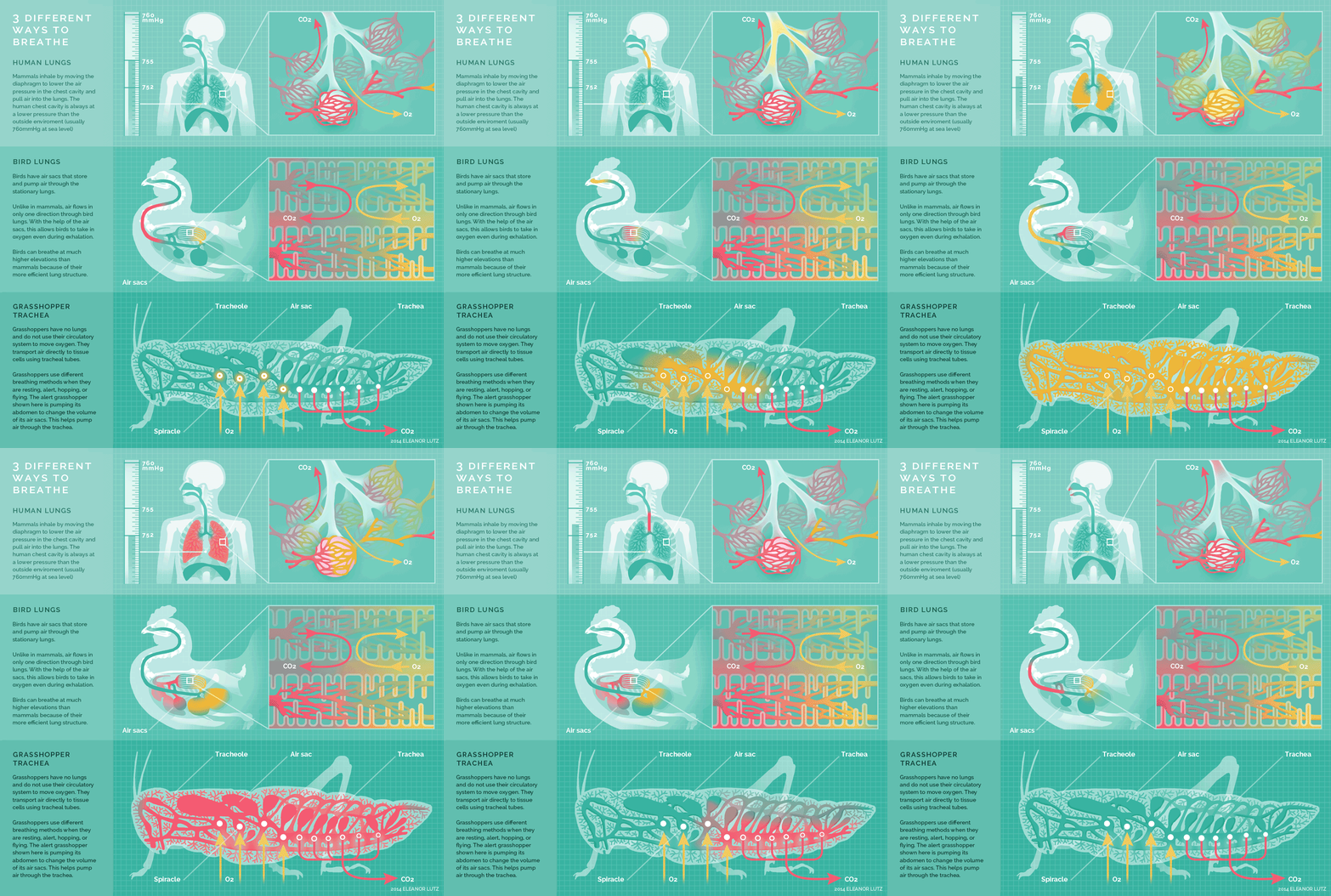
Human lungs are part of the body’s respiratory system. The primary function of the lungs is to process the gas exchange for respiration. The lungs take oxygen from the environment and transfer it to the bloodstream. To breathe properly, humans use structures outside of the lungs - the diaphragm, the intercostal muscles (located between the ribs), the abdominal muscles, and sometimes, neck muscles as well.
The diaphragm, a muscle that sits below the lungs, does the majority of the work involved. When the diaphragm contracts, it moves down and provides more space in the chest cavity and enhances the lungs' ability to expand. The pressure inside goes down when the chest cavity volume increases. Then the air is sucked in through the nose or mouth and moves down into the lungs.
Another point worth noting is that the human chest cavity is always at a lower pressure than the outside environment. This is usually 760 mmHg (millimeters of mercury) at sea level.
2. Bird Lungs:
The respiratory system of birds is quite different from that of mammals. Birds do have lungs, but they do not have a diaphragm. The air moves in and out of their bodies through pressure changes in the air sacs. While the air sacs are not directly related to gas exchange, they do help in directing airflow through the lungs in one direction. The muscles in their chest cause the sternum to be pushed outward. Because of this, negative pressure in the air sacs is created which leads the air to enter the respiratory system.
The lungs of birds do not expand or contract like the lungs of mammals. They have thin-walled, tubular structures called parabronchi that are located throughout the lungs between the secondary bronchi. While the air moves in one direction through the lungs, it also flows in one direction through the parabronchi. Basically, from one secondary bronchus into another.
The respiratory system of birds transfers more oxygen with each breath. It is the remarkable air sacs, though, which really make the respiratory system of birds unique. They enable regular, one-way flow during both inspiration and expiration.
3. Grasshopper Trachea:
You would be surprised to know that grasshoppers have no lungs. Like all insects, they breathe through a complex network of tubules called the tracheae. While the exchange of gases happens through the tracheal system, it is the spiracles where the air is taken in first. This system is comprised of ten spiracles that are located along the length of the grasshopper’s abdomen in eight pairs. They also have two more pairs in the thoracic region.
Oxygen disperses into their cells directly and then into the atmosphere. This completes the grasshopper’s respiration process. Their spiracles take in air with the control of their brains. Furthermore, they also have a few spiracles that perform the job of expiration of air as well. The tracheae inside humans do the role of cleaning the air. For grasshoppers, this system works as an independent operation and is not involved with the circulatory system.

20 Animals We’ve Just Discovered in the Past Decade
Of all the animals discovered during the 2010's, these 20 are the coolest, starting with a tiny chameleon and ending with a really creepy wasp
13 Incredible & Intricate Homes of Animal Architects
The amazing homes animals build for themselves are both mesmerizing and brilliant. Behold nature’s most amazing architects.
How To Take Control Of Your Wellbeing Through Breathing
Breathing seems obvious to most of us, but there is an art to it. Becoming conscious of your breathing could greatly benefit your mental and physical health.
9:09
Protective Measures: How Our Body Reacts to a Tattoo
In this video, we’ll explore the microscopic war raging beneath your skin, where millions of your cells make the ultimate sacrifice to lock that ink in place, turning a defense mechanism into lifelong art.
Eye-opening Infographic Reveals What Extends Our Lifespan
This infogprhic sheds light on what truly increases our lifespan and what does the exact opposite
A Simple Blood Test Could Detect Alzheimer Years Earlier
A few years ago, researchers have discovered a gene that could revolutionize how we diagnose Alzheimer's disease - and they found it by asking a simple question: Why do some people's brains succumb to the disease while others don't?
7 Air Pollution Solutions That Will Help Us Breathe Easy
Let's take a look at some global initiatives that have been launched to reduce air pollution levels.
11:15
These Paradoxes Continue to Mystify Scientists
Take a look at 7 scientific paradoxes that may never get solved.
Meta Unveils New Glasses that May Change Sports Forever
META has revealed a new line of AI-powered smart glasses: Oakley Meta HSTN
Remembering the Life and Wisdom of Stephen Hawking
Stephen Hawking possessed one of the greatest minds the world has ever seen, but was also impaired by a debilitating disease. Here are his life ant times.
10 Declassified U.S. Military Secrets That'll Astound You
Government military secrets can range from amusing to absurd to downright terrifying, but they are all extremely intriguing. Here are 10 such secrets.
TRIVIA: 25 Shocking Differences Between the Sexes
Did you know that there are some vast differences between the sexes? These 25 scientific facts will probably come as a big surprise to you, they did to me.
Study Says: With Age, Come Certain Cognitive Abilities
a study published in August 2021 in the journal *Nature Human Behavior reveals surprising findings that challenge this assumption and may be of great interest to all of us.
4:45
Woah! Learning to Play Music Has This Effect on Your Brain
Learning how to play an instrument can do wonders for our brain...here's how!
19:27
20 of the Most Infamous Tech Product Flops In History
Here's a look at some of the most infamous and biggest technology failures in recent history.
Science History: 17 Math Equations that Changed the World
In this article, we'll journey through 17 of these monumental formulas, demystifying the symbols to reveal the revolutionary ideas they contain and the immense impact they have had on the course of history.
34:33
Is China Number 1 in Global Technology?
In this video, we’ll take a closer look at the new developments hitting the market — and what they could mean for the future of transportation.
11:28
India Built a Monster Dam That Controls the Weather!
The Polavaram Dam doesn't just control floods - it moves water between regions and much more!
4:57
Mjøstårnet - The World’s First Wooden Skyscraper
Mjøstårnet is an 18 story tall skyscraper towering over the Norwegian countryside. What makes it so special is that it's made entirely out of wood...
6:15
K2-18b: The Exoplanet That Might Host Alien Life
Astronomers have detected signs of posisble life in the atmosphere of exoplanet K2-18b.
4:49
This Video Shows You a Different Way to Look at the World
You’ve heard of the fourth dimension but do you know what it is? This TED-Ed video helps uncover a bit of the mystery.
6 Harmful Toxins You Didn’t Know You Encounter Daily
These toxic chemicals can be found in everyday products and can be extremely dangerous to us.
5:22
Why Do You See Colors When You Rub Your Eyes?
Explore the science of afterimages, the visual illusions that linger in your vision following exposure to bright lights or images.
Alzheimer's: What Recent Breakthroughs Have Taught Us
Now, you can discover 4 new studies that show how to do this in ways you haven’t heard of.
33:02
The Entire Story of Earth in 30 Minutes!
The story of our planet, from birth to the adult, ancient planet we see before us today - all in just half an hour.
2:03:03
Full Documentary: From First to Last Dinosaur
With stunning visuals and cutting-edge science, we’ll bring their story to life—from their very first day to their last, a saga of survival, adaptation, and mystery.
42:14
Physicist Michio Kaku: The Universe in a Nutshell...
Physicist Michio Kaku explains the fundamental nature of our universe
11:02
Ever Wonder What Ancient Egyptian Sounded Like?
Researchers have used all the information we know to create what they think it may have sounded like.
20:04
Emotions Explained: The Science Behind How We Feel
Neuroscientist and psychologist Dr. Richard J. Davidson answers some fascinating questions about emotions you would never expect.
2:41
Trick-Mousing is Such Adorable Entertainment...
Mice are much cleverer than most people believe, and they easily respond to training, as long as you use positive reinforcement, or in other words - reward them frequently for their behavior with food.
18:21
Fascinating: How Do Cats TRULY See Humans?
Understanding a cat's world is the key to strengthening your bond. Let's decode your cat's mind!
22:35
Neuralink Update 2025: The Most Incredible Moments
Welcome to our 2025 Neuralink update, where we’ll take you through the most incredible and groundbreaking moments from the past year.
15 Beautiful Carl Sagan Quotes on the Stars and the Cosmos
A look at some profound quotes on the universe by famous astronomer and cosmologist Carl Sagan.
These 14 Forgotten Robots Promised So Much...
This collection showcases 14 cool vintage robots that were supposed to change everything.
5:14
Earth 2125: A Vision of the Future of Our Planet
Exploring what Earth could look like in 2125 reveals exciting potential.
4:20
Ever Wondered About How Our Minds Retain and Lose Memories?
Ever wondered why you can remember something from 20 years ago, but have difficulty remembering what you had for lunch the other day? Learn why here.
10:11
10 Smart Home Gadgets You Didn’t Know You Needed
If you’ve ever wanted a smarter, more efficient home, these 10 gadgets might be exactly what you need.
The First Valentine's Day Was Not That Long Ago...
Let us take you on a fun history lesson with these 10 first-ever things that started way back in history and remain to this day.
20:01
Future Tech: 19 Innovations About to Change Our World
These groundbreaking new technologies will change our world.
17:03
What is a Ballistic Missile and is Its Purpose?
Why is the ballistic missile so feared, and what exactly qualifies it as such - will all be explained in this informative video.
8:10
Taller Doesn't Mean Bigger - the True Size of Skyscrapers
If you were to compare skyscrapers by area rather than height, which skyscraper would end up on top?
These Materials are Strange Enough to Boggle Your Mind...
There are some materials in this world that totally defy scientific convention. From metals that melt in your hand, to a solid lighter than air, take a look.
50:02
Take a Trip Through the Universe and Witness its Beauty
Since its launch, the Hubble Telescope returned images of unprecedented beauty of a dynamic and changing universe. Take a look!
8 Important Inventions That Were a Complete Accident
It might be interesting for you to learn that some very important scientific innovations were born as a result of an accident.
5:06
The Only Manmade Object That Will Last Forever
This copper discus contains 116 images we launched into space for aliens to see
8 Fascinating Heartbeat Facts You Never Knew Before
These heartbeat facts will leave you astounded.
Has Modern Technology Changed Our Cognitive Abilities?
Modern digital technology is everywhere and it’s changing how we think, how we behave and even how we feel about things.
To enable your Ad-Free Subscription, please fill the fields below
Your subscription was successful, now you can enjoy an ad-free experience!! Note: To make sure you get no ads, please make sure to log in to your account. If you are logged in already, then refresh the page. The subscription can be cancelled at any time.