
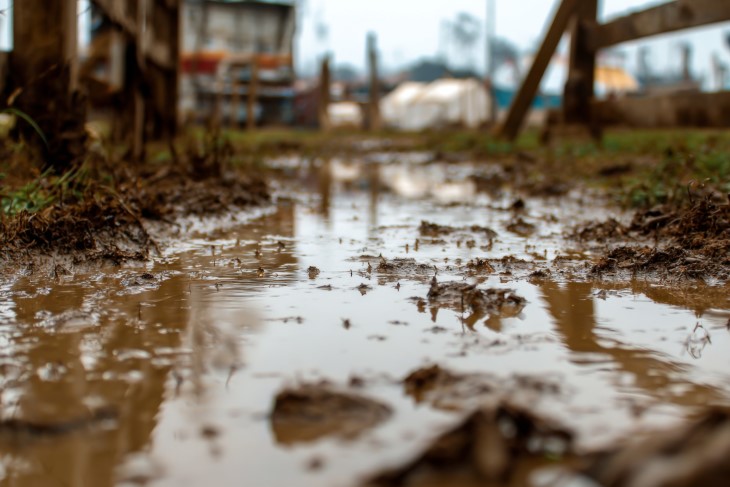
Winter rains can turn even the most beautiful yard into a muddy mess - and if you've ever tracked that mud into the house, you know exactly how frustrating it can be. The good news? With a few simple steps, you can get your outdoor space under control and even set it up for a stunning spring. Here's what the experts recommend.
1. Start With Better Drainage
Believe it or not, solving a muddy yard often starts on your roof. When gutters are clogged, water overflows and flows straight into your yard - making the soil waterlogged before the rain even stops. Clear your gutters regularly and make sure downspouts direct water away from walkways and garden beds. You can also dig a shallow trench called a swale along the natural slope of your yard to guide runoff safely away.
2. Raise Your Garden Beds
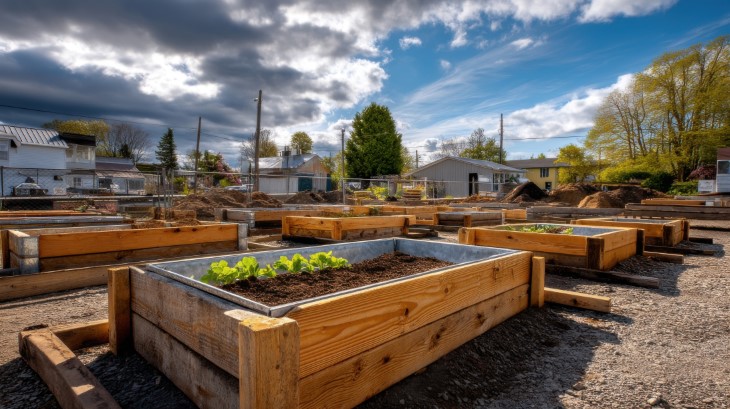
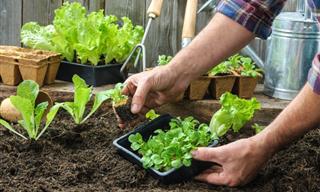
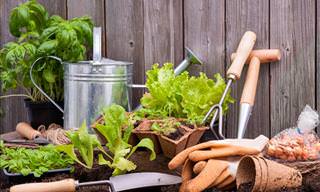
One of the simplest ways to take mud out of the equation entirely is to lift your planting areas off the ground. Raised garden beds sit above the natural soil level, which means their roots are never sitting in waterlogged earth - even during the wettest weeks of winter. Water drains downward naturally, keeping the growing medium loose, airy, and easy to work with year-round.
Beyond the drainage benefits, raised beds warm up faster in spring, are easier to weed, and give you full control over the quality of the soil inside them. They can be built from wood, stone, brick, or metal, and can be as simple or as polished as you like. Surrounding the beds with a layer of gravel, mulch, or stepping stones also reduces the muddy footprint around them, keeping the whole garden area cleaner and more accessible even after heavy rain.
3. Use Permeable Paving
Standard concrete and asphalt are essentially giant waterproof surfaces. When rain hits them, there's nowhere for the water to go except outward - flowing across your driveway, along your paths, and eventually pooling in your yard. Permeable paving flips this logic entirely by allowing water to pass through the surface itself and soak into the ground below.
There are several types to choose from depending on your needs and budget. Permeable pavers are interlocking blocks with small gaps between them that let water filter through. Gravel driveways and paths are another simple option. For a more polished look, there's also permeable concrete and porous asphalt, which are designed with an open structure that water can pass through. Any of these options significantly reduce runoff, help recharge groundwater, and keep the surrounding soil from becoming waterlogged.
The system works by burying a perforated pipe inside a gravel-filled trench. Water seeps through the soil, enters the pipe through its small holes, and is carried away to a safe discharge point such as a storm drain, a dry well, or a lower section of your property. The trench is then covered with soil and grass, leaving no visible trace. French drains work particularly well along the base of slopes, beside foundations, or in any low-lying area where water consistently collects. While installation requires some digging and planning, the long-term results are hard to beat.
4. Install a French Drain
For yards with serious, recurring drainage problems, a French drain is one of the most effective permanent solutions available. Unlike a swale or surface trench, a French drain works underground and is virtually invisible once installed - making it ideal for yards where appearance matters.
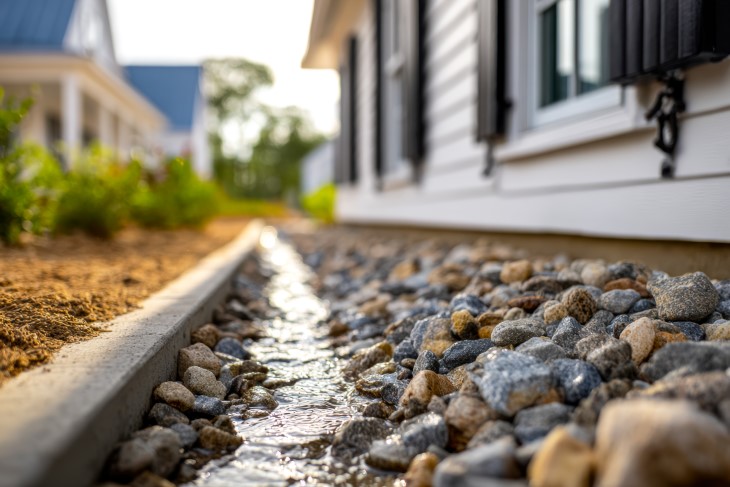
5. Create Clear Walkways
No matter how well-prepared your yard is, rainy days will still happen. That's why having defined pathways through high-traffic areas makes such a difference. Stepping stones, gravel paths, or even a simple mulch walkway can save you from slipping through the mud every time you step outside - and keep all that mess from following you back indoors.
6. Aerate Your Lawn
If your yard turns into a swamp every time it rains, compacted soil might be the real culprit. Over time, foot traffic, heavy equipment, and even just the weight of the rain itself presses soil particles tightly together, leaving almost no space for water to filter through. Instead of soaking in, rainwater sits on the surface - and mud follows.
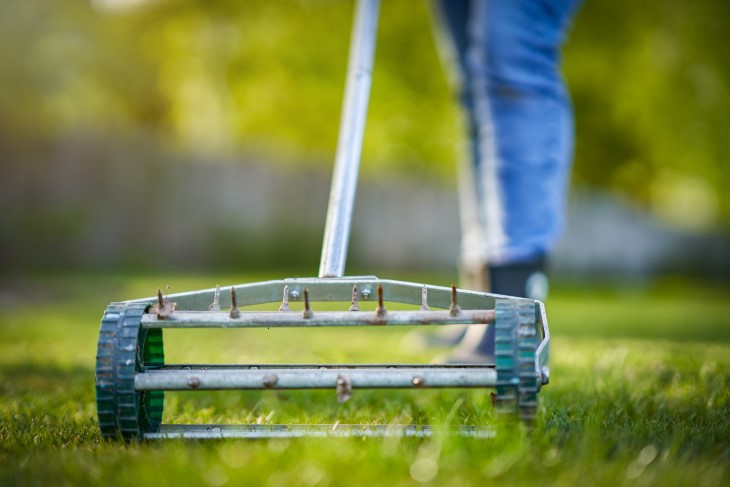
Lawn aeration solves this by creating thousands of small holes throughout your yard, giving water a direct path downward. You can rent a core aerator from most hardware stores, or hire a landscaping service to do it for you. The best times to aerate are early spring or fall, when the soil is moist but not soaked. After aerating, consider spreading a thin layer of compost over the lawn - it will work its way into the holes and further improve the soil's ability to absorb and retain moisture in a healthy way.
7. Use Mulch and Gravel in the Right Places
If you need a quicker fix while you wait for planting season, absorbent materials are your best friend. A layer of mulch or wood chips over bare garden beds does a great job of soaking up moisture and protecting the soil underneath. For high-traffic spots, gravel or crushed stone is even better - it provides traction, keeps mud from forming, and holds up well through heavy rain.
8. Add Sand or Grit to Clay-Heavy Soil
Not all mud problems come from too much rain - sometimes the issue is the soil itself. Clay soil, which is common in many parts of the world, is made up of extremely fine particles that pack together tightly and hold water like a sponge. Instead of draining, water just sits in clay soil for days, turning your yard into a sticky, slippery mess after every storm.
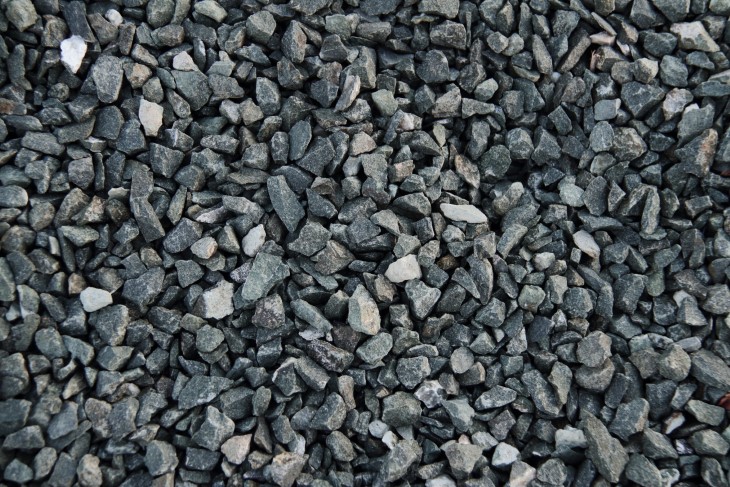
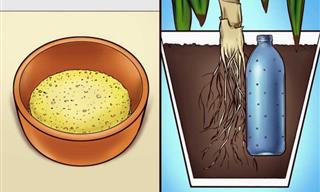
The fix is to gradually improve the soil's texture by working coarse builder's sand or horticultural grit into it. This opens up the structure of the soil, creating more space between particles and allowing water to drain much more freely. It's important to use coarse sand rather than fine sand - fine sand can actually make clay worse by filling in the gaps even more tightly. Mixing in organic matter like compost alongside the sand will further improve drainage while also making the soil more fertile for planting.
9. Build a Rain Garden
A rain garden sounds fancy, but it's actually quite simple - it's just a shallow, bowl-shaped depression in your yard where runoff water collects and slowly soaks back into the ground. Plant it with native flowers and greenery, and you've got a feature that manages moisture, supports local wildlife, and genuinely looks beautiful. It's one of the most rewarding long-term solutions for a waterlogged yard.
10. Install a Dry Creek Bed
A dry creek bed is one of those rare landscaping solutions that's as attractive as it is practical. Essentially, it's a channel designed to mimic the look of a natural stream - lined with smooth river rocks, bordered with native plants, and shaped to guide water naturally from one area of your yard to another. During heavy rain, it fills with flowing water and does its job of redirecting runoff. On dry days, it simply looks like a beautiful garden feature.
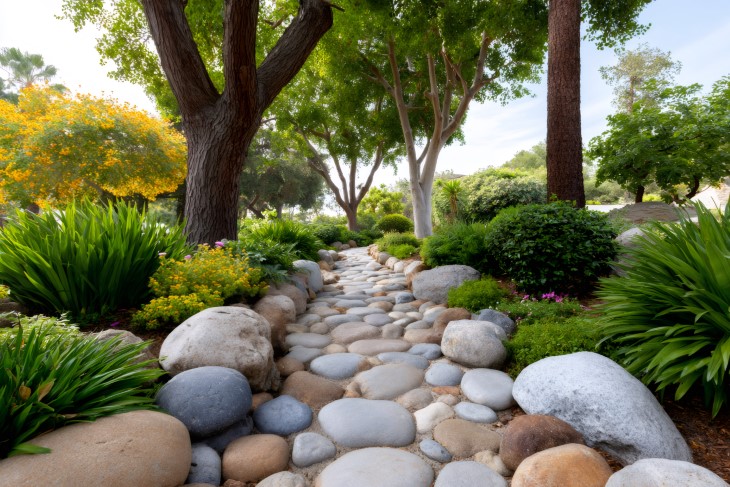
Dry creek beds work especially well in yards with a natural slope, where water tends to rush downhill and erode the soil. By giving that water a defined path, you prevent it from spreading across the lawn and turning everything to mud. The rocks at the bottom slow the flow, reducing erosion, while the plants along the edges absorb any excess moisture. With a little planning, a dry creek bed can become one of the most eye-catching features in your entire yard.
11. Cover Bare Soil With Plants
Exposed soil is basically an open invitation for mud. The more ground you can cover with low-growing plants, the less mess you'll deal with. Native ferns, sedges, and ground cover plants like primrose, Japanese sweet flag, or wintercreeper are all excellent choices - they absorb moisture beautifully and keep your yard looking lush even through the gray winter months.
12. Plant Deep-Rooted Trees Strategically
Trees are nature's drainage system. A single mature tree can absorb tens of thousands of liters of water per year through its roots, pulling moisture up from the soil and releasing it into the atmosphere through its leaves. If you have a chronically wet corner of your yard where mud always seems to gather, planting the right tree nearby can gradually transform that area over a few growing seasons.
Some trees are particularly well-suited for this job - willows, birches, alders, and certain varieties of poplar all thrive in wet conditions and are especially effective at pulling moisture out of saturated soil. It's worth thinking carefully about placement before planting, since deep-rooted trees should be kept a safe distance from foundations, pipes, and paved surfaces. But in the right spot, a well-chosen tree is one of the most powerful and long-lasting mud prevention tools you have available.
13. Use Geotextile Landscape Fabric
If you've ever laid a gravel path only to find that after a season or two the gravel has sunk into the mud beneath it - this is the solution. Geotextile landscape fabric is a durable, permeable material that lays flat on the ground beneath your mulch, gravel, or stepping stones. It acts as a barrier between the decorative surface layer and the soil below, preventing the two from mixing together while still allowing water to drain through freely.
This is especially valuable in high-traffic areas where the constant pressure of footsteps would otherwise push gravel or wood chips down into the wet soil. Landscape fabric keeps your pathways stable, clean, and looking neat season after season. It also suppresses weed growth as a bonus, which makes it a popular choice for garden beds and borders. When installing it, always overlap the edges by at least 15–20 centimeters and secure it with landscape staples to prevent it from shifting over time.
A little preparation now means a cleaner home, a healthier garden, and a yard that's ready to bloom the moment spring arrives. And honestly - your floors will thank you too.