
The most effective gene-editing tool available today is CRISPR-Cas9. Just this year, scientists have successfully used it for a wide variety of experiments, from modifying vegetables to encoding a Gif in bacterial DNA. However, most recently, it was used to remove a genetic disease from a human embryo.
Although extremely powerful, CRISPR-Cas9 does have its limitations; it’d only able to target DNA. Therefore, to extend its capabilities to RNA editing, scientists from the University of California San Diego School of Medicine developed a modification of CRISPR, and they’ve called it RNA-targeting Cas9 (RCas9).
In a study published in Cell, the UCDS team tested their new tool by correcting the kinds of molecular errors that cause people to develop microsatellite repeat expansion diseases, such as hereditary amyotrophic lateral sclerosis (ALS) and Huntington’s disease.
During standard CRISPR-Cas9 gene editing, a “guide” RMA is instructed to deliver a Cas9 enzyme to a specific DNA molecule. However, the scientists from UCSD instructed it to target an RNA molecule instead.

Tests that were conducted in the laboratory showed that RCas9 removed 95% of problem-causing RNA for myotonic dystrophy types 1 and 2, Huntington’s disease, and one type of ALS. This technique also reversed 93% of the dysfunctional RNA targets in the muscle cells of patient with myotonic dystrophy type 1, resulting in healthier cells.
Senior author Gene Yeo, a cellular and molecular medicine professor at UCSD School of Medicine, explained that “this is exciting because we’re not only targeting the root cause of diseases for which there are no current therapies to delay progression, but we’ve re-engineered the CRISPR-Cas9 system in a way that’s feasible to deliver it to specific tissues via a viral vector.
Across the world, an estimated 450,000 people are living with ALS. Roughly 30,000 of these are American, where 5,600 people are diagnosed with the disease each year. However, the exact number of Huntington’s disease cases is as easy to pin down. One estimate suggests that around 30,000 Americans display symptoms of it, while more than 200,000 are at risk.
Regardless of the exact figures, these two neurological diseases clearly affect a large number of people. This prevalence and the absence of a known cure makes the UCSD team’s research all the more relevant. Even more exciting is the fact that some kinds of RNA mutations that this study is targeting are known to cause over 20 other genetic diseases.
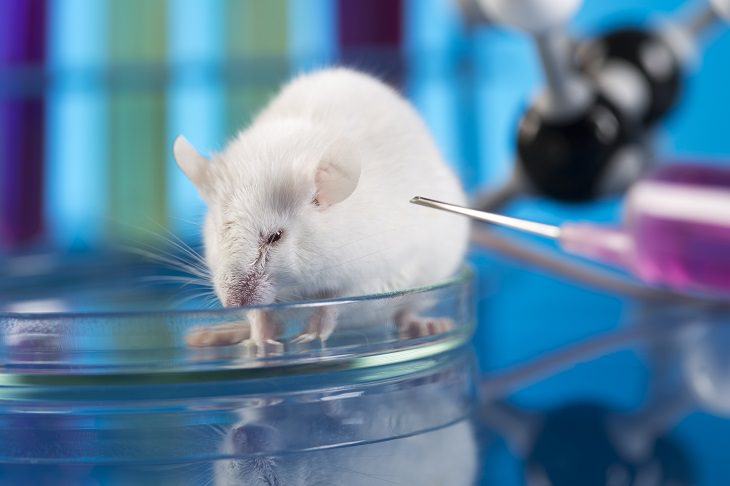
However, the researchers are well aware that what they have accomplished so far is just the first step. While RCas9 works in labs, they still have to figure out how it will fare when tested on humans.
Yeo explains that “the main thing we don’t know yet is whether or not the viral vectors that deliver
RCas9 to cells would elicit an immune response. Before this could be tested in humans, we would need to test it in animal models, determine potential toxicities, and evaluate long-term exposure.”
Ultimately, while RCas9 couldn’t deliver a cure exactly, it could potentially extend a patient’s life. For diseases such as ALS and Huntington’s, that’s a very good place to start.
Source: futurism
Images: depositphotos

39:01
What's so Exciting About James Webb Space Telescope?
Why the new James Webb space telescope is much, much better than Hubble.
6:17
Ever Wondered Why the Sun Makes You Sneeze?
Ever wondered why looking at the sun or at bright lights makes you sneeze? Turns out, you have a condition.
11:53
These Cases Were Cold... Until Science Cracked Them
Technology and science aren't always about the future. Take a look at these cold cases that were solved only thanks to the advances of science.
Scientists Make Huge Breakthrough in Cancer Treatment
Scientists might have just found a revolutionary way to fight cancer. Read about it here.
18:49
Who Knew a Snowflake Could Be So Fascinating?!
You probably never gave a second thought to snowflakes. It turns out that these tiny crystals are full of mysteries...
Viagra May Hold the Key to Preventing Colorectal Cancer...
A new study shows that Viagra may be able to help prevent the onset of colorectal cancer. Find out all about it here.
11:15
These Paradoxes Continue to Mystify Scientists
Take a look at 7 scientific paradoxes that may never get solved.
Six Inventions Da-Vinci Made Ahead of Their Time
He created and envisioned many inventions that were sometimes even centuries ahead of their time. Was there ever a genius as great as Da-Vinci?
10:50
Remarkable! This Is How the Universe Developed...
Watch this time lapse of the entire universe - starting with the big bang and culminating in the appearance of homo sapiens.
Science History: 17 Math Equations that Changed the World
In this article, we'll journey through 17 of these monumental formulas, demystifying the symbols to reveal the revolutionary ideas they contain and the immense impact they have had on the course of history.
5:50
Why Do We Sometimes Hallucinate? Find Out Here!
In this informative TED-Ed video, Elizabeth Cox details the science of hallucinations.
3:02:59
Like Science Mysteries? Enjoy This Giant Compilation!
In this video, we unravel the greatest unsolved mysteries of physics.
Hubble Telescope: 35 Years of Incredible Photos
Exploring 35 years of reality-changing, universe-enhancing photos that opened the sights of outer space to us all.
Enjoy This Fascinating Collection of NASA's Best Photos

Here are 15 of NASA's most amazing recent pictures, along with brief explanations of exactly what is going on in each one.

Chocolate Exposed! Here's What It Does to Your Brain!
Just what is it that makes chocolate so irresistible to so many people around the world? Find all of the answers in the article.
11:05
Science: Can AI Preserve Our Most Precious Memories?
Technologist Pau Aleikum Garcia talks about synthetic memories.
5:56
What on Earth Is a Black Hole? This Video Explains All...
What on Earth are black holes, how do they affect us, and should we be at all worried about their existence? Find out here.
0:55
China's G1 Robot is Showing Some Incredible Moves
The G1 is a new robot developed in China and in this video shows some amazing moves.
Has Modern Technology Changed Our Cognitive Abilities?
Modern digital technology is everywhere and it’s changing how we think, how we behave and even how we feel about things.
Science FIRST: A Fully Created Brain Inside a Computer?
Could a Computer Ever "Run" a Human Brain? Scientists Just Took a Big Step
7:56
These 6 Chemical Reactions Changed the Course of History
Although we rarely pay much attention to the chemistry that constantly surrounds us, these 6 reactions changed history.
Superwood: A New Material That Could Replace Steel
After decades of relying on steel—a material that produces nearly two tons of CO2 for every ton manufactured—builders may soon have access to something far more sustainable and surprisingly stronger: Superwood.
22:35
Neuralink Update 2025: The Most Incredible Moments
Welcome to our 2025 Neuralink update, where we’ll take you through the most incredible and groundbreaking moments from the past year.
4:13
What Does Medicine ACTUALLY Do In the Body? Fascinating.
What really happens in our bodies when we take medicine, have you ever wondered? This video will answer your question.
The 10 Most Elaborate Scientific Hoaxes In History!
Some hoaxes throughout history have been so believable, they managed to fool the entire world. Here are 10 of the most elaborate scientific hoaxes in history.
10:48
Cutting Edge: Translating Thought to Speech is Here!
As a pioneer in Neuralink’s VOICE clinical trial, Kenneth is testing a breakthrough brain-computer interface designed to translate thoughts directly into speech.
A Quantum Leap? Revolutionary Technique Discovered
Scientists at Singapore University have developed a groundbreaking manufacturing method powered by artificial intelligence that may revolutionize how we understand and create quantum materials at the atomic level.
8:46
Science: What is Reality? Dive in and Find Out!
What if everything you see, feel, and experience isn’t real? The simulation argument suggests that our reality might be nothing more than an advanced computer program.
6:15
K2-18b: The Exoplanet That Might Host Alien Life
Astronomers have detected signs of posisble life in the atmosphere of exoplanet K2-18b.
5:39
Why Are Your Ears Ringing? The Causes Explained
Nearly 15% of the human population worldwide are plagued by this strange sensation, but most people don't know the causes behind ringing in the ears...
Meta Unveils New Glasses that May Change Sports Forever
META has revealed a new line of AI-powered smart glasses: Oakley Meta HSTN
5:47
This Genius Child is a Better Calculator than a Computer
This ‘human calculator’ could likely outpace you entering the numbers into a calculator.
8:11
Fascinating: What is the Deepest Hole Humanity Has Dug?
This video explains how low humanity has dug down so far.
Uncover the Secrets of the Universe in These Documentaries
This list of riveting space documentaries will help you unlock the mysteries of the universe and beyond.
8 Biggest Mysteries Still Surrounding the Human Body
Although modern science has revealed much about the human body, there are some things that still remain unknown. Here are the 8 biggest mysteries about it.
9:13
Want to Travel Quickly Through Space? Try Using a Wormhole
If you want to know what a wormhole is and how it is supposed to work, then you've come to the right place!
4:51
Watch These Chinese Robots Amaze the World
In this video, you're going to see just how far these robots can go, as they've been programmed with some truly amazing dance moves,
6:02
How Dogs Actually Know What We Might Be Thinking
Watch how dogs might actually understand the language of humans in this informative video.
These Underwater Craft Are Changing Marine Science
Here's a look at the most remarkable machines currently expanding our understanding of the underwater world.
10:11
10 Smart Home Gadgets You Didn’t Know You Needed
If you’ve ever wanted a smarter, more efficient home, these 10 gadgets might be exactly what you need.
21:24
James Webb Telescope: Redefining Our View of Space
Here's a brief look at all the amazing discoveries made by the James Webb Space Telescope so far.
10:31
Science Predicts These 10 Technologies Will Rule 2025
These upcoming tech innovations will reshape our world.
34:33
Is China Number 1 in Global Technology?
In this video, we’ll take a closer look at the new developments hitting the market — and what they could mean for the future of transportation.
18:14
Are These Vintage Kitchen Gadgets Any Good?
Will any of the vintage kitchen gadgets stand the test of time or outperform their contemporary alternatives?
7 Little-Known Body Parts We Never Knew About
Here's a look at some of the weird and little-known body parts that you didn’t know you had.
58:37
Science: Here's Everything We Know About Pluto
Join us as we unravel the mysteries of far off Pluto, 3.7 billion miles from our Sun.
17 Incredible Eye Facts You Have To See To Believe
They say the eyes are the window to the soul, and they also happen to be our windows to the world. Here are 17 insanely fascinating facts about eyes.
To enable your Ad-Free Subscription, please fill the fields below
Your subscription was successful, now you can enjoy an ad-free experience!! Note: To make sure you get no ads, please make sure to log in to your account. If you are logged in already, then refresh the page. The subscription can be cancelled at any time.