
When it comes to the way they experience emotions, there appears to be a divide between men and women. Men are stereotypically seen as rational, level-headed thinkers, while women are often viewed as being more emotional. But are these assumptions entirely unfounded? Perhaps not completely.
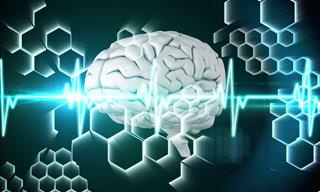
A recent study, conducted by researchers at the University of Montreal and the Institut Universitaire en Santé Mentale de Montréal, has found that certain differences in brain functioning affect the way in which men and women respond to negative imagery.
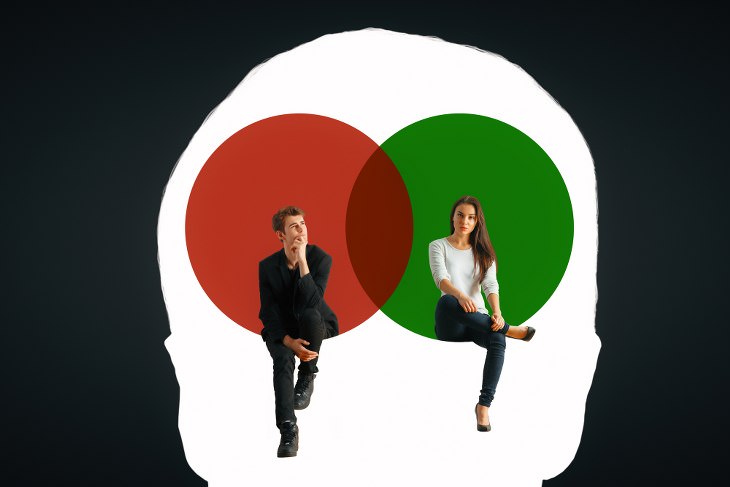
The researchers drew their inspiration from the differences they observed in mental illness between the sexes. “Not everyone’s equal when it comes to mental illness,” said Adrianna Mendrek, one of the researchers. "Greater emotional reactivity in women may explain many things, such as their being twice as likely to suffer from depression and anxiety disorders to men.”
Earlier studies have also given credence to the theory that women and men react to emotional stimuli in different ways. Mendrek and her co-researchers had previously found that the limbic system (the brain's emotion and memory center) reacted differently for men and women, when participants were shown negative images. They decided to go a step further for this study, as they now chose to research whether hormonal levels affect this psychological processing, too.

There were 46 participants who took part in the study (25 female and 21 male), and the researchers ruled out potential contributing factors such as age, education, ethnicity, marital status, and socioeconomic status. Every volunteer was given a blood test at the start to assess their levels of testosterone and estrogen in order to see in what way they affected the results. They were then exposed to images that evoked positive, negative, or neutral emotions, while they underwent fMRI brain scans. Participants also had to review their emotional responses when looking at each image.
Overall, men seemed far less reactive to the emotional images than their female counterparts. Higher estrogen levels seemed to indicate increased sensitivity to the images, while higher testosterone levels appeared to make the subjects more desensitized.
When assessing the brain's reaction to the images, they discovered that the dorsomedial prefrontal cortex (dmPFC) and amygdala on the brain's right hemisphere were activated for both men and women. However, the connection between these two components was discovered to be more powerful in men, leading to the additional interaction between these two parts, and thus further decreased sensitivity to the stimuli.

The researchers explained that the reactions of the dmPFC and amygdala can tell us loads about how people process their emotions. The dmPFC is the part of the brain that helps process social interactions and mediates reasoning, emotions, and perception. The amygdala, on the other hand, is the part that is used to detect threats, and is often triggered when somebody experiences sadness or fear.
“A stronger connection between these areas in men suggests they have a more analytical than emotional approach when dealing with negative emotions,” said Stéphane Potvin, associate professor at the University of Montreal’s Department of Psychiatry. “It is possible that women tend to focus more on the feelings generated by these stimuli, when men remain somewhat ‘passive’ toward negative emotions, trying to analyze the stimuli and their impact.”
Mendrek's team believes that their study shows just how the male and female brains seem to function differently at a psychological level. “There are both biological and cultural factors that modulate our sensitivity to negative situations in terms of emotions,” Mendrek said. She concluded that the next step forward is to research exactly how hormones affect people's reactions to various types of emotions, such as sadness, fear, or anger.
Source
Images

Can Probiotics Improve Mental Health? Research Says YES
Studies repeatedly show that probiotics can be a potentially effective treatment for several mental health issues. This is what is currently known on the topic.
WARNING TO MEN: Here's Another Reason to Cut out Red Meat
It's becoming an increasingly well-known fact that high red meat consumption is bad for our health, and this new study only adds to that knowledge.
New Research Shows Eating Sweets Won't Make You Crave More
A groundbreaking new study challenges conventional wisdom, suggesting our preference for sweet tastes may be more stable than we think.

Evolution Isn’t Over: New Anatomical Feature In Humans
A new study reveals evolution is far from over. In fact, humans are developing a new anatomical feature: a third artery in the arms
6:14
What (Non-Psychedelic) Mushrooms Can Do for Your Brain
Lion's mane mushrooms are memory-enhancing brain food! Learn the science behind them here.
Can We PREVENT Type 1 Diabetes?
The study's findings point toward developing a simple blood test that could detect the immune failure leading to type 1 diabetes before insulin-producing cells are permanently lost.
9:09
Protective Measures: How Our Body Reacts to a Tattoo
In this video, we’ll explore the microscopic war raging beneath your skin, where millions of your cells make the ultimate sacrifice to lock that ink in place, turning a defense mechanism into lifelong art.
14 Retro Inventions That Stunned Crowds Back in the Day
These inventions were the talk of the town back in the day.
Science in 2025: 8 Developments That Could Change it All
Here are some of the most exciting trends in science and healthcare to keep an eye on.
What is the Troxler Effect and How Does it Affect You?
Learn about Troxler's effect and the optical illusions it creates in life.
19:27
20 of the Most Infamous Tech Product Flops In History
Here's a look at some of the most infamous and biggest technology failures in recent history.
Uncover the Secrets of the Universe in These Documentaries
This list of riveting space documentaries will help you unlock the mysteries of the universe and beyond.
4:22
eSIM vs Traditional SIM: What’s the Big Difference?
Are eSIMs and iSIMs the future of connectivity?
5:16
Fascinating: How Fast Does Our Brain Operate?
Ever wonder at what speeds our thoughts move?
1:08
Boston Dynamics New Robot Can Move Almost Like a Human
Watch the latest in robotics in this video.
11:15
These Paradoxes Continue to Mystify Scientists
Take a look at 7 scientific paradoxes that may never get solved.
10:31
Science Predicts These 10 Technologies Will Rule 2025
These upcoming tech innovations will reshape our world.
10:46
Neat Life Hacks To Help You Remember Things Better
A lot of us tend to forget the simplest things at times. This video provides some neat tips to help boost your memory.
13 Astonishing Things You Never Thought You'd See
Here are 13 photos of rare phenomena you never thought you'd see!
4:11
This Video Will Show You Where We Are in the Universe!
Where is our galaxy in the known universe? This video will fly with you to ever-larger destinations, showing you our little planet's cosmic address from a very large viewpoint.
12 Earliest Versions of Tech Inventions We Use Every Day
Witness the evolution of 11 popular devices we use all the time by looking at how they all started...
11:28
India Built a Monster Dam That Controls the Weather!
The Polavaram Dam doesn't just control floods - it moves water between regions and much more!
11:02
Ever Wonder What Ancient Egyptian Sounded Like?
Researchers have used all the information we know to create what they think it may have sounded like.
Are You Ready to Learn About the Expanse of the Universe?
If you have an interest in the unknown, then look no further than these 15 unbelievably facts discovered about space
20:04
Emotions Explained: The Science Behind How We Feel
Neuroscientist and psychologist Dr. Richard J. Davidson answers some fascinating questions about emotions you would never expect.
2:41
Trick-Mousing is Such Adorable Entertainment...
Mice are much cleverer than most people believe, and they easily respond to training, as long as you use positive reinforcement, or in other words - reward them frequently for their behavior with food.
The 12 Game-Changing Inventions From 2024 You Missed
2024 was a ground-breaking year in terms of innovation. Here's a look at some of the key breakthroughs from the year.
4:57
Fascinating: How Does Our Digestive System Work?
This video explains how the human digestive system does its daily.
10:59
Fascinating Science: How Sand is Turned Into Glass
Have you ever looked through a window and wondered how it was made from simple beach sand? This video shows you that incredible process.
Science Lesson: 10 Fiery Facts About the Sun You Must Know
Learn some fascinating and little-known facts about the Sun in this article.
3:55
50 Years Later, We're Debunking the Moon Landing "Hoax"
How do we prove to people the moon landing was real? By answering their doubtful questions in this video.
I Bet You Didn't Have a Clue About These Human Body Facts!
The human body is the most complex machine known to mankind, but I bet you don't know these 10 amazing facts about it...
14 Times Nature Inspired Groundbreaking Technology
Let’s explore 14 remarkable examples of how nature has shaped modern technology.
These Underwater Craft Are Changing Marine Science
Here's a look at the most remarkable machines currently expanding our understanding of the underwater world.
5:22
Why Do You See Colors When You Rub Your Eyes?
Explore the science of afterimages, the visual illusions that linger in your vision following exposure to bright lights or images.
8:46
Science: What is Reality? Dive in and Find Out!
What if everything you see, feel, and experience isn’t real? The simulation argument suggests that our reality might be nothing more than an advanced computer program.
Hubble Telescope: 35 Years of Incredible Photos
Exploring 35 years of reality-changing, universe-enhancing photos that opened the sights of outer space to us all.
Blood Test Breakthrough Transforms Leukemia Diagnosis
This research demonstrates that rare circulating stem cells in blood carry the same diagnostic information as bone marrow samples, enabling doctors to identify disease progression months before clinical symptoms appear.
Do You Have One Of These RARE Genetic Traits?
How unique are you? You might have several rare genetic traits that make you unlike most of the world's population!
Alzheimer's: What Recent Breakthroughs Have Taught Us
Now, you can discover 4 new studies that show how to do this in ways you haven’t heard of.
Absolute Zero: The AI that Doesn't Need People to Develop
Imagine an AI that doesn’t need humans to teach it how to code—it creates its own coding challenges, solves them, and gets smarter all on its own. This isn’t science fiction; it’s a groundbreaking development called Absolute Zero
7:56
These 6 Chemical Reactions Changed the Course of History
Although we rarely pay much attention to the chemistry that constantly surrounds us, these 6 reactions changed history.
Learn Chemistry Easily with This Interactive Periodic Table
This interactive table of elements has video lectures about every element, including experiments
A Quantum Leap? Revolutionary Technique Discovered
Scientists at Singapore University have developed a groundbreaking manufacturing method powered by artificial intelligence that may revolutionize how we understand and create quantum materials at the atomic level.
13 Forgotten Phone Designs That Were Too Odd to Survive
From pen-shaped dialers to phones that clipped onto your clothes, here’s a look at the most unusual phones ever made.
6:15
K2-18b: The Exoplanet That Might Host Alien Life
Astronomers have detected signs of posisble life in the atmosphere of exoplanet K2-18b.
12:34
The World You See Doesn't Really Exist...
his video reveals how your brain constructs reality instead of simply perceiving it.
To enable your Ad-Free Subscription, please fill the fields below
Your subscription was successful, now you can enjoy an ad-free experience!! Note: To make sure you get no ads, please make sure to log in to your account. If you are logged in already, then refresh the page. The subscription can be cancelled at any time.