
In this age of environmental pollution using more renewable sources of energy is steadily increasing and all forms of power are being studied and harnessed. Solar energy has taken over numerous states in America as well as many European countries, where residents are also switching to bicycles and forms of transportation other than gas-guzzling cars. Elon Musk made history with his electric car and made them more popular than ever. But perhaps one of the most powerful sources of fuel is nuclear energy.
Nuclear power can produce an immense amount of electricity if harnessed and channeled properly. Though there are risks to the use of this type of energy, as anything associated with nuclear reactions is likely to have, civilian nuclear power supplies nearly 10% of the electricity generated globally. That would account for a population twice that of the United States. While there are numerous pros and cons to the use of nuclear power and setting up of nuclear energy plants near residential areas, it is still a major contributor to our worldwide power supply. Here are some interesting facts that will help keep you informed on all things nuclear!
Building a single new reactor for a nuclear power plant costs over $6 billion.
As of December 2019, there are 96 operational nuclear reactors in 58 commercial power plants, spread across 29 states.

The first controlled nuclear chain reaction was initiated by Dr. Enrico Fermi on 2nd December 1942, underneath the football stadium bleachers of the University of Chicago.
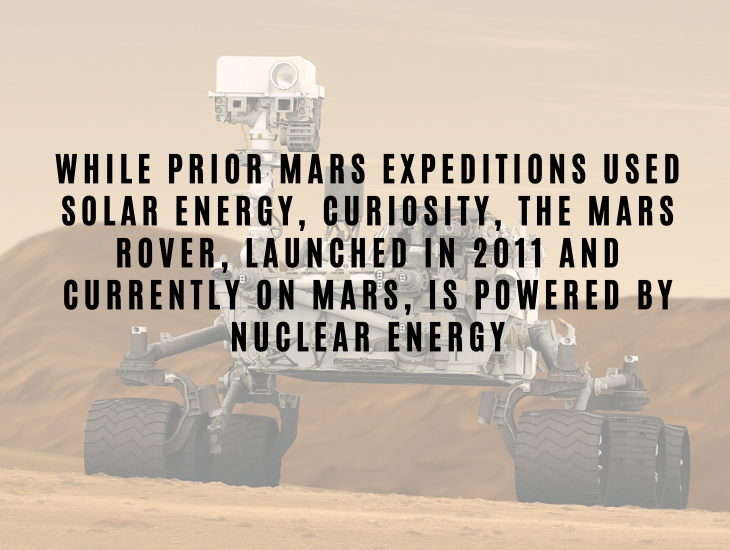
While prior Mars expeditions used solar energy, Curiosity, the Mars rover, launched in 2011 and currently on Mars, is powered by nuclear energy.
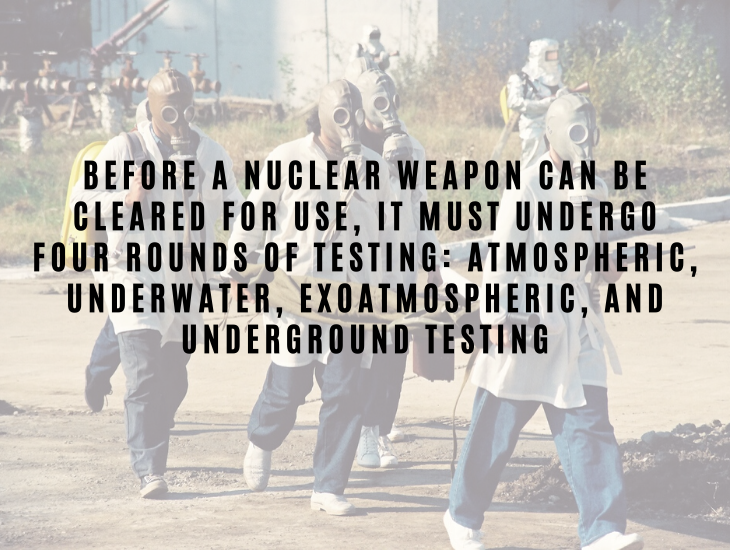
Before a nuclear weapon can be cleared for use, it must undergo four rounds of testing: atmospheric, underwater, exoatmospheric, and underground testing.
For the past 3 decades, there have been over 55 nuclear tests a year, averaging at about 1 test a week.
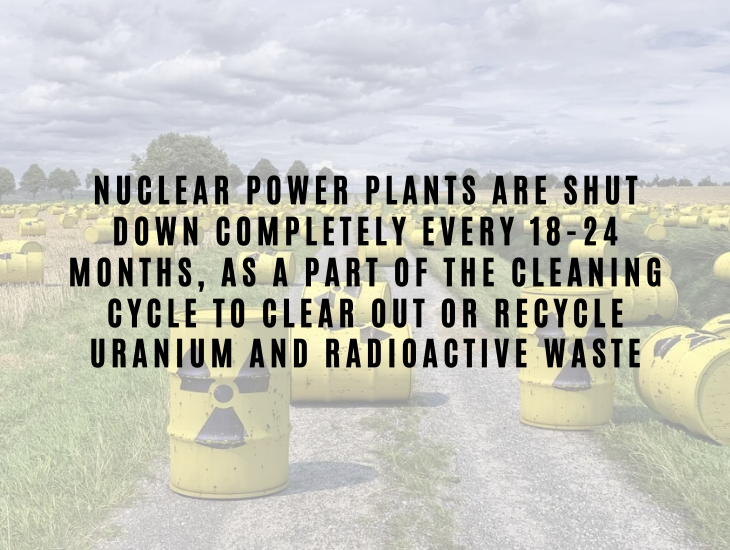
Nuclear power plants are shut down completely every 18-24 months, as a part of the cleaning cycle to clear out or recycle uranium and radioactive waste.
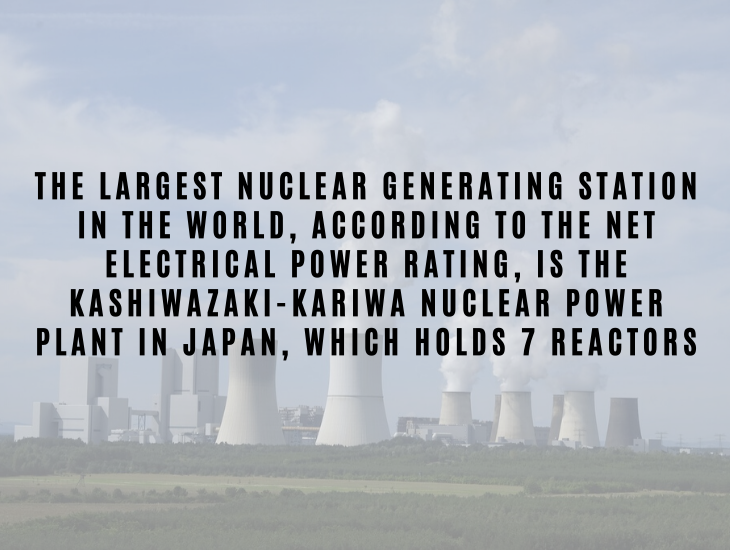
The largest nuclear generating station in the world, according to the net electrical power rating, is the Kashiwazaki-Kariwa Nuclear Power Plant in Japan, which holds 7 reactors.
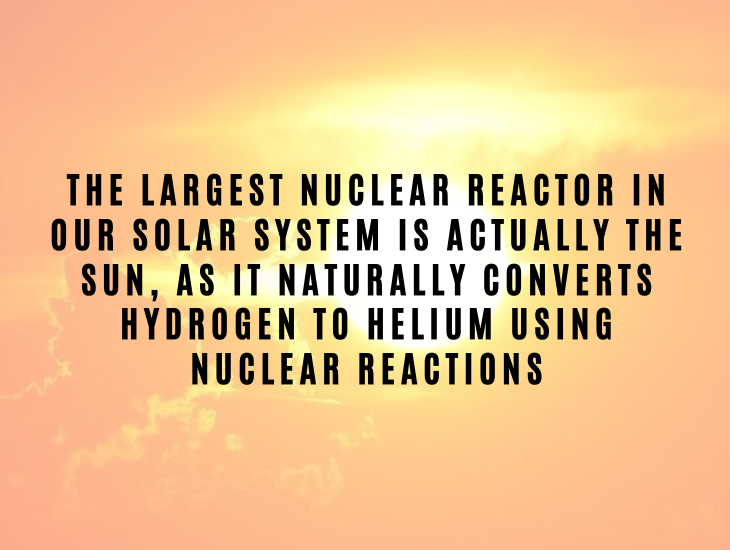
The largest nuclear reactor in the solar system is actually the sun, as it naturally converts hydrogen to helium using nuclear reactions.
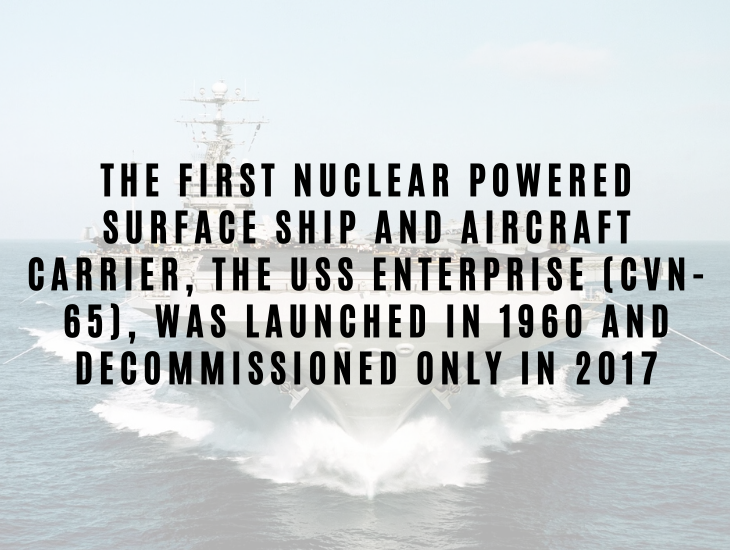
The first nuclear powered surface ship and aircraft carrier, the USS Enterprise (CVN-65), was launched in 1960 and decommissioned only in 2017.
Project Prometheus is the name given to NASA’s initiative on nuclear powered long-distance space exploration.
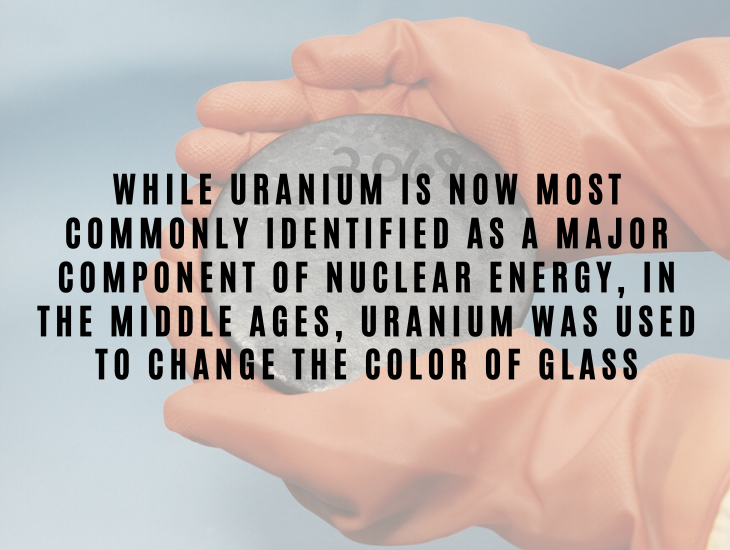
While uranium is now most commonly identified as a major component of nuclear energy, in the middle ages, uranium was used to change the color of glass.
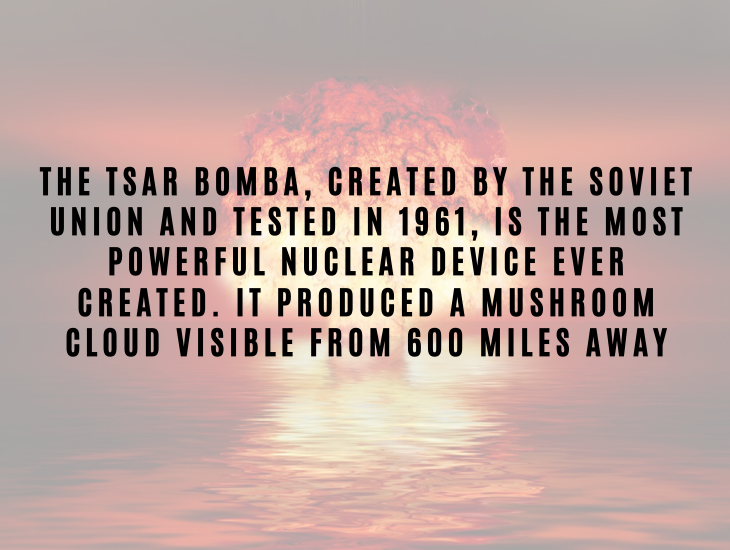
The Tsar Bomba, created by the Soviet Union and tested in 1961, is the most powerful nuclear device ever created. It produced a mushroom cloud visible from 600 miles away.
Nuclear power plants need at least 400 gallons of water per megawatt hour for cooling and steam production, averaging to about 300 billion gallons a year.
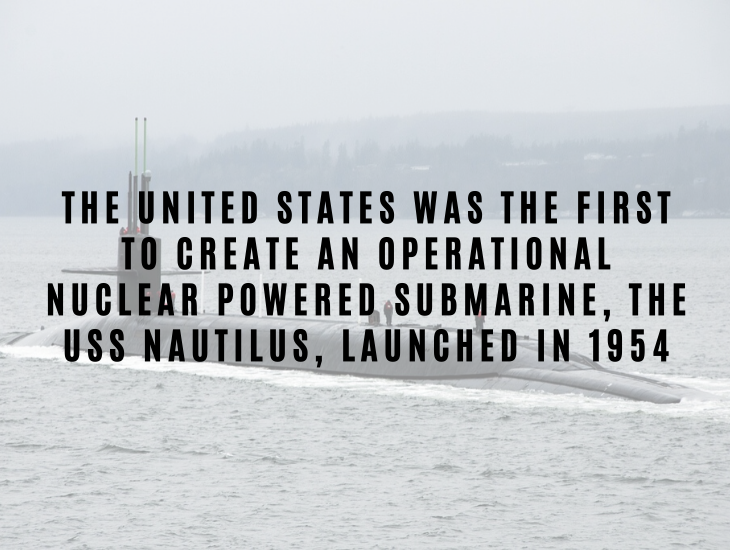
The United States was the first to create an operational nuclear powered submarine, the USS Nautilus, launched in 1954.
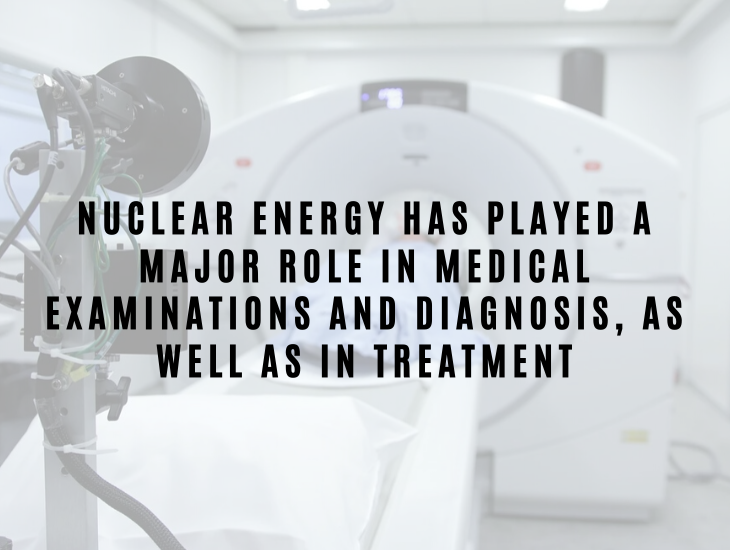
Nuclear energy has played a major role in medical examination and diagnosis, as well as in treatment. Examples include the PET Scan and cancer radiotherapy.
Share these articles with family and friends!

14 Fascinating Facts Thatโll Leave You Surprised
Time to enjoy some random, surprising facts about the world!
5:05
Discover the Science Behind Natureโs Rarest Colors
Ever wonder what the most elusive color in nature is? Watch this video to find out.
Whoa! Who Would've Guessed the Human Body Was So Bizarre?
These 10 facts give you just a little taste of all the strange things that make up our absolutely bizarre bodies and physiology
These Projects Are Our Best Hope For a Sustainable Future
These 10 initiatives come in the form of new technologies, buildings, and philosophies. And they are all focused on environmental consciousness, energy conservation and sustainable development.
18:02
8 of the BIGGEST Supervolcanoes on Earth
Compared to these supervolcanoes, the Yellowstone Caldera is tiny! Any one of these supervolcanoes could civilization as we know it in a blink of an eye.
Is It a Bird? Why, Yes It Is. Here Are Some Facts About It
There are around 10,000 species of birds. Let's see what can we learn about them- they are way more interesting than you thought.
A 'Brain Fog' Epidemic? Study Shows a Worrying Trend
Analysis of over 4.5 million U.S. survey responses spanning a decade (2013โ2023) shows a rise from 5.3% to 7.4% in reported cognitive disability nationwide, with an exceptional surge in the 18โ39 age group and a clear influence of income and educatio
12 Earliest Versions of Tech Inventions We Use Every Day
Witness the evolution of 11 popular devices we use all the time by looking at how they all started...
14:58
Why IS Fentanyl So Dangerously Addictive?
In this video, we break down what opioids really do to your brain and body, what using them actually feels like, and why so many people are dying from Fentanyl overdoses.
8:46
Science: What is Reality? Dive in and Find Out!
What if everything you see, feel, and experience isnโt real? The simulation argument suggests that our reality might be nothing more than an advanced computer program.
3:39
Magic is Only A Vibration Away With This Great Experiment
All it takes is some sand, a metal plate and carefully toned vibrations from a speaker to create stunning and complex patterns. This video shows you the amazing results!
Science in 2025: 8 Developments That Could Change it All
Here are some of the most exciting trends in science and healthcare to keep an eye on.
A Quantum Leap? Revolutionary Technique Discovered
Scientists at Singapore University have developed a groundbreaking manufacturing method powered by artificial intelligence that may revolutionize how we understand and create quantum materials at the atomic level.
8:28
Could These Signals Be A Sign of Extraterrestrial Life?
Scientists have recently picked up on a mysterious radio signal from space, and it could mean a lot - maybe even a sign from extraterrestrial life forms.
58:37
Science: Here's Everything We Know About Pluto
Join us as we unravel the mysteries of far off Pluto, 3.7 billion miles from our Sun.
Hubble Telescope: 35 Years of Incredible Photos
Exploring 35 years of reality-changing, universe-enhancing photos that opened the sights of outer space to us all.
0:55
China's G1 Robot is Showing Some Incredible Moves
The G1 is a new robot developed in China and in this video shows some amazing moves.
2024's Biggest Breakthroughs in Science We Must Celebrate
These recent scientific breakthroughs could change the world.
22:35
Neuralink Update 2025: The Most Incredible Moments
Welcome to our 2025 Neuralink update, where weโll take you through the most incredible and groundbreaking moments from the past year.
Science Proves: These 10 Bible Stories Probably Did Happen
The Bible describes many seemingly supernatural cases, but today, science can show that they might have indeed happened.
4:45
Woah! Learning to Play Music Has This Effect on Your Brain
Learning how to play an instrument can do wonders for our brain...here's how!
Learn Chemistry Easily with This Interactive Periodic Table
This interactive table of elements has video lectures about every element, including experiments
1:17
The Age of the Affordable Android Robots is Here...
Meet the Unitree R1 โ the game-changing humanoid robot that just shattered every price expectation in robotics.
8:11
Fascinating: What is the Deepest Hole Humanity Has Dug?
This video explains how low humanity has dug down so far.
PayPal Versus Credit Cards: Here's the Lowdown!
Just how safe is PayPal? Should you have a PayPal account or should you pay for all online purchases using a credit card? All is revealed here!
10:46
Neat Life Hacks To Help You Remember Things Better
A lot of us tend to forget the simplest things at times. This video provides some neat tips to help boost your memory.
5:28
Just How Small is an Atom? - Fascinating!
Just how small are atoms? And what's inside them? The answers turn out to be astounding...
See the World From Up Close - 17 Fascinating Macro Photos
Seeing ordinary objects like honey, paracetamol, and snow through a microscopic lens teaches us how beautiful and intricate they really are!
10 Tech Products You Must Double-Check Before Buying
Beware! These tech products are most commonly faked.
7 Air Pollution Solutions That Will Help Us Breathe Easy
Let's take a look at some global initiatives that have been launched to reduce air pollution levels.
9:09
Protective Measures: How Our Body Reacts to a Tattoo
In this video, weโll explore the microscopic war raging beneath your skin, where millions of your cells make the ultimate sacrifice to lock that ink in place, turning a defense mechanism into lifelong art.
10:30
China's Crazy Plan to Dig a Canal in the Middle of EUROPE
China is setting out a plan to dig a canal through the middle of Europe in the nearest future, but why?
Superwood: A New Material That Could Replace Steel
After decades of relying on steelโa material that produces nearly two tons of CO2 for every ton manufacturedโbuilders may soon have access to something far more sustainable and surprisingly stronger: Superwood.
38:55
What Happens the Deeper You Go Underground?
What happens when pressure pushes matter beyond the limits of what we thought possible?
13:21
The Race to Complete the World's Second-Tallest Skyscraper
Malaysia is all set to unveil the worldโs second tallest skyscraper.
5:50
Why Do We Sometimes Hallucinate? Find Out Here!
In this informative TED-Ed video, Elizabeth Cox details the science of hallucinations.
13 Forgotten Phone Designs That Were Too Odd to Survive
From pen-shaped dialers to phones that clipped onto your clothes, hereโs a look at the most unusual phones ever made.
5:22
Why Do You See Colors When You Rub Your Eyes?
Explore the science of afterimages, the visual illusions that linger in your vision following exposure to bright lights or images.
9:13
Want to Travel Quickly Through Space? Try Using a Wormhole
If you want to know what a wormhole is and how it is supposed to work, then you've come to the right place!
I Bet You Didn't Have a Clue About These Human Body Facts!
The human body is the most complex machine known to mankind, but I bet you don't know these 10 amazing facts about it...
Extraordinary Inventions By Tesla That Were Never Built!
Nikola Tesla was a scientist too advanced for his time. Here are some of the inventions he never had a chance to build.
56:12
What's the Largest Thing in the Universe?
In this video, we look into some of the mightiest structures in the known universe.
3:55
50 Years Later, We're Debunking the Moon Landing "Hoax"
How do we prove to people the moon landing was real? By answering their doubtful questions in this video.
Hair Regeneration Could Be Possible With This New Process
Learn about an innovative new study which has revealed a novel treatment for effective hair regeneration.
18:21
Fascinating: How Do Cats TRULY See Humans?
Understanding a cat's world is the key to strengthening your bond. Let's decode your cat's mind!
8:48
Fascinating: What Around Us is Invisible?
The Invisible Things that Turn the World...
4:05
Kirobo: First Robot in Space!
It was one small step for robot and another giant leap for mankind...
14 Times Nature Inspired Groundbreaking Technology
Letโs explore 14 remarkable examples of how nature has shaped modern technology.
To enable your Ad-Free Subscription, please fill the fields below
Your subscription was successful, now you can enjoy an ad-free experience!! Note: To make sure you get no ads, please make sure to log in to your account. If you are logged in already, then refresh the page. The subscription can be cancelled at any time.