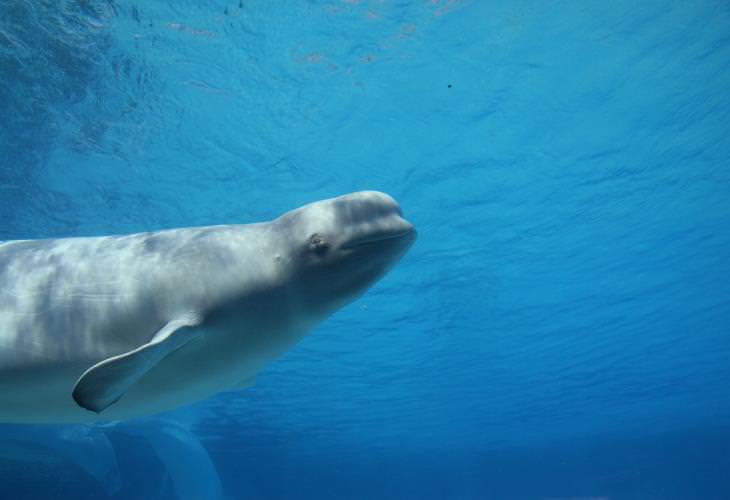
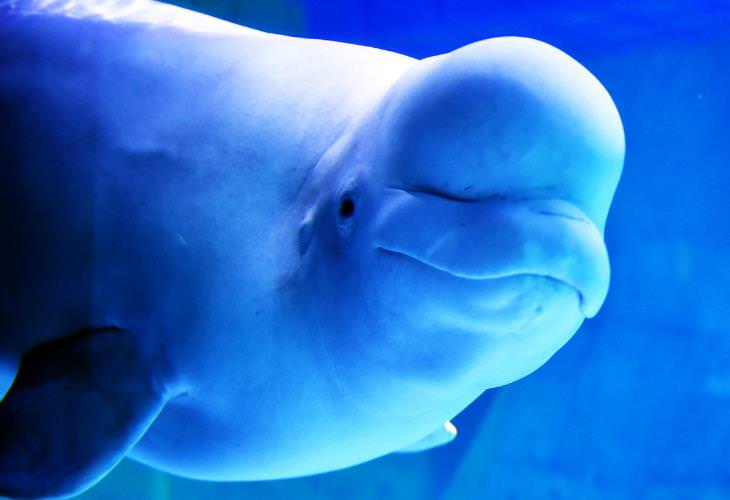
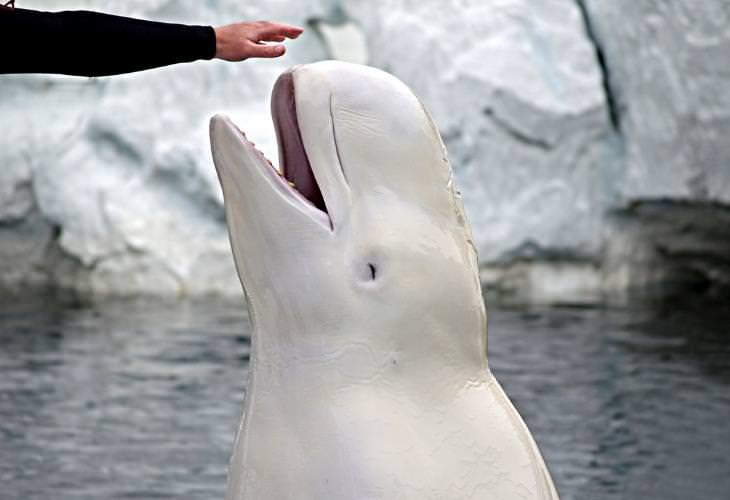
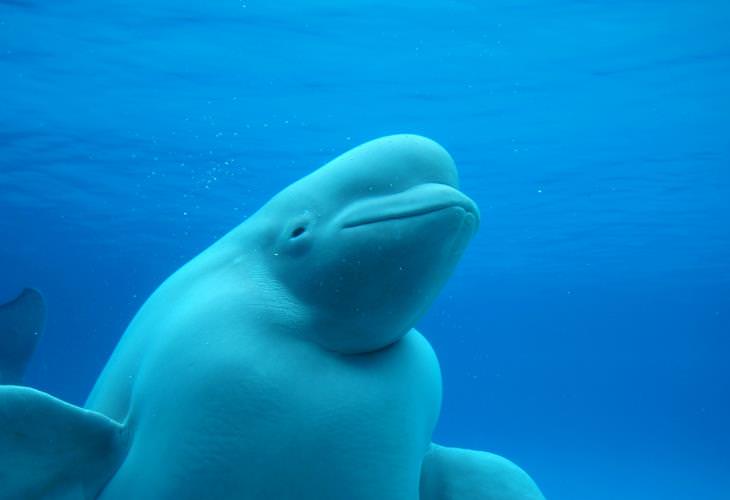
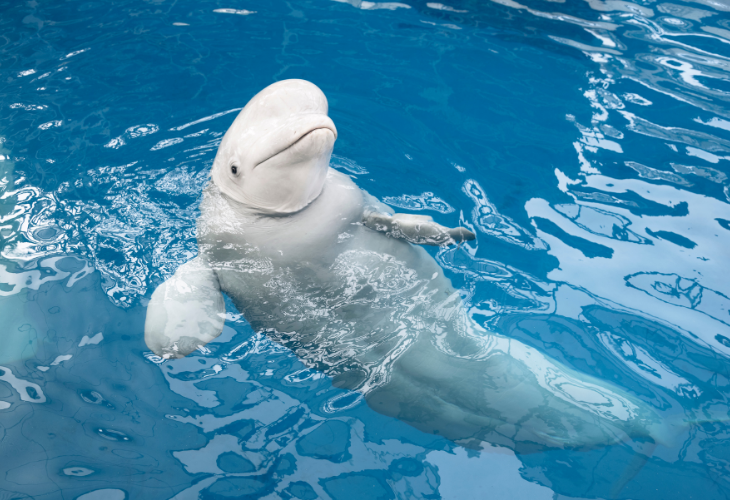
You might have seen several pictures and videos of them and muttered a soft “aww!” at their cuteness. After all, beluga whales are so charismatic and adorable and stand out because of their bright white skin, bulbous heads, smiling appearance, and elongated bodies. Found in and around the freezing polar regions of the Arctic Ocean, there are more than 200,000 belugas in the wild today - they’re abundant in parts of Alaska, Canada, Greenland, and Russia.
These whales are, however, more than just cute marine animals. These have plenty of fascinating and impressive qualities that might leave you surprised. Here are a few things you might not know about the magnificent beluga whale.
Beluga whales are sometimes called “canaries of the sea”. This is because they make noises such as a series of chirps, clicks, whistles, buzzes, and squeals, which makes it feel like they are singing. A 2015 study of a beluga population in Alaska's Beaufort Sea documented 34 distinct calls from the animals, including bell-like tones. These rich and varied vocalizations are sometimes so loud that they can often be heard through the hulls of ships.
But why do belugas make such distinct noises? Experts believe that these vocalizations are used to convey important information in the large open water. The noises are also said to be used for echolocation (a process in which animals use echoes of their calls to locate and identify objects) by these marine animals as they navigate the dark waters of the ocean. Bats use the exact same process to hunt for insects on land.
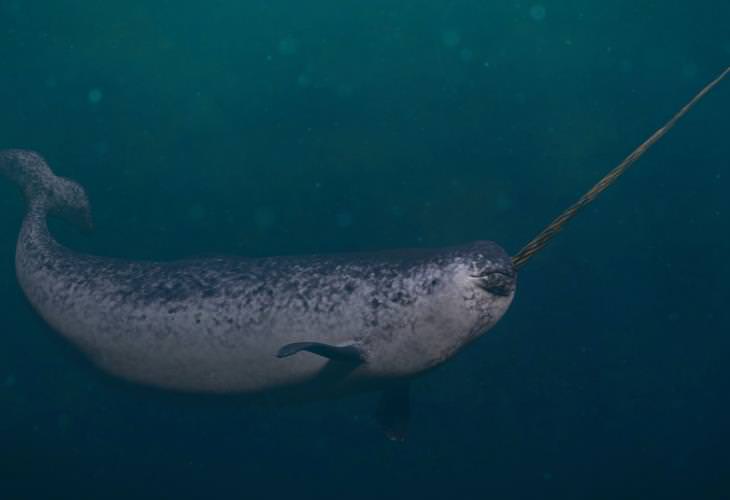
2. Belugas are closely related to narwhals
Belugas are toothed whales and are classified under the Monodontidae family. Apart from belugas, this family consists of only one other species – narwhals. Narwhals, much like belugas, are medium-sized whales and mainly live in the Arctic and North Atlantic. They are known as the unicorn of the sea for the long tusks protruding from their heads.
The two species do coexist in some areas and there’s even been a beluga-narwhal hybrid spotted in the wild.
To adapt to the incredibly cold waters of their Arctic habitat, where temperatures can reach 32 degrees Fahrenheit (0 Celsius), belugas have developed a particularly thick layer of blubber. This thick layer of body fat insulates marine mammals from cold environments and in belugas, blubber accounts for almost 40% of their body weight, according to the U.S. National Oceanic and Atmospheric Administration (NOAA).
Beluga whales have been reported to have the ability to imitate human speech. A beluga named NOC, captured by the U.S. Navy, was said to have produced unusually low-frequency sounds similar to human speech. NOC, who lived at the National Marine Mammal Foundation in San Diego for 30 years, even confused a diver once to climb out of the whale’s tank when he thought he heard another person asking him to leave. As it turned out, the sound was actually made by the playful beluga who was mimicking the word “out”.
Belugas have distinctively large melons - a rounded structure on the dorsal surface of a whale's head. Composed of lipids (fats), a beluga's melon is used to make a range of different communication sounds and facial expressions. It also helps transmit sound waves from their head into the water. While all toothed whales have a melon, the beluga’s version of this organ is quite bulbous and is squishy with the ability to change shapes during vocalizations.
6. Their white color helps them survive
The word beluga comes from the Russian word "bielo" meaning white. Adult belugas are mostly pure white, which is why they are also known as white whales. At birth, beluga calves are generally dark gray and take about eight years before they turn completely white. Interestingly, the white coloration helps protect these sea animals from predators like polar bears and orcas by camouflaging them among the icebergs and ice floes of the northern seas.
7. Their necks are super flexible
Belugas have unfused cervical neck vertebrae, unlike most whales and dolphins whose seven neck vertebrae are fused together. This feature provides them with a lot of flexibility and allows them to turn their heads from side to side and nod up and down. Experts believe that this adaptation helps them maneuver their bodies smoothly in shallow waters to hunt as well as to escape from predators.
8. Belugas can swim backward
Unlike most other whales, belugas can swim both forward and backward. This adaptation is useful in an environment where sea ice can change rapidly. Moreover, this skill also makes up for their languid speeds of about 2 to 6 mph (3 – 9 km/h).
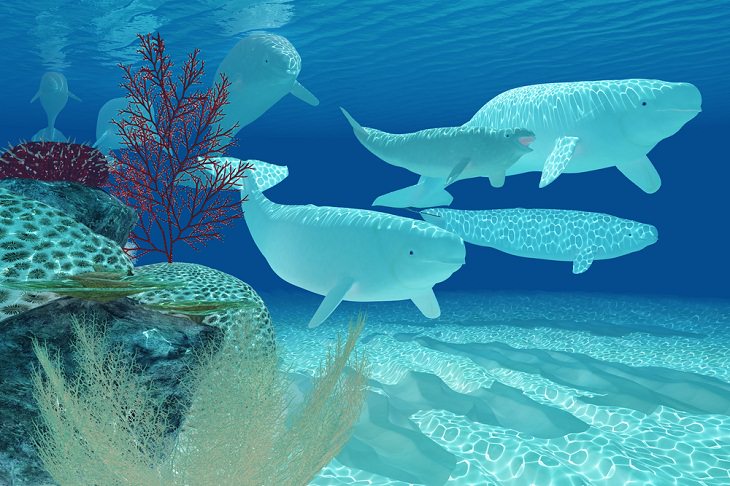
Belugas are highly social creatures and live in small groups known as pods. The size of their pods varies and even numbers in the hundreds at times.
Scientists believe that belugas spend more time interacting with each other than any other type of cetaceans. In fact, research suggests that apart from bonding with their own family, belugas socialize with other whales and may even branch off and join other pods. According to Florida Atlantic University research professor Greg O'Corry-Crowe, lead author of a 2020 study published in Scientific Reports, belugas might be forming fission-fusion societies as well, where the size and makeup of social groups depend largely on context.
“Unlike killer and pilot whales, and like some human societies, beluga whales don’t solely or even primarily interact and associate with close kin. Across a wide variety of habitats and among both migratory and resident populations, they form communities of individuals of all ages and both sexes that regularly number in the hundreds and possibly the thousands,” said O’Corry-Crowe in a statement. “It may be that their highly developed vocal communication enables them to remain in regular acoustic contact with close relatives even when not associating together.”
Subscribe and REMOVE ALL ADS
LOVE our articles but HATE our ads? For only $3.89 per month, enjoy a seamless, ad-free experience that lets you focus on what matters most — enjoying all of our content, uninterrupted. 🔒 100% Secure Payment 📅 Cancel Anytime, No Strings Attached Unlock a cleaner, faster browsing experience today and gain the freedom to navigate without visual clutter.
Ready for a Ad-Free experience? Upgrade now for just $3.89/month!
To enable your Ad-Free Subscription, please fill the fields below
Thank you for your subscription!
Your subscription was successful, now you can enjoy an ad-free experience!! Note: To make sure you get no ads, please make sure to log in to your account. If you are logged in already, then refresh the page. The subscription can be cancelled at any time.
Subscribe
Do You Love Nature and Animals?
Get updates on new posts directly to your inbox!
Login
Login via Email
The new BabaMail app is now available at the app stores.