
When we think about aging, we typically focus on wrinkles around the eyes, sagging cheeks, or gray hair. But there's one area that often flies under the radar, despite being among the first to show the passage of time: the earlobe.
The ears might seem like a "static" area of the face - they don't participate in facial expressions, don't undergo sharp muscle movements, and are barely affected by changing weather conditions. They just sit there, seemingly unchanged throughout our lives.
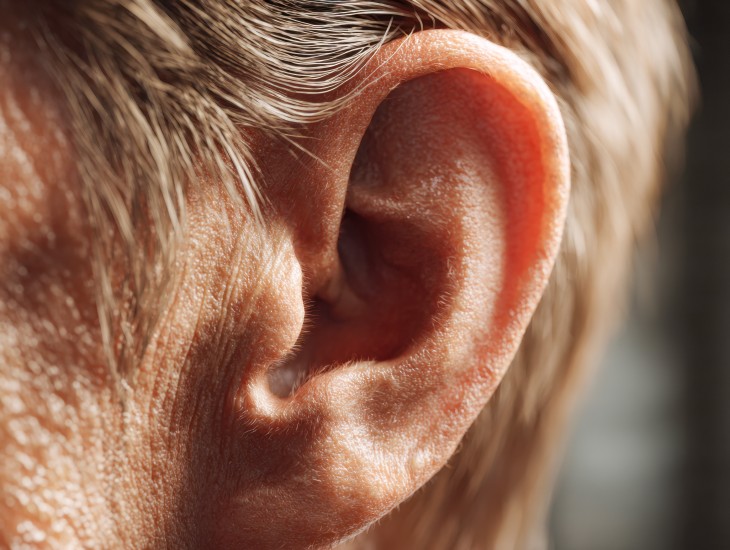
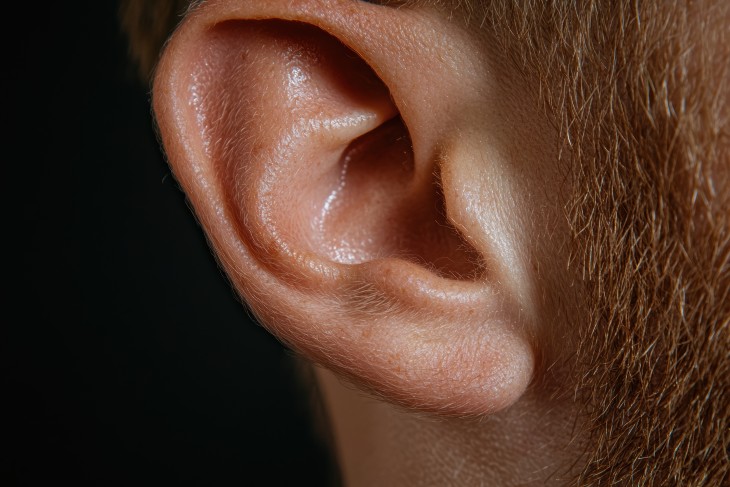
Yet it's precisely this quiet part, the earlobe - that soft, cartilage-free, round area at the bottom of the ear - that's among the first to expose the signs of time. Here, the skin's aging process becomes strikingly visible: loss of volume, decreased elasticity, and gradual elongation that reshapes the ear's appearance.
The earlobe is built from dense connective tissue rich in collagen and elastin fibers - two key proteins that give skin its firmness and flexibility. In youth, collagen is tightly organized and creates a stable structure, while elastin gives the lobe the ability to return to its shape after stretching.
Over the years, just like facial skin, the quantity and quality of these fibers decline. The tissue loses its support, elasticity weakens, and the skin becomes thinner and more lax. Alongside time's natural effects, external factors like sun exposure, smoking, and loss of subcutaneous fat volume also contribute to the change. A lobe that was once firm and full gradually becomes more elongated, loose, and sometimes even wrinkled.
Earrings and jewelry don't just serve beauty - they're part of an ancient human tradition. For hundreds of years, they've served as symbols of status, identity, and belonging: from African and Native American cultures where tribal hoop earrings symbolized coming-of-age and social status, to contemporary culture where they express fashion, personal style, and freedom.
In recent decades, the phenomenon of "ear stretching" or "gauging" has also emerged - jewelry that gradually enlarges the piercing hole, creating a bold and dramatic look. But biologically speaking, this places significant stress on the tissue: the skin stretches beyond its natural capacity, collagen fibers weaken, and a tear may form that won't heal on its own.
Even without intentional stretching, large or heavy earrings create constant downward pull, and over the years can cause noticeable earlobe elongation and even change its shape.
Scientific studies show that the ear - including the earlobe - continues to elongate throughout life. Research published in the Aesthetic Surgery Journal indicates that between ages 20 and 60, the earlobe elongates by approximately 30-35%, with measurements finding an average growth rate of about 0.22 millimeters per year.
Alongside time's natural effect, wearing heavy earrings for years also worsens the elongation and can even cause tears. Contributing factors include genetic components - like skin thickness and collagen fiber quality - as well as lifestyle factors such as sun exposure and daily earring use.
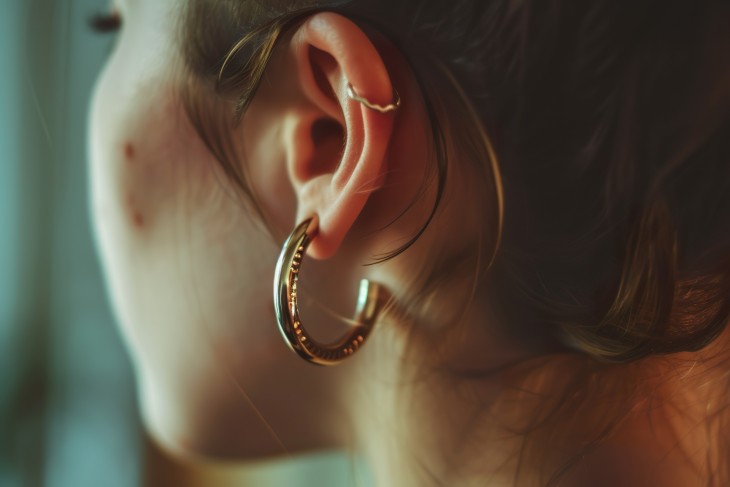
While aging is inevitable, there's one common mistake that significantly accelerates earlobe stretching: wearing heavy or large earrings regularly.
The constant gravitational pull on delicate earlobe tissue gradually stretches the piercing hole, leading to elongation or even complete splitting of the lobe. The heavier the earring, the greater the impact over time. Many women don't realize the cumulative damage until they notice their earrings sitting lower, the piercing hole becoming elongated, or earrings refusing to stay in place properly.
Another often-overlooked mistake? Sleeping with earrings in. The pressure caused by side sleeping with earrings can damage earlobes and cause stretching or widening of pierced holes. Even small studs can cause damage over time when pressed against the pillow night after night.
In recent years, awareness has been growing that earlobes also deserve aesthetic treatment. Several options are available:
The principle is simple: just like the skin on your face and neck, your earlobes need protection and care. It's recommended to avoid heavy earrings for daily wear, apply sun protection to the ear area as well, and consider treatments that strengthen connective tissue.
By taking these steps, you can maintain a soft, aesthetic appearance of your ears for years, even as time leaves its mark. After all, true beauty is in the details - and that includes the parts we sometimes forget to care for.
Remember: While earlobes are often overlooked in anti-aging routines, they're prominent features that frame your face and are almost always visible. A little attention to these delicate structures can make a significant difference in your overall appearance.
Pls Continue ProjectsProjects