
Alzheimer's disease is one of the most feared diagnoses of our time - and for good reason. It doesn't just affect memory. It gradually changes a person's entire sense of self, eroding the ability to think, communicate, and live independently. It's the most common cause of dementia, and aging remains the single biggest risk factor.

Despite decades of research, Alzheimer's still holds many secrets. Scientists have long debated what drives it - the buildup of abnormal proteins in the brain, a misfiring immune system, disruptions in cell energy, the lingering effects of certain infections, or some combination of all of these. Every new clue has the potential to reshape the picture entirely.
And a very unexpected clue has recently emerged - from cancer research.
A Pattern That Kept Showing Up
Doctors and researchers began noticing something strange: people who had been diagnosed with cancer seemed less likely to develop Alzheimer's later in life. And conversely, Alzheimer's patients seemed to have lower rates of cancer.
At first, this seemed like a statistical curiosity. But the pattern kept appearing, across study after study.
In one large analysis following nearly 3.5 million U.S. veterans aged 65 and older, cancer survivors showed a lower risk of developing Alzheimer's across nearly every cancer type studied. Lung cancer survivors had about a 21% lower risk, kidney cancer survivors 21%, leukemia survivors 19%, and lymphoma survivors 14% - all compared to people who had never had cancer.
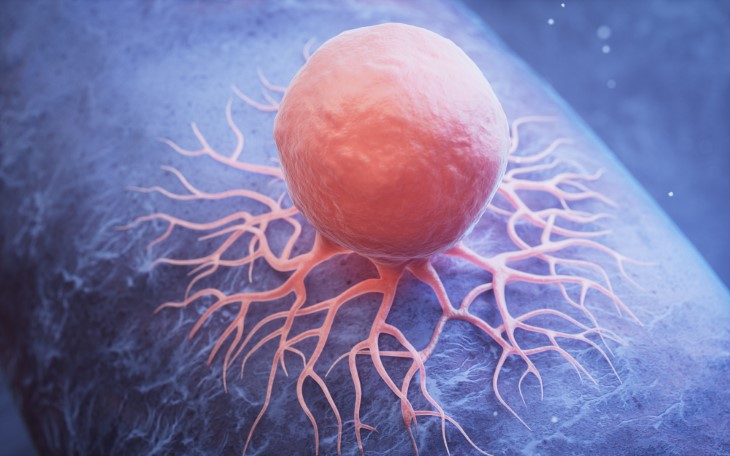
A separate review that pooled data from 22 studies and nearly 9.6 million adults found that people with a cancer history had roughly an 11% lower risk of developing Alzheimer's - a finding that held up even after researchers accounted for age, sex, lifestyle, and other health conditions.
Perhaps most striking was a 2022 study that examined brain tissue after death. Researchers found that people who had been diagnosed with cancer during their lifetimes showed milder cognitive decline - and when their brains were examined, they had significantly fewer amyloid plaques, the abnormal protein clusters that are one of Alzheimer's hallmarks.
This wasn't just statistics anymore. It was physical evidence, visible in the brain itself.
A Protein From Cancer Cells - Doing Something Remarkable
A new study published in the prestigious journal Cell may have uncovered one reason why.
Researchers injected mice with Alzheimer's-like brain changes with cancer cells - lung, prostate, and colon - and checked their brains several weeks later. The results were clear: the presence of tumors was linked to a significant reduction in amyloid buildup in the brain.
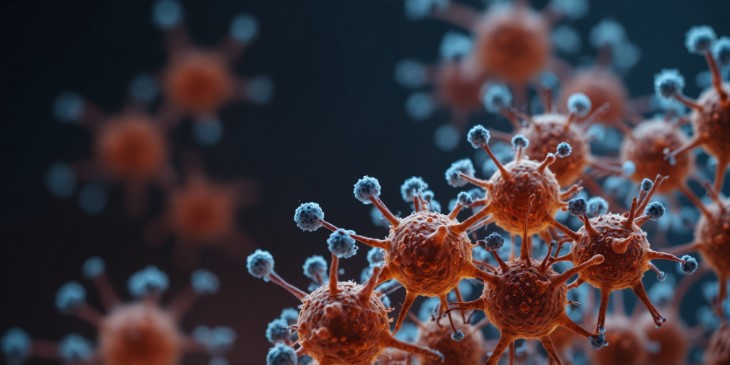
Then came the real twist. When researchers injected the mice not with cancer cells themselves, but with the fluid in which those cancer cells had been grown in the lab, the same protective effect appeared. Something being secreted by the cancer cells - not the cells themselves - was doing the work.
That something turned out to be a protein called Cystatin C.
When this protein was released by cancer cells, it was able to cross into the brain, where it accumulated and activated microglia - the brain's own immune cells - to break down and clear away existing amyloid plaques. When the researchers genetically blocked cancer cells from producing Cystatin C, the protective effect disappeared entirely.
Even more encouragingly, the protein didn't just reduce amyloid buildup. It also improved communication between nerve cells and appeared to strengthen the connections between them. Mice treated with Cystatin C showed measurable improvements in learning and memory tasks.
The Immune System: A Piece of the Puzzle
These findings fit into a growing body of evidence that Alzheimer's isn't simply a "brain disease" - it's deeply connected to the immune system throughout the body.
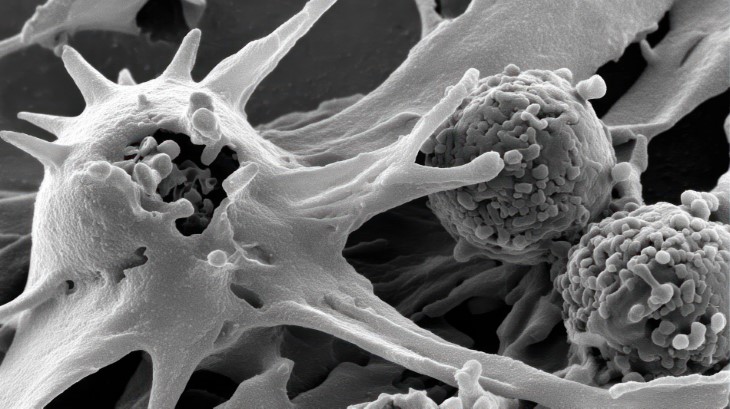
Microglia, the brain's built-in immune cells, act as a kind of maintenance crew, clearing out waste and abnormal proteins like amyloid. But as we age, they can malfunction - becoming either chronically inflamed or sluggish - and instead of protecting brain cells, they may actually contribute to the damage.
Some of the most intriguing recent evidence on this front involves an unlikely intervention: a shingles vaccine.
A study published in the journal Nature found that people who received the shingles vaccine had about a 20% lower risk of being diagnosed with dementia - including Alzheimer's - over seven years, compared to those who weren't vaccinated. A follow-up study in the journal Cell found the vaccine was also linked to fewer diagnoses of mild cognitive impairment (an early stage before full dementia), and even slowed the progression of the disease in people who already had it.
A study in Nature Medicine, drawing on medical records from hundreds of thousands of adults, found that those who received the newer recombinant shingles vaccine lived an average of about 164 additional days without a dementia diagnosis compared to unvaccinated individuals.
And a large Canadian study published in The Lancet Neurology found a meaningful drop in new dementia diagnoses among older adults who had been vaccinated against shingles - using a clever natural experiment that compared people born just before and just after an eligibility cutoff date, making the two groups nearly identical in every way except vaccination likelihood.
What This Means - And What It Doesn't
Researchers are careful to stress one crucial point: none of this means cancer is somehow "good" or protective. Cancer remains a life-threatening disease, and no one should interpret these findings any other way. What these discoveries suggest is that certain biological processes triggered by cancer - or by cancer-related proteins like Cystatin C - may offer clues about new ways to treat Alzheimer's.
The vision that's beginning to take shape is of Alzheimer's as a disease of the whole body, not just the brain. Disruptions in the immune system, proteins secreted by tumors, even routine vaccines - all may influence who develops Alzheimer's and how quickly it progresses.
Future treatments, researchers speculate, may work on multiple fronts: clearing amyloid from the brain on one hand, while also targeting the broader biological pathways - including immune function - that shape the disease's course.
We're not there yet. But every unexpected connection - even one that begins with cancer - brings scientists one step closer to understanding one of the most complex diseases we face.