
When we picture the road to D-Day, we tend to imagine careful planning, brave young men, and a triumphant landing on the beaches of Normandy on June 6, 1944. What most people never learned, for decades, is that one of the worst single-night tragedies suffered by American forces in the entire war did not happen on a French beach at all. It happened off the quiet coast of Devon, England, during a practice run. The rehearsal was called Exercise Tiger, and on one terrible night in late April 1944, it cost the lives of hundreds of young American servicemen. The story was hidden for years, and the lessons paid for in blood that night may well have made the difference when the real invasion finally came.
Why a Rehearsal Was Needed at All
By the spring of 1944, the Allies had been preparing for the invasion of occupied France for a very long time. The plan, known as Operation Overlord, was the largest seaborne assault ever attempted. Tens of thousands of men, along with tanks, trucks, jeeps, and mountains of supplies, would have to be carried across the English Channel and landed on a hostile shore under fire. Nothing on this scale had ever been tried. Everyone involved understood that if the first hours of the landing went wrong, the entire operation, and perhaps the war in Western Europe, could be lost.
General Dwight D. Eisenhower, the Supreme Commander of the Allied forces, insisted that the troops train under conditions as close to the real thing as possible. He wanted live ammunition, real naval gunfire, and the full chaos of a beach assault, so that the men would not freeze when the genuine bullets started flying. To make this happen, the Allies needed a stretch of English coastline that looked and felt like the actual landing zones in Normandy.
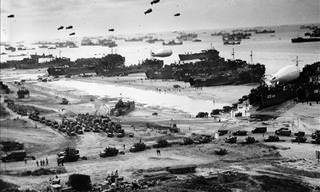
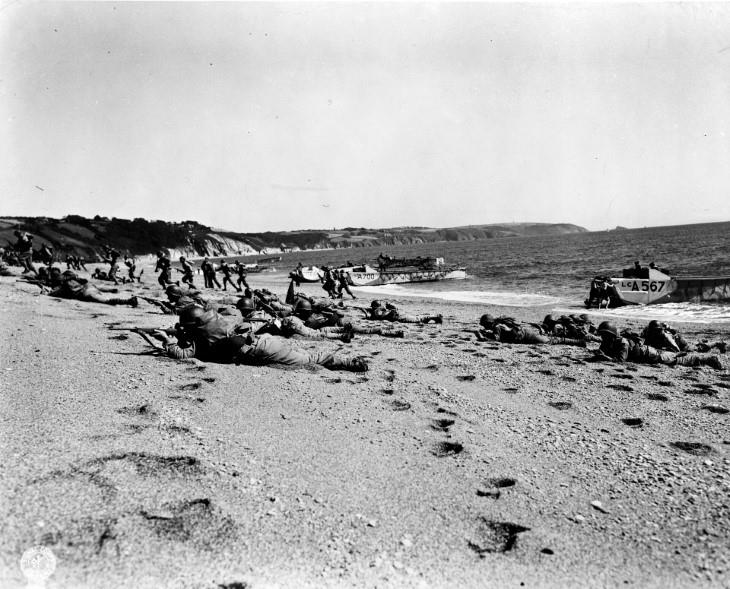
They found it at Slapton Sands, a long gravel beach in Devon backed by a shallow lagoon and gently rising farmland. It was almost a mirror image of Utah Beach, the section of the Normandy coast assigned to American forces. The resemblance was so useful that the British government took a painful step. In late 1943, around 3,000 local residents across several villages were asked to leave their homes and farms so the area could be turned into a training ground. Families packed up generations of belongings and moved away, many of them unsure if they would ever return. That sacrifice cleared the way for a series of large rehearsals, and the biggest of them was Exercise Tiger.
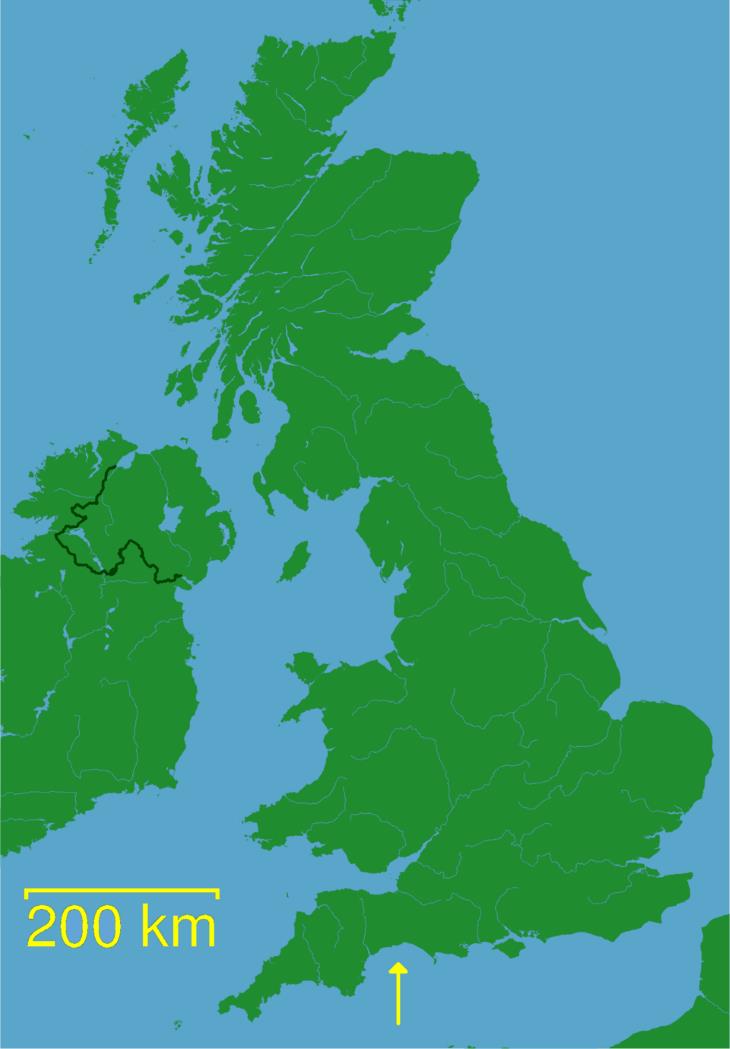
The Stage Is Set
Exercise Tiger was designed to test everything at once. Thousands of men of the 4th Infantry Division would board landing ships, sail out into the English Channel, and then come ashore at Slapton Sands exactly as they would on the real Utah Beach. The plan even routed the convoy on a long looping path through Lyme Bay so the men would experience hours at sea, just as they would on the way to France. Live shells would pound the beach ahead of the landing to harden the troops to the noise and danger.
On the afternoon of April 27, 1944, thousands of soldiers and sailors began boarding eight large vessels known as Landing Ship, Tanks, or LSTs. These were huge, slow, flat-bottomed ships built to carry tanks and vehicles right up onto a beach. Useful as they were, they were also lumbering and lightly armed, which earned them a grim nickname among their own crews: Large Slow Targets. Loaded with men, fuel, ammunition, and vehicles, the convoy formed up in Lyme Bay and began its long approach in the dark.
The First Tragedy on the Beach
Trouble began even before the worst of it. The first day of landings on April 27 was reported as successful, but the realism that Eisenhower demanded carried a deadly risk. The plan called for live naval gunfire to sweep the beach just before the troops landed, to get them used to the sound and fury of real combat. Timing was everything. If the men arrived too early, they would be walking into their own side's shells.
That is widely believed to be exactly what happened to some of them. Delays crept into the schedule, and orders to push back the landing time did not reach every ship. Several landing craft, still following the original timetable, came ashore just as the bombardment was hitting the beach. Men who had been told they were taking part in a controlled exercise suddenly found live shells exploding around them. It was a horrifying introduction to the gap between a plan on paper and the confusion of real operations, and it claimed lives before the night's greater disaster had even begun.
The Wolves in the Dark
The catastrophe that Exercise Tiger is remembered for came in the early hours of April 28. As a second convoy of eight LSTs steamed slowly through Lyme Bay, the unusually heavy radio traffic in the area drew the attention of the German navy. Nine German fast attack boats slipped out into the bay under cover of darkness. The Germans called them Schnellboote, meaning fast boats, and the Allies called them E-boats. They were sleek, powerful, and armed with torpedoes, capable of racing in at high speed, striking, and vanishing back into the night.
The slow, heavily loaded American landing ships were almost defenseless against them. To make matters far worse, the convoy's protection had quietly collapsed. The convoy was supposed to be escorted by a Royal Navy destroyer, but that ship had been damaged and ordered into port for repairs, and the replacement did not arrive in time. That left a single small corvette guarding the entire line of vulnerable ships. On top of this, the American ships and the British naval headquarters had been assigned different radio frequencies. When warnings about enemy activity were sent, the men on the LSTs never heard them. They sailed on in complete ignorance of the danger closing in.
The E-boats struck the rear of the convoy first. One LST was torpedoed and burst into flames. Another was hit and sank within minutes, taking hundreds of men down with it. A third was struck, caught fire, but managed to limp back to shore. In the space of a short and terrible window, two ships were lost outright and a third badly damaged.
A Night of Fire and Freezing Water
What followed in the water was, for many, even worse than the explosions. The April sea was bitterly cold, cold enough to kill a man through hypothermia in a matter of minutes. Men leaped from burning decks into a darkness lit only by flames and the green glow of tracer fire. Inside the tank decks, crews who had no idea they were even under attack were trapped as vehicles slid loose and ships went down.
One of the most heartbreaking failures was also one of the simplest. Many of the soldiers had never been properly trained to use their life belts. These were inflatable belts meant to be worn high, around the chest. Weighed down by heavy packs, many men had instead strapped them around their waists. When they hit the water, the inflated belt flipped them upside down, holding their feet up and their heads underwater. Countless young men who could have been saved drowned in this way, found later floating head down in the dark sea. Survivors in the lifeboats described the horror of drifting among the dead, with no idea which way to steer toward safety.
The exact number of lives lost has been debated over the years, with figures commonly placed at around 750 and as high as roughly 940 when the friendly fire deaths are included. By any count, it was a staggering toll. More Americans died that night in a training exercise than would later die landing on Utah Beach in the real invasion.
The Secret That Could Have Doomed the Invasion
As awful as the loss of life was, Allied commanders soon realized they faced a second, almost unthinkable danger. Among the men missing after the attack were ten officers who held a special security clearance known by the codename Bigot. This was a level of access higher than top secret, reserved for those who knew the genuine details of where and when the Normandy invasion would take place.
If even one of these ten men had been captured alive by the Germans, or if his body had been recovered with documents, the entire secret of D-Day could be exposed. The Germans would know the time and place of the landings, and the greatest invasion in history could turn into a massacre. Eisenhower was forced to continue preparing for the operation while a desperate search was carried out. There was serious discussion of changing the plans, or even calling the whole thing off. Only when the bodies of all ten Bigot officers were finally accounted for, confirming that none had fallen into enemy hands, did the commanders breathe again. The secret of D-Day had survived.
Lessons Paid for in Blood
For all its horror, Exercise Tiger taught the Allies hard lessons that very likely saved many lives weeks later in Normandy. The problems exposed that night were studied closely, and changes were made quickly.
The radio frequency confusion that left the convoy deaf to warnings was fixed, with frequencies standardized so American and British forces could finally talk to one another. Troops were given proper training on how to wear and use their life belts, so that men would float upright rather than drown in their own equipment. Plans were drawn up for small rescue craft to follow the invasion fleet and pull survivors from the water, rather than leaving them to freeze. Naval escorts were strengthened so the vulnerable landing ships would not again be left almost unguarded. The deadly threat posed by German E-boats was taken far more seriously, and a heavier screen of warships was arranged to protect the real invasion. The timing of the naval bombardment, which had caused such confusion at Slapton, was also reconsidered.
When the men finally stormed the beaches of Normandy on June 6, they did so with procedures that had been rewritten because of what went wrong off Slapton Sands. The young men lost during Exercise Tiger never knew it, but their deaths helped protect the comrades who came after them.
Why the World Did Not Know for Decades
So why did such a major tragedy stay out of the history books for so long? The first reason was urgent and practical. With D-Day only weeks away, the Allies could not risk a single word leaking that might tip off the Germans or hint at the missing Bigot officers. Survivors were sworn to absolute secrecy, and some were warned that talking could lead to a court-martial. A complete information blackout was ordered.
After the invasion succeeded and the war moved on, the event simply faded from public attention. The records remained classified, and grieving families were told almost nothing. Some parents knew only that their son had died on April 28, 1944, with no explanation of where or how. In one well-known case, a mother did not piece together what had truly happened to her son until the late 1980s, when she happened to see a television documentary about Exercise Tiger and recognized the date.
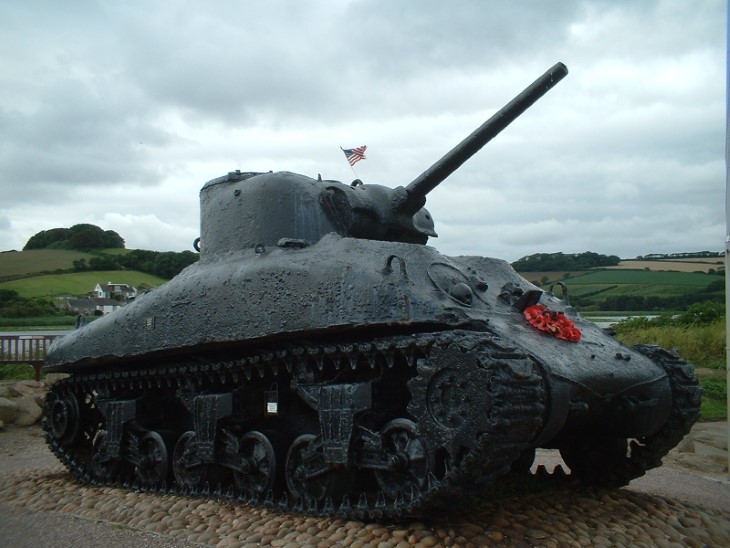
The full story only began to surface decades later, helped enormously by the efforts of a man named Ken Small. He had moved to the area, taken long walks on the beach, and started finding wartime relics in the sand. Troubled that the American dead had no memorial of their own, he eventually salvaged a Sherman tank from the seabed and set it up on the shore as a tribute. That tank still stands today as a quiet monument to the men who died in the dress rehearsal that history almost forgot.
Remembering the Forgotten
Exercise Tiger is a reminder that the great victories of history were often built on losses we rarely hear about. The men who died off Slapton Sands were not killed storming a fortress or charging an enemy line. They died practicing, in the cold and the dark, so that others might have a better chance when the real moment came. For decades their sacrifice went unspoken, locked away behind the urgent secrecy of war and then simply forgotten. Today, thanks to the persistence of a few determined people, their story is finally told. It deserves to be remembered, not as a footnote to D-Day, but as part of the price that was paid for it.