The flu has finally left your household - but the germs it left behind haven't necessarily gone with it. The influenza virus can survive on hard surfaces for up to 48 hours, and on unwashed hands for a full hour. That means a thorough clean-up after someone has been sick isn't just satisfying - it's genuinely important for keeping everyone else healthy.
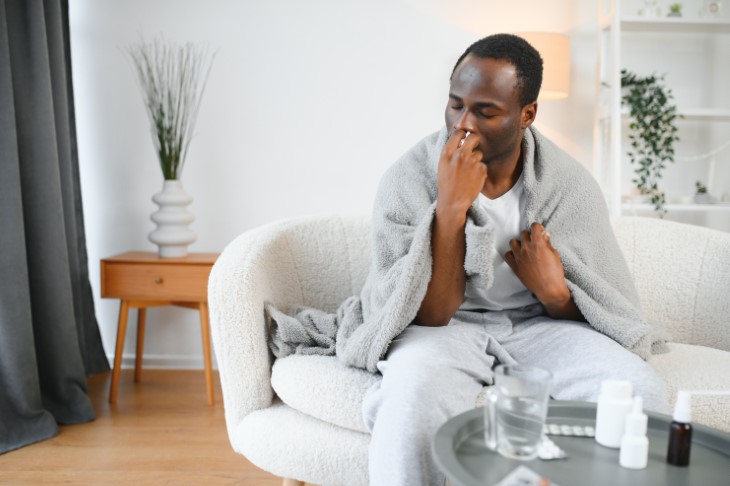
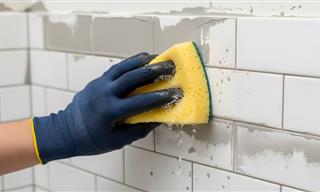
Before you reach for the disinfectant, keep one rule in mind: always clean first, then disinfect. Scrubbing surfaces with warm, soapy water removes dirt and debris, and only then does disinfecting — with sprays, wipes, or bleach-based products — get a real chance to kill what's left behind. Skipping the cleaning step and going straight to disinfectant is a common mistake; disinfectants work best on already-clean surfaces, not on surfaces coated in grime.
One more practical note before you start: wear disposable gloves throughout the process, and wash your hands thoroughly after you're done — even if you wore gloves. Work from the cleanest areas toward the dirtiest, and from top to bottom, so that anything you knock loose falls onto surfaces you haven't cleaned yet.
Start with the Most-Touched Spots
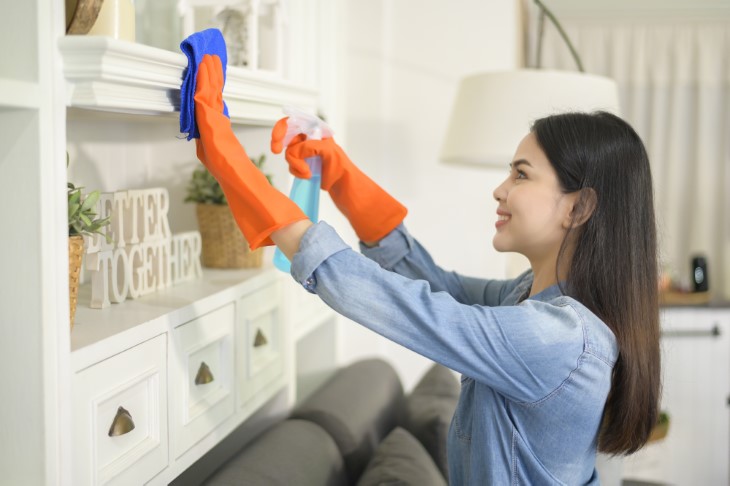
The places your hands land dozens of times a day are your first priority. Doorknobs, light switches, drawer handles, and stair rails are all prime germ territory. When using disinfecting wipes or sprays, don't just give the surface a quick swipe and move on — most disinfecting products need to remain visibly wet on the surface for several minutes to actually kill viruses. Check the label for the recommended contact time, and let the product do its job before wiping or drying.
If someone in the family was also sick in the car, don't forget the steering wheel, door handles, gear shift, navigation screen, and seat belts. A few disinfecting wipes kept in the glove compartment make this an easy habit to maintain year-round.
Move Through the Kitchen
Collect any dishes, glasses, or utensils that accumulated while someone was under the weather and run them through the dishwasher or wash them in hot, soapy water. The heat of a dishwasher's drying cycle is particularly effective at killing germs, so if you have one, use it.
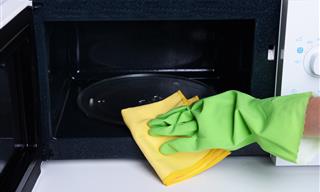
Then turn your attention to the frequently overlooked surfaces: refrigerator handles, cabinet doors, countertops, the sink and faucets, the coffee maker, the microwave handle and keypad, and the garbage can — including the lid and the pedal if it has one. Sponges used during the sick period should be thrown out and replaced, since they can harbor bacteria long after everything else has been cleaned.
Give the Bathroom Extra Attention
The bathroom deserves a thorough going-over after any illness. Wash down all hard surfaces — the sink, faucets, countertops, toilet (including the handle, seat, and base), tub, shower, and floor — with warm soapy water first, then follow up with a disinfectant. Pay special attention to the toilet flush handle, which is touched immediately after the person is most vulnerable to spreading germs.
Don't overlook the small details: toothbrush holders, tissue box holders, and soap dispensers are easy to miss. It's also worth replacing toothbrushes for anyone who was sick — even after recovery, an old toothbrush can reintroduce bacteria into the mouth.
Wash All the Laundry
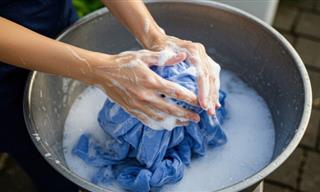
Flu viruses can linger on soft surfaces too. Wash all clothing, bed linens, pillowcases, and towels using the hottest water temperature the fabrics allow, and make sure everything is fully dried — damp laundry left sitting in the machine can encourage bacterial growth. It's perfectly fine to combine laundry from someone who was sick with items from others; the hot water and the heat from the dryer do the work.
When handling soiled laundry, avoid shaking items out, which can send virus particles into the air. Carry items directly to the washing machine without pressing them against your clothing. Clean out the laundry basket itself as well — wipe it down with soapy water or a disinfecting spray and let it dry completely before using it again.
Don't Forget the Bedroom
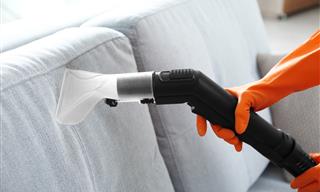
Beyond washing the bedding, wipe down all the hard surfaces in the sick room: bedside tables, bed frames, doorknobs, light switches, and drawer handles. If the sick person spent a lot of time in a particular chair or on the sofa, those surfaces deserve attention too — disinfecting sprays designed for soft surfaces can be used on upholstered furniture.
Vacuum carpets and mop hard floors. If a child was ill, wash their soft toys in a pillowcase in the washing machine, and scrub hard toys with soap and water before disinfecting them. A mild bleach solution (a quarter cup of bleach per gallon of water) works well for hard plastic toys — just rinse thoroughly and let them air dry.
Clean Your Electronics
This one is easy to overlook — but phones, tablets, keyboards, and remote controls are among the germiest surfaces in any home. To clean a smartphone safely, first power it off. Then use a soft, lint-free cloth lightly dampened with soapy water or a disinfecting wipe, being careful not to let moisture get into any openings. Alcohol-based wipes used repeatedly over time can degrade screen coatings, so if you're cleaning frequently, look for wipes specifically labeled as safe for electronics.
For keyboards, turn them upside down and gently shake to dislodge debris, then wipe down each key individually with a lightly dampened cloth or disinfecting wipe. Remote controls respond well to the same treatment — just wrap a wipe around each button and press to get into the crevices. Consider using a wipeable phone cover to make future cleanups easier and protect your device from moisture.
Open the Windows
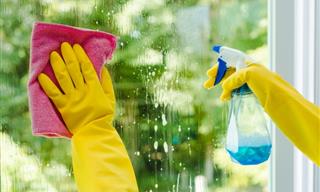
Once you're ready to clean, open the windows if the weather allows. Fresh air helps clear out any airborne germs still lingering in the house, and dilutes the concentration of any chemical fumes from your cleaning products. Even 15–20 minutes of good ventilation can make a real difference in air quality. If opening windows isn't practical due to cold or rain, running bathroom and kitchen exhaust fans can help.
If anyone in the household is asthmatic or sensitive to strong fumes, consider using fragrance-free or gentler cleaning products, and make sure they leave the room while surfaces are being treated.
One Last Reminder
If you were the one who was sick, make sure you've genuinely recovered before taking on a big cleaning session. Most people bounce back from the flu within a week, but it can take longer — and pushing yourself too soon risks a relapse. Break the cleaning into smaller tasks spread over a day or two rather than trying to tackle everything at once. Enlist help from family members or friends if you need to, and take it one room at a time. The house will be back to normal soon enough — and properly disinfected when it is.