
Researchers in the United States, after having treated a drowned and resuscitated toddler with a combination of oxygen therapies, have reported what they believe is a first-of-its-kind reversal of brain damage.
The little girl, whose heart stopped beating for two hours, showed deep gray matter injury, and cerebral atrophy with grey and white matter loss after the accident, and could no longer talk, walk, or respond to voices – but would squirm uncontrollably and shake her head.
Amazingly, thanks to a range of oxygen treatments, administered by a team from LSU Health New Orleans and the University of North Dakota, doctors were able to significantly reverse the brain damage that she had experienced.

The drowning occurred in February 2016, when two-year-old Eden Carlson slipped through the baby gate while her mother was showering, then made it past a heavy door, before eventually falling into the family swimming pool.
She was submerged for 15 minutes before being discovered and had suffered cardiac arrest, and while her mother immediately began CPR, she wasn’t resuscitated for 2 hours. After receiving critical care at the Washington Regional Medical Center in Fayetteville, Arkansas, the little girl was discharged, but due to the extent of her brain damage, hyperbaric specialist Paul Harch proposed treatment with oxygen therapies in an attempt to wake up her damaged brain.
Hyperbaric oxygen therapy works by administering oxygen to a patient at an ambient pressure higher than atmospheric pressure, through the use of a sealed, pressurized chamber. By doing this, the oxygen in the patient’s blood is increased, which can eventually restore normal levels of blood gases and repair damaged tissue.
In Eden’s case, she wasn’t located close enough to a hyperbaric oxygen therapy chamber, so Harch’s team began a bridging course of normobaric oxygen treatments that were delivered at sea level pressure – fifty-five days after she drowned.
The treatments, given for 45 minutes, twice a day, through a nasal cannula, saw Eden recover alertness and reduced her squirming, giving her back increased movement of her arms and hands. Furthermore, she also regained part of her ability to eat orally, speak short sentences, and laugh.

About three weeks later, the researchers moved Eden and her family to New Orleans, where she began a round of new treatments inside a hyperbaric chamber. After just 10 sessions, Eden’s mother observed that her daughter was back to “near normal, except for gross motor function”, and so she started to have physical therapy as well.
Once 39 hyperbaric sessions were completed, Eden’s walking had improved, and her level of speech was better than it was before the accident. She showed improvements on all neurological abnormality tests, and showed near normal motor function and cognition.
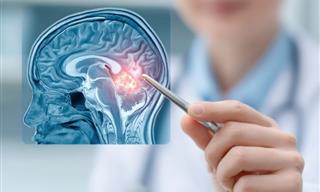
At the conclusion of the treatment, 162 days after she drowned, MRI scans revealed that Eden still had a mild residual injury to her brain, but had experienced a near-complete reversal of cortical and white matter atrophy.
The team studying her recovery state that to their knowledge, this kind of reversal is “unreported with any therapy”. While they do not quite understand the exact breakdown of this amazing revival, it’s clear that normobaric and hyperbaric oxygen treatments combined to reduce inflammation and promote brain cell survival.
Harch declares that “although it’s impossible to conclude from this single case if the sequential application of normobaric oxygen then HBOT would be more effective than HBOT alone, in the absence of HBOT therapy, short duration, repetitive normobaric oxygen therapy may be an option until HBOT is available. Such low-risk medical treatment may have a profound effect on recovery of function in similar patients who are neurologically devastated by drowning”.
Source: sciencealert
Shocking! How Maternal Neglect Affects a Child's Brain
Read this shocking report to find out how a mother's neglect can physically affect her baby's brain.
9 Inspirational Female Scientists You Should Know About
History is full of women who made significant contributions to science. Let’s meet the most influential ones.
The End of Breathing Machines? New Way of Getting Oxygen
Oxygen may now be able to be added directly to the bloodstream, thanks to a new experiment.
7 Submerged Villages and Cities You Never Knew About
Forget Atlantis. Let’s explore some of the lesser-known underwater places from around the world.
8:10
Winter Hikers, Gather Round for the Best Tip of the Season
Here's how advanced snow hikers layer clothing in the winter.
All You Ever Wanted to Ask About the Universe
Discover more about the universe by reading through these facts.
0:55
China's G1 Robot is Showing Some Incredible Moves
The G1 is a new robot developed in China and in this video shows some amazing moves.
Extraordinary Inventions By Tesla That Were Never Built!
Nikola Tesla was a scientist too advanced for his time. Here are some of the inventions he never had a chance to build.
22:52
Will AI Take Your Jobs? An Expert Explains the Future

Gonzaga University's AI professor Graham Morehead some of our most pertinent questions related to AI.
Hair Regeneration Could Be Possible With This New Process
Learn about an innovative new study which has revealed a novel treatment for effective hair regeneration.
8:11
Fascinating: What is the Deepest Hole Humanity Has Dug?
This video explains how low humanity has dug down so far.
7 Air Pollution Solutions That Will Help Us Breathe Easy
Let's take a look at some global initiatives that have been launched to reduce air pollution levels.
Absolute Zero: The AI that Doesn't Need People to Develop
Imagine an AI that doesn’t need humans to teach it how to code—it creates its own coding challenges, solves them, and gets smarter all on its own. This isn’t science fiction; it’s a groundbreaking development called Absolute Zero
5:16
How The Brooklyn Bridge Narrowly Escaped Never Being Built
Learn about the fascinating, but equally tragic history of the construction of Brooklyn Bridge in this engaging and educational video
These 11 Brain Facts Are Enough to Boggle Your Mind
When you consider the sheer complexity of the human brain, it's difficult to wrap your head around it. Learn these 11 fascinating facts about the human brain.
Chronically Late? What Science Has to Say About You
There are 8 positive things that science says about late people that we all need to know.
These 14 Forgotten Robots Promised So Much...
This collection showcases 14 cool vintage robots that were supposed to change everything.
22:35
Neuralink Update 2025: The Most Incredible Moments
Welcome to our 2025 Neuralink update, where we’ll take you through the most incredible and groundbreaking moments from the past year.
33:02
The Entire Story of Earth in 30 Minutes!
The story of our planet, from birth to the adult, ancient planet we see before us today - all in just half an hour.
13 Forgotten Phone Designs That Were Too Odd to Survive
From pen-shaped dialers to phones that clipped onto your clothes, here’s a look at the most unusual phones ever made.
14:58
Why IS Fentanyl So Dangerously Addictive?
In this video, we break down what opioids really do to your brain and body, what using them actually feels like, and why so many people are dying from Fentanyl overdoses.
7 Discoveries of Albert Einstein that Changed the World

The 7 biggest discoveries of Albert Einstein and how they changed the world forever.
Space Looks Breathtaking in These Amazing Photographs
There are some absolutely stunning photographs of space out there today, You won't believe how incredible it is!
25 Pics Showing How People in the Past Imagined the Future
Let’s see how the people of the past imagined the future and find out if their fun predictions came true with these 25 vintage pictures
This New Blood Pressure Drug Could Be a Game-Changer
Zilebesiran, an investigational drug that is showing profound success in late-stage clinical trials is offering hope for millions who struggle to keep their blood pressure in check.
World-Famous Psychological Experiments That Shocked Us
The human mind is a most intricate thing. It also has some quirks and idiosyncrasies that are both incredible and a little uncomfortable. Read on for more.
21:24
James Webb Telescope: Redefining Our View of Space
Here's a brief look at all the amazing discoveries made by the James Webb Space Telescope so far.
The 12 Game-Changing Inventions From 2024 You Missed
2024 was a ground-breaking year in terms of innovation. Here's a look at some of the key breakthroughs from the year.
9:54
Neo: The New Tele-Robot that "Cleans" Your Home
Neo is a new robot that has great capabilities and is designed to clean your home. Sounds perfect right? Well, there's a catch.
10 Obscure Inventions by World Famous Inventors
We’d like to bring your attention to 10 lesser-known inventions of famous figures in history, which will reveal a new and different side of these inventors to you.
2:01
What Does the Appendix Actually DO?
Dr. Berg explains, in this video, all about the appendix and what it actually does in our body.
8:12
The Tallest Statues Compared, Even Those Not Built Yet...
In this 3D animated size comparison, we showcase the tallest statues in the world alongside ambitious future projects.
9:03
24 Unbelievable Abilities Your Body Has
The human body is a complex and endlessly fascinating machine, and it might be even more sophisticated than you know...
9:09
Protective Measures: How Our Body Reacts to a Tattoo
In this video, we’ll explore the microscopic war raging beneath your skin, where millions of your cells make the ultimate sacrifice to lock that ink in place, turning a defense mechanism into lifelong art.
7 Mind Blowing Science Facts School Left Out
Put on your learning caps! We rounded up 7 surprising scientific facts you probably didn't learn at school.
New Research Shows Eating Sweets Won't Make You Crave More
A groundbreaking new study challenges conventional wisdom, suggesting our preference for sweet tastes may be more stable than we think.
5:14
Earth 2125: A Vision of the Future of Our Planet
Exploring what Earth could look like in 2125 reveals exciting potential.
10:46
Neat Life Hacks To Help You Remember Things Better
A lot of us tend to forget the simplest things at times. This video provides some neat tips to help boost your memory.
18:21
Fascinating: How Do Cats TRULY See Humans?
Understanding a cat's world is the key to strengthening your bond. Let's decode your cat's mind!
10:11
10 Smart Home Gadgets You Didn’t Know You Needed
If you’ve ever wanted a smarter, more efficient home, these 10 gadgets might be exactly what you need.
21:25
How Every Nuclear Power Got Its Atomics
This video will explain how each nation earned the complex and controversial title of nuclear power.
5:47
This Genius Child is a Better Calculator than a Computer
This ‘human calculator’ could likely outpace you entering the numbers into a calculator.
Whoa! Who Knew the Human Body Was Capable of So Much?
Have a look at these 17 intriguing facts about the human body that we can practically guarantee will leave you in awe.
8:12
How Humans Helped Cats Take Over the World
The relationship between humans and cats goes back as far as 9,500 years. How did it al start? And how did humans help cats essentially take over the world?
Find Out How Some Elderly People Stay Sharp into Old Age
Some old people have better memories than people half their age. This could be the reason why...
Is Microsoft's "AI Doctor" Better Than a Real Doctor?
A new study presents a committee of digital doctors achieving approximately 80% accuracy in complex medical diagnoses – far beyond the average of general practitioners.
10 Fascinating Facts About the Subconscious Mind
10 facts about the way the subconscious mind works
To enable your Ad-Free Subscription, please fill the fields below
Your subscription was successful, now you can enjoy an ad-free experience!! Note: To make sure you get no ads, please make sure to log in to your account. If you are logged in already, then refresh the page. The subscription can be cancelled at any time.