
For centuries, sailors, squires, and treasure hunters have dreamed about finding the untold riches of silver, gold, and jewels that sank with the World’s most valuable shipwreck. But, when eyes were finally laid upon the “Holy Grail” of shipwrecks – the Spanish galleon San José, which capsized off the Colombian coast in 1708 – they were not human eyes.
This doomed vessel was discovered back in 2015, after more than three centuries lying at the bottom of the Caribbean Sea and, this week, for the first time, researchers have revealed how they made their famous find.

Marine scientists from the Woods Hole Oceanographic Institution (WHOI) in Massachusetts say that that ship – whose sunken riches are estimated to be worth around $17 billion – was discovered by an autonomous underwater vehicle called Remus 6000, during a survey off Colombia’s Barú Peninsula.
Rob Munier, WHOI’s vice president for marine facilities and operations, said that “we’ve been holding this under wraps out of respect for the Colombian government.” But, why the need for such secrecy? Usually, general explanations of the technology involved in the discovery of long-lost shipwrecks like this don’t take three years to come to the fore.
However, the San José is no ordinary case, due to the staggering level of riches that was estimated to have sunk with it. When the Spanish vessel sank in battle with a British squadron in 1708, it wasn’t just full of treasure: the 60-gun galleon was also armed with a large arsenal of gunpowder, which was detonated in the fray, killing almost everyone on board.
A couple of centuries later, in the 1980s, a consortium called “Sea Search Armada” (SSA) claimed to have found the wreck, but Colombia refused to grant them permission to salvage the San José, and they have, for decades, legally contested the company’s rights to any of the treasure, since it’s in Colombian waters.
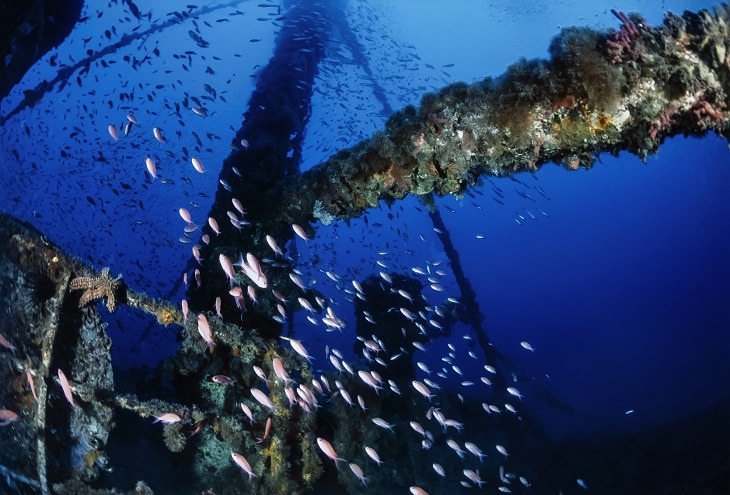
However, Spain might also now want its share of the spoils since the San José was flying under the Spanish flag when it sank. Many contend that since much of the wealth aboard the ship resulted from the conquest of the Americas, it ought not leave Colombia, while others suggest that other nations might still be entitled to a share of the treasure, based on historical arguments that a lot of Spanish cargo in the late 17th century rightfully belonged to England, France, or Holland.
With these potential disputes in mind, the United Nations asked Colombia not to commercially exploit the discovered wreck and the cultural heritage it represents. So far, the Colombian government has kept the exact location a secret – not clarifying whether it’s the same site that SSA claimed decades ago – but they have said that the wreck has not been looted, meaning the full cargo is expected to be recoverable.
In terms of new details of the vessel’s discovery, WHOI – which acts in collaboration with the Colombian government, in addition to other parties – says the wreck was located more than 600 meters (around 2,000 feet) deep, in an area that the REMUS 6000 began surveying in June 2015.
Mike Purcell, the WHOI expedition leader, explains that “during a November expedition, we got the first indications of the find from side scan sonar images of the wreck. From those images, we could see strong sonar signal returns, so we sent REMUS back down for a closer look to collect camera images.
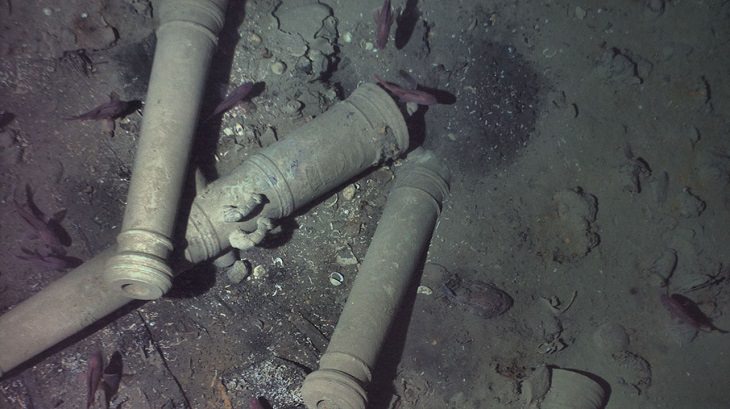
Photographs that were taken just 9 meters (30 feet) above the wreck captured the vessel’s cannons, and later dives uncovered details such as engraved dolphins carved into the cannons’ bronze, in addition to scattered teacups, ceramics, and other artifacts on the seabed.
“The wreck was partially sediment-covered, but with the camera images from the lower altitude missions, we were able to see new details in the wreckage and the resolution was good enough to make out the decorative carving on the canons,” said Purcell.
At the moment, there’s no official word on when or how these items will be recovered, but with all the violence and intrigue in the galleon’s pasts, we’re guessing that this tale of long-lost plunder is far from over.
Source: sciencealert
Images: depositphotos

6 Olympic Athletes Who Sold Their Medals
Find out why these 6 Olympic athletes decided to sell their gold and silver medals.
7:21
Could We Stop the Aging Process? Find Out Here!
This video takes a close look at three different tools that scientists are experimenting with which could eventually help prevent aging in humans.
Viagra May Hold the Key to Preventing Colorectal Cancer...
A new study shows that Viagra may be able to help prevent the onset of colorectal cancer. Find out all about it here.
21 Incredible Items Unearthed by Metal Detectors
Metal detecting is a surprisingly popular hobby. Here are some of the coolest and most valuable items found by amateur metal detector hobbyists.
Broccoli Lattes Made With Broccoli Powder Could Soon Exist
Australian scientists have developed a broccoli powder that can help you get your recommended daily dosage of vegetables. Take a look.
5:35
Discover the Fascinating Hidden Treasures of Timbuktu
Dig into the past and discover the fascinating secrets of the hidden treasures of Timbuktu.
8 Biggest Mysteries Still Surrounding the Human Body
Although modern science has revealed much about the human body, there are some things that still remain unknown. Here are the 8 biggest mysteries about it.
22:52
Will AI Take Your Jobs? An Expert Explains the Future
Gonzaga University's AI professor Graham Morehead some of our most pertinent questions related to AI.
8:12
The Tallest Statues Compared, Even Those Not Built Yet...
In this 3D animated size comparison, we showcase the tallest statues in the world alongside ambitious future projects.
PayPal Versus Credit Cards: Here's the Lowdown!
Just how safe is PayPal? Should you have a PayPal account or should you pay for all online purchases using a credit card? All is revealed here!
Space Looks Breathtaking in These Amazing Photographs
There are some absolutely stunning photographs of space out there today, You won't believe how incredible it is!
1:17
The Age of the Affordable Android Robots is Here...
Meet the Unitree R1 – the game-changing humanoid robot that just shattered every price expectation in robotics.
Do You Have One Of These RARE Genetic Traits?
How unique are you? You might have several rare genetic traits that make you unlike most of the world's population!
4:57
Fascinating: How Does Our Digestive System Work?
This video explains how the human digestive system does its daily.
18:21
Fascinating: How Do Cats TRULY See Humans?
Understanding a cat's world is the key to strengthening your bond. Let's decode your cat's mind!
I Bet You Didn't Have a Clue About These Human Body Facts!
The human body is the most complex machine known to mankind, but I bet you don't know these 10 amazing facts about it...
What Your Phone Habits Say About Your Mental Health
These phone habits might indicate underlying anxiety—and paying attention to them could help you better understand your mental health.
7:56
These 6 Chemical Reactions Changed the Course of History
Although we rarely pay much attention to the chemistry that constantly surrounds us, these 6 reactions changed history.
4:57
Mjøstårnet - The World’s First Wooden Skyscraper
Mjøstårnet is an 18 story tall skyscraper towering over the Norwegian countryside. What makes it so special is that it's made entirely out of wood...
Study: New Link Found Between Parkinson's and the Gut
A recent study has identified gut microbes likely involved and linked them to decreased riboflavin (vitamin B2) and biotin (vitamin B7), suggesting a potential treatment
5:50
The Rise of the Machines: Can Humanoid Robots Help Us?
Will humanoid robots change the way we work forever?
How AI Is Fixing Problems Humans Struggle With
Here’s how AI is quietly reshaping the world in ways that actually matter.
4:05
Kirobo: First Robot in Space!
It was one small step for robot and another giant leap for mankind...
11:05
Science: Can AI Preserve Our Most Precious Memories?
Technologist Pau Aleikum Garcia talks about synthetic memories.
6:47
7 Exciting Physics Tricks You Have to See!
Watch these seven remarkable physics tricks in this exciting and fun video.
33:02
The Entire Story of Earth in 30 Minutes!
The story of our planet, from birth to the adult, ancient planet we see before us today - all in just half an hour.
Is Weekend Sleep as Good as Regular Sleep? Let's Check
If you thought sleeping in on the weekend was a bad habit, you're about to find out that it's quite the opposite.
5:22
Why Do You See Colors When You Rub Your Eyes?
Explore the science of afterimages, the visual illusions that linger in your vision following exposure to bright lights or images.
9:34
Was Roman Concrete Really Superior to Our Own?
How did Ancient Romans make such durable concrete that it still lasts today?
10:30
China's Crazy Plan to Dig a Canal in the Middle of EUROPE
China is setting out a plan to dig a canal through the middle of Europe in the nearest future, but why?
3:02:59
Like Science Mysteries? Enjoy This Giant Compilation!
In this video, we unravel the greatest unsolved mysteries of physics.
Has Modern Technology Changed Our Cognitive Abilities?
Modern digital technology is everywhere and it’s changing how we think, how we behave and even how we feel about things.
These Underwater Craft Are Changing Marine Science
Here's a look at the most remarkable machines currently expanding our understanding of the underwater world.
10 Tech Products You Must Double-Check Before Buying
Beware! These tech products are most commonly faked.
14:34
What to Do (and Avoid) When Setting Up a Smart Home
Here's how you can set up a family-friendly smart home that will last long.
20:04
Emotions Explained: The Science Behind How We Feel
Neuroscientist and psychologist Dr. Richard J. Davidson answers some fascinating questions about emotions you would never expect.
6:05
The Real Reason Companies Prevent You from Fixing Things
Ever felt like you should be able to fix that broken gadget, but something's holding you back? Watch this to know more.
12 Earliest Versions of Tech Inventions We Use Every Day
Witness the evolution of 11 popular devices we use all the time by looking at how they all started...
2:11
Here are Some Unique Tricks You Can Do at Home With Salt!
This video shows us a few interesting magic tricks that you can do anytime using salt, ice, and other items you can find at home.
2:41
Trick-Mousing is Such Adorable Entertainment...
Mice are much cleverer than most people believe, and they easily respond to training, as long as you use positive reinforcement, or in other words - reward them frequently for their behavior with food.
13 Forgotten Phone Designs That Were Too Odd to Survive
From pen-shaped dialers to phones that clipped onto your clothes, here’s a look at the most unusual phones ever made.
9:13
Want to Travel Quickly Through Space? Try Using a Wormhole
If you want to know what a wormhole is and how it is supposed to work, then you've come to the right place!
3:55
50 Years Later, We're Debunking the Moon Landing "Hoax"
How do we prove to people the moon landing was real? By answering their doubtful questions in this video.
58:37
Science: Here's Everything We Know About Pluto
Join us as we unravel the mysteries of far off Pluto, 3.7 billion miles from our Sun.
15:34
This Stunning Video Visualizes the Size of the Universe
This video visualizes the number of galaxies in the world, giving you a look into the true size of our enormous universe.
1:29
A Must See: White Cells Devouring Bad Bacteria!
A real look at how white cells identify and consume harmful bacteria.
See the World From Up Close - 17 Fascinating Macro Photos
Seeing ordinary objects like honey, paracetamol, and snow through a microscopic lens teaches us how beautiful and intricate they really are!

To enable your Ad-Free Subscription, please fill the fields below
Your subscription was successful, now you can enjoy an ad-free experience!! Note: To make sure you get no ads, please make sure to log in to your account. If you are logged in already, then refresh the page. The subscription can be cancelled at any time.