
It’s well-known that the Bible is by far the best-selling book of all time, with estimates of over 5 billion copies in circulation. Religious texts like the Bible and the Qur’an (with hundreds of millions of copies) are often left off “most popular books” lists because their distribution is unique and hard to track. In this article, we set aside the Bible and focus on seven other books – from novels to reference works – that have achieved extraordinary global popularity. Each has sold tens or even hundreds of millions of copies worldwide, making them among the most widely read and influential books in history. For each book, you’ll find its title, author, year of publication, a spoiler-free synopsis, and an explanation of its impact and why it became so popular. (Note: To avoid duplication, we list only one book from any given series, even if multiple installments rank among the top sellers.)
Author/Year:
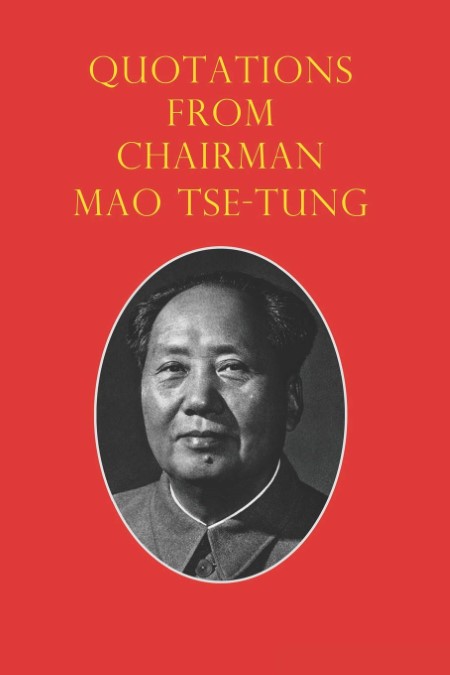
Quotations from Chairman Mao Zedong was compiled from speeches and writings of Mao Zedong, the leader of China’s Communist Revolution. It was first published in 1964 (by the People’s Liberation Army) and continuously reprinted through the 1960s and 1970s. The book is better known in the West as the “Little Red Book,” for its small pocket-sized format and bright red cover. It contains 427 selected quotations arranged into 33 thematic chapters. The topics range from the role of the Communist Party and the importance of class struggle, to issues of war, peace, and revolution – essentially encapsulating Mao’s communist ideology and political philosophy during a tumultuous era in China. Each quote is brief (anywhere from one sentence to a few paragraphs) and meant to be easily memorized and referenced by readers.
Synopsis (General Theme):
This isn’t a narrative story, but rather a collection of Mao’s slogans and teachings. Mao emphasizes concepts like self-reliance, the importance of ideology, and the idea that “political power grows out of the barrel of a gun.” Chapters have titles such as “Classes and Class Struggle,” “War and Peace,” and “Imperialism and All Reactionaries Are Paper Tigers,” each compiling Mao’s pronouncements on that subject. The quotes exhort the reader to commit fully to the communist cause, to struggle against class enemies, and to uphold Mao’s vision of socialism. In essence, Quotations from Chairman Mao served as a concise handbook of Maoist thought. During China’s Cultural Revolution (1966–1976), it was expected that every citizen (including soldiers and schoolchildren) not only own a copy, but study it diligently and carry it at all times. Its aphorisms became ingrained in daily life and political discourse in China during that period.
Impact & Popularity:
Quotations from Chairman Mao Zedong is one of the most widely distributed books in history, with total copies rivaled only by the Bible. Precise figures are hard to verify, but estimates range from at least 740–800 million official copies to over a billion when unofficial printings are included. During the late 1960s, Chinese state media reported that nearly every one of China’s 700 million people owned or had access to a copy. This unprecedented circulation was driven not by commercial marketing but by political mandate and mass enthusiasm. The Chinese government heavily subsidized and promoted the book – providing paper, printing presses, and distribution channels so that Quotations could be printed in enormous quantities. It was translated into many languages and spread internationally as an icon of global communism. At the height of its popularity, the Little Red Book was waved at rallies, chanted in slogans, and treated with a fervor akin to religious devotion.
Despite being a product of its specific historical context, the book’s impact was immense. It crystallized Mao’s cult of personality – his quotes were memorized like scripture. The book also helped shape political movements abroad; in the 1960s and ’70s, Maoist revolutionary groups from Asia to the West often brandished the Little Red Book as a symbol of solidarity. Its popularity waned after Mao’s death and the end of the Cultural Revolution, but the book remains a significant historical artifact. Today, copies (especially vintage ones) are collected and studied by historians, and phrases from Mao’s quotations (like “political power grows out of the barrel of a gun”) still appear in discussions of revolutionary politics. In summary, Quotations from Chairman Mao became so popular because it was a linchpin of state-driven mass politics – a book essentially placed in the hands of hundreds of millions by their government – and it encapsulated the spirit of an era in Chinese history, leaving an indelible mark on 20th-century political culture.
Author/Year:
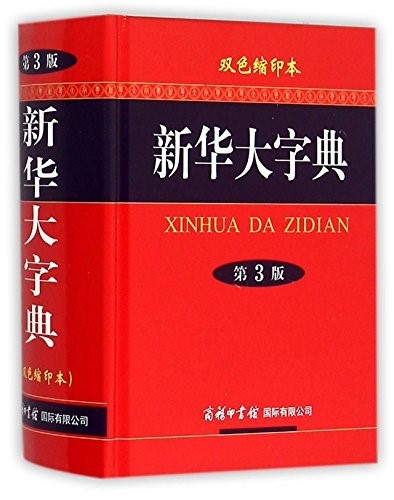
It might be weird to see a DICTIONARY on this list, but this dictionary is legendary. The Xinhua Dictionary (Xīn huá zìdiǎn) is a Chinese language dictionary first published in 1953 by The Commercial Press in Beijing. Rather than a single author, it was compiled by a team of linguists and scholars under government sponsorship, with the aim of standardizing the modern Chinese lexicon. The word “Xinhua” means “New China,” reflecting the era of its creation just after the establishment of the People’s Republic in 1949. The dictionary has been updated constantly over the decades, releasing new editions to include new words and usage; thus it’s considered a “regularly updated” reference book. Notably, it was the first modern dictionary of Chinese written in the simplified Mandarin character system, and it even included illustrations (a novelty at the time) to help learners.
Synopsis (What it Contains):
As a dictionary, Xinhua Zidian doesn’t have a storyline or characters – it’s a reference work containing around 13,000 Chinese characters, each with definitions, pronunciations (using pinyin romanization), example phrases, and other linguistic information. Essentially, it’s the go-to small handbook for looking up Chinese characters. The dictionary is designed in a compact format for easy carry, somewhat analogous to “pocket dictionaries” in the West. It has entries organized by stroke order or radical, which are ways to index Chinese characters. For example, a student could look up the character for “horse” (马) by finding the section for characters with the radical for horse or by counting strokes. Each entry provides the pronunciation, the meaning(s) in Chinese, and often example compound words or phrases that use that character. Over time, the editors have expanded it to include new vernacular words, scientific terms, and so on, reflecting the evolving language.
Impact & Popularity:
Xinhua Dictionary holds a Guinness World Record as the world’s “Most Popular Dictionary” and the best-selling book that is regularly updated. As of 2015, it had sold about 567 million copies globally – more copies than any single-volume dictionary or any book of its kind. To put that in perspective, it means roughly one copy for every two or three people in China. In fact, the Xinhua Dictionary has been an essential tool for generations of Chinese students; many Chinese children receive a copy during primary school as they start learning to read and write. Its popularity stems from a combination of factors:
Educational Utility: In a country with a vast population and a complex writing system, a simple standardized dictionary was hugely important for promoting literacy. The Xinhua Dictionary became known as the “National Dictionary,” an indispensable resource for school homework and everyday reference. Parents often ensure their kids have one for school, driving sales year after year.
Government Endorsement: The dictionary was published by a state-run press and was effectively the officially sanctioned reference for Mandarin Chinese. This meant it was widely adopted in the school curriculum and by institutions, further cementing its ubiquity.
Size and Price: It’s relatively small, affordable, and portable. Because it’s designed to be a concise dictionary (as opposed to multi-volume encyclopedic dictionaries), ordinary people find it handy to own. Its convenience helped it reach rural and urban populations alike.
Over the decades, the Xinhua Dictionary became a cultural icon in its own right – symbolizing the standardization of the Chinese language and even the broader spread of education in modern China. Guinness World Records recognized it for its unparalleled sales and influence, noting that it’s a repository of Chinese culture and has impacted the linguistic lives of billions. Even outside of China, students of Chinese as a foreign language use this dictionary due to its clear definitions and authoritative status. In short, the Xinhua Dictionary is so popular because it met a fundamental need (learning the language) in the world’s most populous nation. Its massive sales reflect how many people have learned Chinese with its help – truly making it one of the most popular books in history, albeit a non-fiction/reference one.
Author/Year:
Don Quixote is a Spanish novel written by Miguel de Cervantes. It was published in two parts, first in 1605 and later in 1615. The full Spanish title was “El ingenioso hidalgo don Quijote de la Mancha,” and it’s often regarded as the first modern novel in Western literature. Cervantes, a former soldier and tax collector turned writer, imbued the work with satire, humor, and profound insight into human nature. Over four centuries, Don Quixote has become one of the most celebrated classics in world literature.
Synopsis:
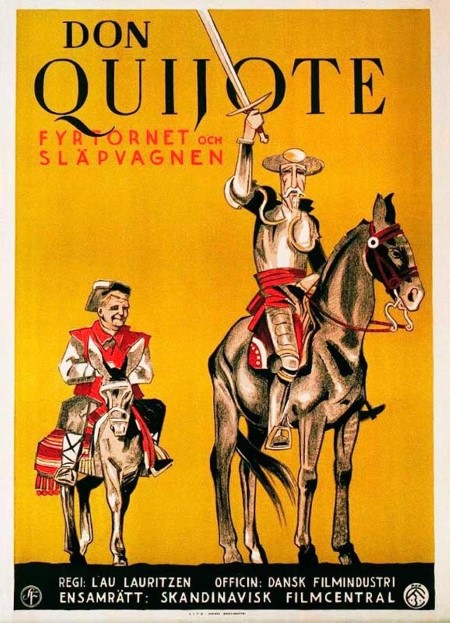
The novel follows the adventures of Alonso Quixano, a genial but obsessive Spanish gentleman who has read so many chivalric romances that he loses touch with reality. Declaring himself a knight-errant named “Don Quixote de la Mancha,” he dons an old suit of armor, renames a broken-down farm horse as his mighty steed “Rocinante,” and sets out to perform noble deeds and revive the age of knight-errantry. He is accompanied by his loyal squire, Sancho Panza, a practical, down-to-earth farmer whom Quixote recruits to join him. Don Quixote’s imagination famously turns ordinary objects into fantastical challenges – in the most iconic scene, he attacks windmills that he believes to be fearsome giants.
This comical misadventure, along with many others, forms the heart of the book’s first part. Quixote insists on seeing the world not as it is, but as it ought to be according to knightly ideals. Throughout the novel, the contrast between Don Quixote’s idealism (or delusion) and Sancho Panza’s common-sense realism provides both humor and thoughtful commentary. They encounter innkeepers Quixote takes for castle lords, peasant girls he imagines as princesses, and traveling actors he mistakes for enchanters. While much of the story is very funny, it also has a bittersweet tone – Quixote’s intentions are pure and courageous, but his failure to see reality often leads to trouble or tragedy. Cervantes uses these episodes to explore themes of idealism vs. realism, the power of literature, and the complexity of human dreams.
Impact & Popularity:
Don Quixote is frequently cited as the best-selling novel of all time, with an estimated 500 million copies sold over the past four centuries. While exact sales across history are impossible to confirm, it is clear that this book has had an unparalleled influence on literature and culture. Here’s why it’s so impactful and popular:
Foundational Influence: As one of the earliest novels, Don Quixote essentially set the template for long-form fiction. It introduced realism and psychological depth at a time when romances and epics were more fanciful. Many literary scholars consider it the first true modern novel, and authors from Dostoevsky to Faulkner have cited it as a favorite. The book’s central character, the deluded yet noble Quixote, gave rise to the term “quixotic,” meaning extravagantly idealistic or impractical – a permanent addition to the lexicon.
Universal Themes: The story of an individual who insists on pursuing his dream and vision, however outlandish, resonates universally. Readers across eras empathize with Don Quixote’s passion and Sancho’s loyal friendship. The novel is simultaneously comic and tragic, entertaining and philosophical. This rich duality means it can be appreciated on multiple levels: as slapstick adventure, as social satire, and as a profound meditation on hope, reality, and the human condition.
Cultural Icons: Don Quixote and Sancho Panza have become iconic characters. The image of the lanky knight tilting at windmills is known worldwide as a symbol of impractical idealism. Their friendship – the dreamy knight and the earthy squire – set a pattern for “odd couple” companions in countless stories since. The novel has inspired innumerable adaptations: there have been stage plays, ballets, operas, films, and artworks based on Don Quixote. Even the musical Man of La Mancha (1965) is a famous interpretation of Quixote’s tale, featuring the song “The Impossible Dream,” which encapsulates the novel’s enduring message of striving for virtue against all odds.
Longevity and Global Reach: Don Quixote has been continuously in print since the 17th century. It’s been translated into more than 50 languages and is read in countries around the world. Its longevity is unmatched – few other novels have remained as widely read for so long. Cervantes’ masterpiece manages to feel surprisingly modern even today, because it was ahead of its time in blending genres and breaking the “fourth wall.” Such innovations keep new generations of readers engaged and scholars fascinated.
In terms of sheer numbers, those half-billion copies sold include everything from scholarly editions to children’s illustrated abridgments. The novel’s popularity has also been boosted by education – it’s often part of school curricula or university literature courses (especially in Spanish-speaking countries but also globally as world literature). All these factors together explain why Don Quixote remains one of the most popular and significant books ever written. The book’s massive influence and continued readership make it a cornerstone of literary history and a beloved favorite of millions.
Author/Year:
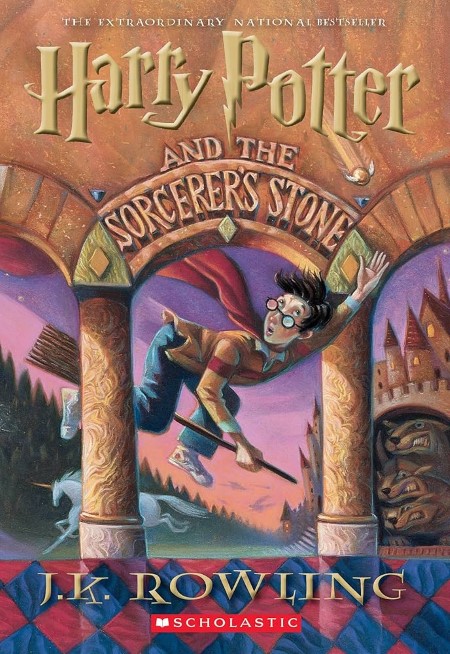
Harry Potter and the Sorcerer’s Stone is the first novel in the Harry Potter series, written by British author J.K. Rowling. It was first published in the U.K. in 1997 under the title Harry Potter and the Philosopher’s Stone. The following year, it was published in the United States with the title changed to “Sorcerer’s Stone.” Rowling was an unknown debut author at the time, and the initial print run was famously small – a sharp contrast to the phenomenon it would soon become.
Synopsis:
This book introduces us to Harry Potter, a seemingly ordinary 11-year-old orphan who has been living a hard life with his neglectful aunt, uncle, and cousin. Harry’s life changes dramatically when he discovers that he is, in fact, a wizard. He learns that his deceased parents were a witch and wizard, and that he has been invited to attend Hogwarts School of Witchcraft and Wizardry, a magical boarding school hidden in the British countryside. Harry also learns of his own fame in the wizarding world – as an infant, he miraculously survived an attack by the dark wizard Lord Voldemort, which left Harry with a lightning-bolt scar on his forehead and Voldemort mysteriously vanquished.
At Hogwarts, Harry befriends two other first-year students – Ron Weasley, from a large family of warm-hearted red-headed wizards, and Hermione Granger, a brilliant and studious witch born to non-magical parents. Together, the trio is sorted into Gryffindor House and begins learning magic (from flying on broomsticks to casting spells) under Hogwarts’ eccentric and wise professors. The story follows the school year as Harry adjusts to this wonder-filled new world. But not all is well at Hogwarts: a mysterious object guarded by a three-headed dog, whispered rumors of Voldemort’s possible return, and a series of challenges force Harry, Ron, and Hermione to step up and face dangers well beyond their years. The narrative strikes a balance between whimsical school adventures – like playing Quidditch (a magical sport played on broomsticks) – and an overarching mystery that Harry must solve to protect the Sorcerer’s Stone from falling into the wrong hands. Along the way, Harry discovers clues about his parents’ past and the truth about Voldemort’s downfall.
Impact & Popularity:
Harry Potter and the Sorcerer’s Stone (and the series it launched) is a global cultural phenomenon. The first book itself has sold an estimated 120 million copies worldwide, making it one of the best-selling individual novels in history. Moreover, the seven-book Harry Potter series has sold over 500 million copies in total – the best-selling book series ever. Several factors explain the extraordinary popularity and impact of Harry Potter:
Magical yet Relatable World: Rowling created an elaborate magical world coexisting with the ordinary world, full of imaginative details that captivated readers’ imaginations. At the same time, Harry and his friends deal with universal coming-of-age experiences – making friends, standing up to bullies, coping with loss, and finding one’s identity. This blend of fantasy and relatable human themes drew in both children and adult readers.
Word-of-Mouth and Fandom: Initially, the book gained popularity through word-of-mouth – kids would recommend it to friends, teachers and librarians championed it, and soon it spread like wildfire. By the time the second and third installments came out, a loyal fanbase was forming. The series eventually became so popular that midnight release parties were held at bookstores for each new sequel, with fans lining up in costume. The fandom aspect – online forums, fan fiction, merchandise, theme parks – created a virtuous cycle, continually drawing new readers in.
Critical Acclaim and Accessibility: The book’s language is very accessible; it’s easy to read yet doesn’t talk down to its audience. This meant it could hook even reluctant readers. There’s a oft-cited idea that Harry Potter revived the joy of reading for a whole generation, and indeed educators noted a surge in kids’ interest in reading thanks to these books.
Adaptations and Media: The popularity further skyrocketed when Hollywood adaptations came into play. The movie was a massive hit, which in turn spurred more book sales. Over the next decade, the eight blockbuster films brought the story to an even wider global audience, many of whom then went on to read the books. The Harry Potter brand expanded into video games, spin-off books, and even real-life attractions like the Wizarding World theme park.
Approximate copies sold: 150 million
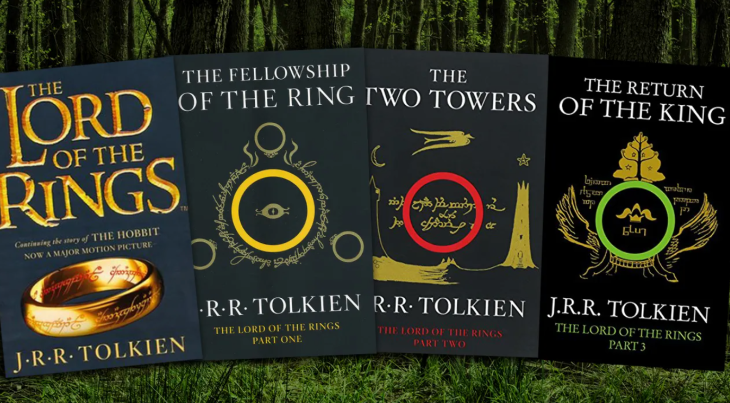
You may ask why this is number 5 as it has more sales than the first Harry Potter. The answer is that this is the number of copies sold for the entire trilogy. The Lord of the Rings is an epic fantasy novel by English author J.R.R. Tolkien. It was originally published in three volumes – The Fellowship of the Ring (1954),The Two Towers (1954), and The Return of the King (1955) – although Tolkien conceived it as a single novel divided for practicality. Tolkien, who was a linguist and Oxford professor, created an extensive mythological world for this story, building on his earlier children’s novel The Hobbit (1937). Over the years, The Lord of the Rings has sold over 150 million copies worldwide, placing it among the all-time top-selling novels.
Synopsis:
The Lord of the Rings is set in the fictional world of Middle-earth, a land populated by humans, elves, dwarves, hobbits, wizards, and other fantastical creatures. The story begins in the peaceful Shire, home to the diminutive, good-natured Hobbits. The young hobbit Frodo Baggins inherits a simple gold ring from his uncle Bilbo – only to discover that this ring is in fact the One Ring, a device of immense evil power created by the dark lord Sauron. Sauron, who lost the Ring long ago, is regaining strength and seeks to recover it to conquer Middle-earth.
Under the guidance of the wizard Gandalf the Grey, Frodo realizes that the Ring must be destroyed before Sauron finds it. Thus, Frodo sets out on a perilous journey with eight companions – forming the Fellowship of the Ring. This fellowship includes Frodo’s loyal Hobbit friends, the human warriors Aragorn and Boromir, the elven prince Legolas, the dwarf Gimli, and Gandalf himself. Their mission: travel across Middle-earth to cast the Ring into the fires of Mount Doom in Sauron’s realm of Mordor, the only place it can be unmade. Along the way, they face countless dangers: hordes of orcs, monstrous creatures like the Balrog, treachery within and without, and the eerie, ring-obsessed creature Gollum who stalks Frodo. The story’s scope is vast – wars erupt across different kingdoms, alliances are forged, and ancient prophecies unfold. Yet at its heart, it remains Frodo and Sam’s arduous personal quest to bear the Ring to Mount Doom, resisting its seduction of power.
Impact & Popularity:
The Lord of the Rings is one of the most influential and popular works of fiction ever written. Its estimated 150 million+ copies sold testify to its enduring appeal. Here are key reasons for its immense popularity and impact:
Genre-Defining Epic: Tolkien’s work essentially defined the modern fantasy genre. Almost every fantasy book, game, or movie produced since bears the footprint of The Lord of the Rings. The idea of a grand quest, a Dark Lord, a band of heroes from different races – these tropes became staples of fantasy literature because of Tolkien. Prior to this, “fantasy” wasn’t a mainstream genre; Tolkien’s success created a template that countless authors would draw inspiration from. Even Dungeons & Dragons and other role-playing games owe a huge debt to the world Tolkien created.
Rich World-Building: Part of what makes the book so engrossing is the depth of Middle-earth. Tolkien constructed languages, histories, and geographies for his world with scholarly precision. Readers often remark that Middle-earth feels like a real mythic history. This level of detail allows fans to immerse themselves completely. People re-read the novel multiple times to catch nuances, and an entire ecosystem of analysis and fandom has grown around decoding its languages and legends.
Beloved Characters and Themes: The characters of LOTR are iconic. From the humble bravery of Frodo and Sam, to the nobility of Aragorn, the ethereal grace of Legolas, and the wise, fatherly guidance of Gandalf – readers form deep attachments to these heroes. The story explores timeless themes: the struggle between good and evil, the corrupting influence of power, friendship and loyalty, sacrifice for a greater good, and even the sadness of change and loss as eras end. These themes resonate widely.
Literary Merit: Tolkien’s writing style is old-fashioned and poetic, which gives the story a sense of mythic grandeur. While some modern readers find it dense, many others appreciate it as a work of literary art. In 2003, The Lord of the Rings topped several polls as the “Nation’s best-loved novel” in the UK, showing its broad appeal. It’s also worth noting that The Lord of the Rings has been translated into dozens of languages, bringing the story to readers in many countries and cultures.
Renaissance through Adaptations: After the initial success in the 1950s and ’60s, the series got a massive new surge of popularity in the early 2000s with Peter Jackson’s film trilogy. The films were critically acclaimed and commercially huge – they won multiple Oscars and were seen by tens of millions. This led to skyrocketing book sales once again. New collectors’ editions were printed, and a whole new generation who saw the movies went on to read (or re-read) the books. Even today, with new adaptations like Amazon’s The Rings of Power show, Tolkien’s world continues to attract audiences.
With all these factors, The Lord of the Rings remains perennially popular. It’s not just a book but a cultural touchstone. Fans often discuss it as an allegory (Tolkien denied it was a strict allegory, but many see parallels to World War themes or environmentalism). Others simply enjoy it as an adventure story of the highest order. Importantly, it’s “popular” not only in sales figures but in its effect on readers – many people count reading LOTR as a defining experience of their youth or an inspiration for their own creativity. With over 150 million copies sold, The Lord of the Rings is one of the best-selling prose narratives of the twentieth century and remains beloved by fans across the globe. Its story of “an unlikely hero fated to save the world from destruction — and the close-knit fellowship that aids him” has become the template for countless fantasy stories that followed. In short, The Lord of the Rings became so popular because it offers a sweeping, beautifully crafted escape into a world of heroism and hope, one that readers revisit again and again across generations.
Author/Year:
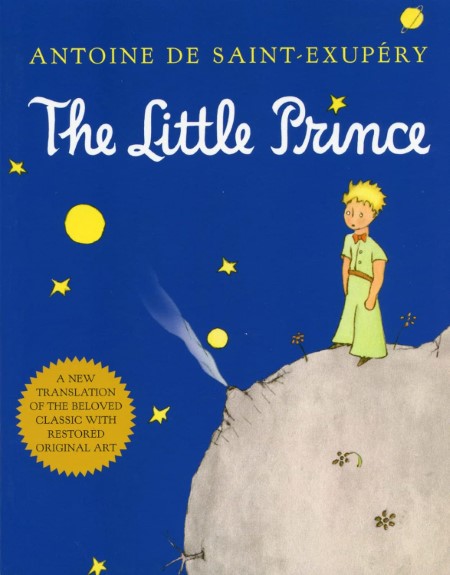
The Little Prince (Le Petit Prince in French) is a novella written by Antoine de Saint-Exupéry, first published in 1943. It was published in New York City – Saint-Exupéry was a French aviator and writer who wrote the book during World War II while exiled in America. It was released in both French and English in April 1943. Saint-Exupéry’s background as a pilot deeply informs the story’s imagery and themes. Though written as a children’s fable, The Little Prince is often considered a work of philosophy and has charmed readers of all ages around the world.
Synopsis:
The Little Prince begins with a narrator – a pilot – who crash-lands his airplane in the Sahara Desert. Stranded and desperate, the pilot is astonished when a small blond boy, the titular Little Prince, appears and asks him, “Please, draw me a sheep.” As the pilot grapples with fixing his plane, the Little Prince shares the story of his origin. He comes from a tiny asteroid-like planet (known as Asteroid B-612), no bigger than a house, where he lives alone tending to his chores – clearing out baobab tree sprouts (so they don’t overgrow his little planet) and caring for a very special, vain Rose that has grown there. One day, feeling lonely and disillusioned with his Rose’s temperamental nature, the Little Prince set off to explore other worlds.
He recounts to the pilot his interplanetary journey: visiting a series of small asteroids, each inhabited by a curiously single-minded adult. There’s a king with no subjects who makes meaningless “commands,” a conceited man who craves admiration, a drunkard ashamed of his drinking, a businessman obsessively counting stars he claims to own, a lamplighter absurdly obeying outdated orders to light a lamp every minute, and a geographer too sedentary to explore the worlds he records. These encounters are satirical portraits, gently exposing the folly of various adult fixations – power, vanity, addiction, greed, busywork, and armchair academics. Eventually, the Little Prince arrived on Earth, where he wandered in the desert. He befriended a fox, who taught him that only through the heart can one see truly (for example, the time the Prince has spent caring for his Rose is what makes her unique in all the universe to him). The fox’s lesson “One sees clearly only with the heart. What is essential is invisible to the eye.” is one of the book’s most famous lines. The Little Prince also encounters a snake who speaks in riddles about being able to send him “home” (implying death).
As the Little Prince finishes telling his tale, both he and the pilot gain insights. The Sahara setting and the need to fix the plane provide a gentle tension – the pilot’s life depends on finding water and repairing the engine, and time is running out. The story concludes in a bittersweet, symbolic way that underscores themes of love, loss, and remembering what truly matters. Despite its simple, fairy-tale-like narrative, The Little Prince delivers profound observations about the foolishness of grown-ups, the beauty of friendship, the pain of separation, and the purity of childlike perspective. The book is also accompanied by Saint-Exupéry’s own delightful watercolor illustrations of the characters, which have become iconic in their own right.
Impact & Popularity:
Although brief, The Little Prince is one of the most widely read and beloved books in the world. It’s often said to be the most translated non-religious book, having been translated into hundreds of languages and dialects – from major languages like Spanish and Chinese to indigenous and rare languages. In terms of sales, The Little Prince is commonly estimated to have sold on the order of 150–200 million copies worldwide, placing it among the all-time bestsellers. Its popularity endures for several reasons:
Universal Themes and Philosophical Depth: The Little Prince might look like a children’s book, but it’s often described as a book for the child in everyone. It tackles big questions: the meaning of love and friendship, the shallow values that adults often prioritize, and the transient nature of life. Almost every reader finds some personal resonance in it – whether it’s the criticism of adult busyness, or the lesson that true love involves responsibility. The story invites multiple interpretations and deep reflection, which is why adults return to it and new generations keep discovering it.
Emotional Connection: The relationship between the Little Prince and his Rose, and between the Prince and the pilot, can bring readers to tears. Saint-Exupéry wrote the book during a tumultuous time, having experienced loss and longing, and that emotional undercurrent gives the fairy tale a real poignancy. The ending is famously open to interpretation – both sad and hopeful – prompting discussions about mortality and memory.
Accessibility and Language: The book is very short and written in a clear, poetic style. This makes it easy to translate and easy to read in one sitting. Its brevity and clarity help it spread across borders; even those who aren’t avid readers might pick it up and be enchanted.
Cultural and Educational Presence: The Little Prince is part of school curricula in many countries. It’s also highly quotable – lines from the book are frequently cited in speeches, on posters, in songs, etc. The imagery of the Little Prince standing on his tiny planet, or sketching a sheep, is instantly recognizable.
Adaptations and Merchandise: Over the years, The Little Prince has been adapted into numerous forms – there are stage plays, animated films, television episodes, and even an opera. The character of the Little Prince has almost a merchandise life similar to Peter Pan or Winnie-the-Pooh. This gentle commercialization keeps the story in popular awareness without diluting its message.
One could say The Little Prince is so popular because it speaks to the soul in a simple, artful way. Children enjoy it as a fanciful tale of a boy traveling the stars, and adults cherish it as an allegory about life’s deepest truths. Saint-Exupéry’s own life story often adds a layer of mystique when people consider the book’s themes of absence and looking at the stars. In conclusion, The Little Prince has captured hearts globally due to its unique blend of childlike imagination and profound wisdom, earning its place as one of the most popular and treasured books in history.
Author/Year:
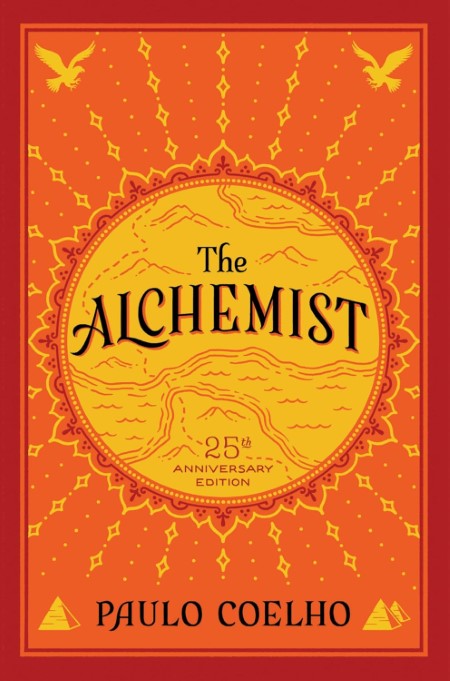
The Alchemist is a novel by Brazilian author Paulo Coelho, first published in Portuguese in 1988 as O Alquimista. It’s a short, allegorical novel that initially had modest success in Brazil. After Coelho found a new publisher and the book was translated into multiple languages in the early 1990s, it began to gain worldwide attention. Over the years, The Alchemist has grown into an international bestseller – as of today it has sold over 150 million copies worldwide, making it one of the few books to break the 100-million mark. It’s been translated into about 80 languages, earning a Guinness World Record for the most translated book by a living author.
Synopsis:
The Alchemist tells the story of Santiago, a young Andalusian shepherd from Spain who keeps having a recurring dream about a hidden treasure waiting for him near the Egyptian pyramids. Believing this dream to be prophetic, Santiago decides to pursue this dream – essentially to seek out his Personal Legend, as Coelho calls one’s destiny. He sells his flock of sheep and embarks on a journey from his home in Spain to North Africa and onwards toward Egypt. Early in his journey, Santiago is robbed and nearly loses hope, but he takes up work at a crystal merchant’s shop to earn money and learns important lessons about perseverance and faith.
Continuing on, he joins a caravan crossing the Sahara desert. Among the travelers, Santiago meets an Englishman who is studying to become an alchemist. The Englishman is seeking a famed Alchemist who resides at the Al-Fayoum oasis. In the oasis, Santiago meets a young woman named Fatima and falls in love, which tempts him to settle down. However, the Alchemist (an enigmatic 200-year-old master of alchemy) appears and encourages Santiago to continue pursuing his Personal Legend, promising to guide him. Under the Alchemist’s mentorship, Santiago learns deeper truths about listening to his heart and understanding the “Soul of the World” – a spiritual force that connects all of nature and mankind. The Alchemist demonstrates magical feats and instructs Santiago to perform an impossible task of transforming himself into the wind, teaching him about courage, intuition, and the oneness of the universe.
Ultimately, Santiago reaches the pyramids in Egypt, following omens and his heart’s guidance. The climax has a twist that involves Santiago discovering where his treasure truly lies, in a manner that completes his journey both literally and spiritually. The Alchemist reads like a parable or fable. It’s simple in plot, but heavy with symbolic meaning and inspirational aphorisms. Coelho’s message is essentially about following one’s dreams, learning the lessons life presents, and ultimately finding one’s destiny, which often comes full circle.
Impact & Popularity:
The journey of The Alchemist from obscurity to global fame is almost as dramatic as Santiago’s own journey. Today, The Alchemist is often mentioned in the same breath as literary classics in terms of copies sold, and its impact has been profound:
Inspirational Appeal: The Alchemist struck a chord with readers worldwide for its uplifting message. It’s essentially a motivational story wrapped in mystical packaging. Many readers describe feeling deeply inspired after reading it – it encourages them to pursue their dreams and listen to their hearts. Because it’s not tied to a specific culture or religion, it resonates across cultural boundaries. Whether you’re a reader in India, America, or Europe, the idea of a personal destiny and the importance of hope and perseverance are relatable themes. The book’s tone is optimistic and reassuring, which appealed especially during the ’90s and 2000s era of self-help and personal development movements. Quotes like “When you want something, all the universe conspires in helping you to achieve it” have become famous mantras for many.
Simplicity and Readability: Coelho’s writing is very straightforward and metaphorical. The novel is short and can be read quickly. This made it accessible to a broad audience, including people who might not often read novels. Its brevity and clarity helped word-of-mouth: someone might read it in a day or two, feel moved, and then pass the book to a friend saying “you must read this.” It’s the kind of book that gets gifted a lot because of its inspirational impact. This grassroots sharing greatly boosted its popularity.
Global Word-of-Mouth & Celebrity Endorsement: The Alchemist didn’t become a blockbuster overnight – it grew gradually, propelled by enthusiastic readers and even celebrities. Over the years, high-profile figures talked about loving The Alchemist, which introduced it to their fans. Such endorsements, combined with generally positive reviews, helped The Alchemist gain a snowballing momentum. It became an international bestseller list mainstay. The novel also saw huge popularity in places like Iran, where millions of copies sold. Its success in multiple markets and multiple languages is remarkable; it’s one of those rare books that was as big in, say, Japan or Turkey as it was in English-speaking countries.
The Author’s Personal Legend: Paulo Coelho’s own life story around The Alchemist became part of the book’s legend. Coelho has often spoken about how he was told by his first publisher that the book was not selling – they dropped it after it sold only a few hundred copies. He persisted, found another publisher, and continued to believe in his book even when success was not immediate. This narrative of the author following his Personal Legend and eventually succeeding mirrors the book’s message and added an appealing meta-layer: it was proof that believing in one’s dream can pay off. Readers find Coelho’s sincerity and life philosophy inspiring, which in turn draws them to his work.
Longevity and Adaptations: The Alchemist continues to sell vigorously decades after release, often recommended in schools and book clubs. It has been adapted into stage plays and reportedly a film adaptation has been in talks for years. Coelho interacts with his large fanbase on social media, keeping the book in contemporary discussions. Its staying power is evidenced by the fact that it’s one of only a handful of books to sell over 100 million copies.
In conclusion, The Alchemist became so popular because it distilled age-old wisdom about following one’s dreams into a simple, poetic story that anyone can relate to and understand. It arrived at a time when the world was perhaps hungry for positive, spiritual storytelling outside of organized religion. As a result, the book transcended borders and languages. People hand it to friends saying, “This book changed how I see my life.” Such personal impact on millions of readers has elevated The Alchemist to a modern classic. It’s not just a best-seller; for many, it’s a life-changing fable – which is why its popularity has endured and grown, placing Coelho’s little novel among history’s most beloved books.
Conclusion:
These seven books – ranging from political treatises and dictionaries to novels of fantasy, adventure, and philosophy – have each touched hundreds of millions of lives. Their popularity stems from a mix of historical circumstance, universal themes, and emotional resonance. Whether it’s a manual carried by an entire nation, a dictionary that helped educate generations, or a story that sparks the imagination, these works have proven to be timeless in their appeal. They remind us that books can shape worldviews, preserve culture, inspire personal journeys, and unite readers across time and space. Each of these titles has earned its place in history through an extraordinary connection with readers, and they continue to be read, remembered, and loved by new audiences every year.