
Once example of a study conducted in relation to the perception of time was held in 2005 at the Ludwig Maximilian University of Munich. Psychologists Marc Wittmann and Sara Lenhoff surveyed a sample of 499 participants, aged between 14 and 94. They were asked about how fast they felt time was moving, and had the option to select different answers ranging from “very slowly”, to “very fast”.
The psychologists conducting the study concluded that the perception of short periods of time, namely days, weeks or months, did not change with age. In fact, the general perception for these time periods was that the clocked ticked by quickly.
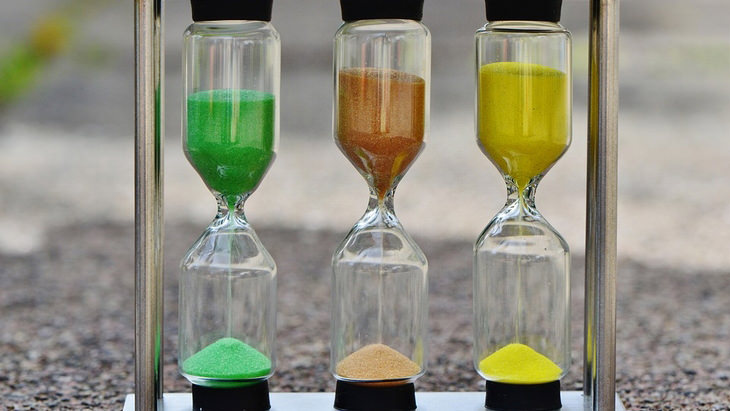
In contrast, when participants were asked about longer periods of time, such as a decade, a pattern began to emerge. Older people had a much greater tendency to perceive such time periods as moving faster.
The study’s participants aged 40 or older felt that time elapsed slowly in their childhood, but accelerated steadily from when they were in their teens into early adulthood.
The main reason for this is that a human being can estimate the length of an event from two distinct vantage points, prospective and retrospective. As their names suggest, the former occurs when an event is still ongoing, and the latter occurs when an event has ended.
A secondary reason for the perception of accelerated time is that our experience of time simply varies from one experience to the other. This means that there really is truth in the saying “time flies when you’re having fun”. The funny thing is that when we’re in such special moments, they seem to end quickly, however our perception of them when we look back at them makes it seem as if they were much longer than they really were.
It’s believed that the reason for the aforementioned is how the brain encodes new experiences. In other words, the more new memories we build on a weekend getaway, the longer the trip will seem in hindsight.
According to BBC columnist and psychologist Claudia Hammond, this is what’s known as the “holiday paradox”. From childhood through to early adulthood, we go through many new experiences and learn a whole myriad of new skills. As time goes by, our lives become more routine, thus we tend to experience less moments that are unfamiliar.
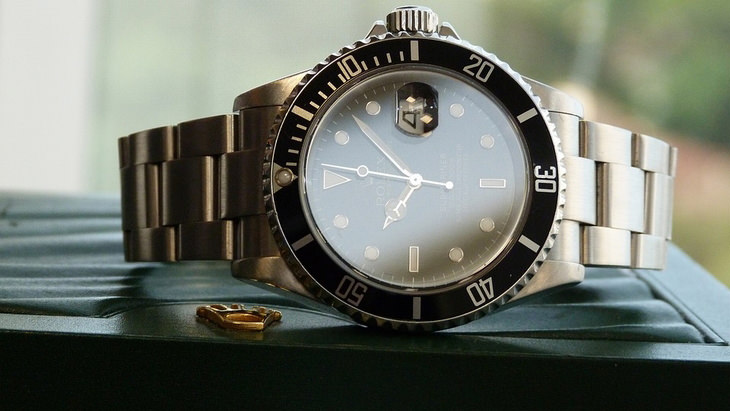
She contends that because we deal with so many new things in our early lives, this leads to over-representation of our early lives in our autobiographical memory. The inevitable result of this is that the time seems to have lasted longer.
All of these findings don’t mean that we are unable to slow time down in later life. In fact, we can do so by keeping our brains active, continually learning new skills and ideas, and exploring new places.
Content Source: Scientific American

Do Hangovers Really Get Worse With Age?
While research on this phenomenon is somewhat limited, science offers several compelling explanations for why that morning-after misery intensifies as the years go by.
4 Ways to Tell Time Without a Watch
Phone battery died? These methods will help you tell the time by relying solely upon the sun - no watch needed!
54:17
Science Philosophy: What is the TRUE Nature of Time?
Join us as we journey through theories, discussions, and insights that challenge our perceptions and broaden our understanding of time itself.
Study: Can Our Sense of Time Heal Us Faster?
A recent groundbreaking study delves into how our perception of time can significantly impact the physical process of healing.

Marijuana Might Not Be As Harmless As Previously Thought..
Marijuana is being pushed as a harmless recreational drug around the world, but it might not be as harmless as previously thought thanks to this study.
Scientists Find Enzyme That Could End Aging and Cancer
Scientists have found an enzyme that they reckon could be used to slow down the aging process and eradicate cancer!

Will We Ever Solve Our Universe's Most Complex Mysteries?
Here are 8 of the biggest unsolved mysteries from the world of physics.
17:03
What is a Ballistic Missile and is Its Purpose?
Why is the ballistic missile so feared, and what exactly qualifies it as such - will all be explained in this informative video.
8 Important Inventions That Were a Complete Accident
It might be interesting for you to learn that some very important scientific innovations were born as a result of an accident.
4:20
Ever Wondered About How Our Minds Retain and Lose Memories?
Ever wondered why you can remember something from 20 years ago, but have difficulty remembering what you had for lunch the other day? Learn why here.
The 12 Game-Changing Inventions From 2024 You Missed
2024 was a ground-breaking year in terms of innovation. Here's a look at some of the key breakthroughs from the year.
17 Incredible Eye Facts You Have To See To Believe
They say the eyes are the window to the soul, and they also happen to be our windows to the world. Here are 17 insanely fascinating facts about eyes.
50:02
Take a Trip Through the Universe and Witness its Beauty
Since its launch, the Hubble Telescope returned images of unprecedented beauty of a dynamic and changing universe. Take a look!
22:35
Neuralink Update 2025: The Most Incredible Moments
Welcome to our 2025 Neuralink update, where we’ll take you through the most incredible and groundbreaking moments from the past year.
22:52
Will AI Take Your Jobs? An Expert Explains the Future
Gonzaga University's AI professor Graham Morehead some of our most pertinent questions related to AI.
What is the Troxler Effect and How Does it Affect You?
Learn about Troxler's effect and the optical illusions it creates in life.
20:04
Emotions Explained: The Science Behind How We Feel
Neuroscientist and psychologist Dr. Richard J. Davidson answers some fascinating questions about emotions you would never expect.
2:41
Trick-Mousing is Such Adorable Entertainment...
Mice are much cleverer than most people believe, and they easily respond to training, as long as you use positive reinforcement, or in other words - reward them frequently for their behavior with food.
10:46
Neat Life Hacks To Help You Remember Things Better
A lot of us tend to forget the simplest things at times. This video provides some neat tips to help boost your memory.
These Underwater Craft Are Changing Marine Science
Here's a look at the most remarkable machines currently expanding our understanding of the underwater world.
58:37
Science: Here's Everything We Know About Pluto
Join us as we unravel the mysteries of far off Pluto, 3.7 billion miles from our Sun.
10:31
Science Predicts These 10 Technologies Will Rule 2025
These upcoming tech innovations will reshape our world.
How AI Is Fixing Problems Humans Struggle With
Here’s how AI is quietly reshaping the world in ways that actually matter.
12 Bizarre Scientific Facts You Never Learned at School
The scientific facts we collected in this list aren't the kind of stuff you'll see in a school curriculum.
8:11
Fascinating: What is the Deepest Hole Humanity Has Dug?
This video explains how low humanity has dug down so far.
11:40
6 Of the Earliest Known Parasites Ever Found
Get to understand and learn about the earliest parasites discovered by scientists.
New Study: Dopamine Does Way More Than We Thought!
How the brain's reward system physically rewires the motor cortex during skill learning — and what happens when that reward signal gets cut off.
Science News: AI-Designed Drugs Move to Human Trials
Isomorphic Labs, is positioning itself to begin human clinical trials of medications designed entirely through artificial intelligence, marking a potentially transformative shift in how we develop life-saving treatments.
Science History: 17 Math Equations that Changed the World
In this article, we'll journey through 17 of these monumental formulas, demystifying the symbols to reveal the revolutionary ideas they contain and the immense impact they have had on the course of history.
Is Microsoft's "AI Doctor" Better Than a Real Doctor?
A new study presents a committee of digital doctors achieving approximately 80% accuracy in complex medical diagnoses – far beyond the average of general practitioners.
6:47
7 Exciting Physics Tricks You Have to See!
Watch these seven remarkable physics tricks in this exciting and fun video.
14:58
Why IS Fentanyl So Dangerously Addictive?
In this video, we break down what opioids really do to your brain and body, what using them actually feels like, and why so many people are dying from Fentanyl overdoses.
4:52
Neon Lights: a Beautiful Union of Science and Art
Neon signs are a beautiful blend or artistry and science, and knowing the history and the science behind them make them even more exciting
6:15
K2-18b: The Exoplanet That Might Host Alien Life
Astronomers have detected signs of posisble life in the atmosphere of exoplanet K2-18b.
Find Out How Some Elderly People Stay Sharp into Old Age
Some old people have better memories than people half their age. This could be the reason why...
25 Pics Showing How People in the Past Imagined the Future
Let’s see how the people of the past imagined the future and find out if their fun predictions came true with these 25 vintage pictures
10:59
Fascinating Science: How Sand is Turned Into Glass
Have you ever looked through a window and wondered how it was made from simple beach sand? This video shows you that incredible process.
16:31
Why Building a Perpetual Motion Machine Is Impossible
Since the Middle Ages, scholars have been trying to build the mythical perpetual motion machine. Was it all in vain? Is it even possible to build such a machine?
Explore the Most Bizarre Planets We've Discovered So Far
The search for stars, planets, and extraterrestrial life has led to quite a number of extraordinary discoveries, and here are 10 of the strangest!
2:17:01
Astronomy: What is Beyond the Edge of the Universe?
In this video, we explore what modern astronomy reveals about the universe’s boundaries—if they even exist.
7 Mind Blowing Science Facts School Left Out
Put on your learning caps! We rounded up 7 surprising scientific facts you probably didn't learn at school.
1:17
The Age of the Affordable Android Robots is Here...
Meet the Unitree R1 – the game-changing humanoid robot that just shattered every price expectation in robotics.
9:09
Protective Measures: How Our Body Reacts to a Tattoo
In this video, we’ll explore the microscopic war raging beneath your skin, where millions of your cells make the ultimate sacrifice to lock that ink in place, turning a defense mechanism into lifelong art.
19:27
20 of the Most Infamous Tech Product Flops In History
Here's a look at some of the most infamous and biggest technology failures in recent history.
20:32
History: Did the Trojan War REALLY Happen?
The Trojan War, the most famous of the ancient wars, fought by thousands of men for ten long years on the beaches of the famed city of Troy. Was all that real?
36:24
Ever Wonder How a Steel Locomotor Works?
Let’s take a closer look at the engineering behind these compact workhorses.
Remembering the Life and Wisdom of Stephen Hawking
Stephen Hawking possessed one of the greatest minds the world has ever seen, but was also impaired by a debilitating disease. Here are his life ant times.
To enable your Ad-Free Subscription, please fill the fields below
Your subscription was successful, now you can enjoy an ad-free experience!! Note: To make sure you get no ads, please make sure to log in to your account. If you are logged in already, then refresh the page. The subscription can be cancelled at any time.