
Once example of a study conducted in relation to the perception of time was held in 2005 at the Ludwig Maximilian University of Munich. Psychologists Marc Wittmann and Sara Lenhoff surveyed a sample of 499 participants, aged between 14 and 94. They were asked about how fast they felt time was moving, and had the option to select different answers ranging from “very slowly”, to “very fast”.
The psychologists conducting the study concluded that the perception of short periods of time, namely days, weeks or months, did not change with age. In fact, the general perception for these time periods was that the clocked ticked by quickly.
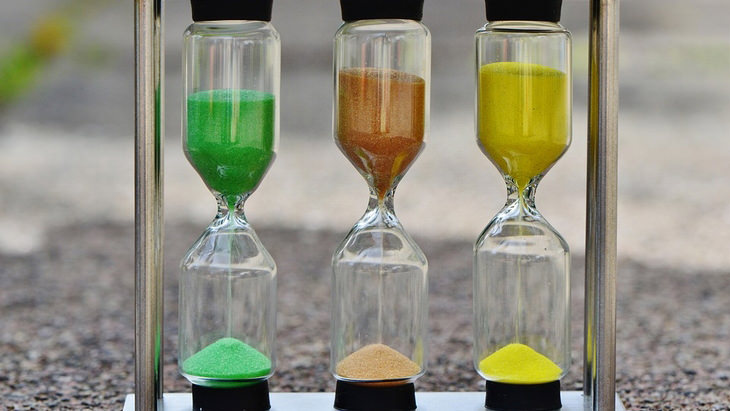
In contrast, when participants were asked about longer periods of time, such as a decade, a pattern began to emerge. Older people had a much greater tendency to perceive such time periods as moving faster.
The study’s participants aged 40 or older felt that time elapsed slowly in their childhood, but accelerated steadily from when they were in their teens into early adulthood.
The main reason for this is that a human being can estimate the length of an event from two distinct vantage points, prospective and retrospective. As their names suggest, the former occurs when an event is still ongoing, and the latter occurs when an event has ended.
A secondary reason for the perception of accelerated time is that our experience of time simply varies from one experience to the other. This means that there really is truth in the saying “time flies when you’re having fun”. The funny thing is that when we’re in such special moments, they seem to end quickly, however our perception of them when we look back at them makes it seem as if they were much longer than they really were.
It’s believed that the reason for the aforementioned is how the brain encodes new experiences. In other words, the more new memories we build on a weekend getaway, the longer the trip will seem in hindsight.
According to BBC columnist and psychologist Claudia Hammond, this is what’s known as the “holiday paradox”. From childhood through to early adulthood, we go through many new experiences and learn a whole myriad of new skills. As time goes by, our lives become more routine, thus we tend to experience less moments that are unfamiliar.

She contends that because we deal with so many new things in our early lives, this leads to over-representation of our early lives in our autobiographical memory. The inevitable result of this is that the time seems to have lasted longer.
All of these findings don’t mean that we are unable to slow time down in later life. In fact, we can do so by keeping our brains active, continually learning new skills and ideas, and exploring new places.
Content Source: Scientific American

Now I Understand Why Older People are Generally Happier...
Although many things go intro decline as we age, there's actually scientific evidence that older people are happier than their younger counterparts. Read on.
Scientists Find Enzyme That Could End Aging and Cancer
Scientists have found an enzyme that they reckon could be used to slow down the aging process and eradicate cancer!
4 Ways to Tell Time Without a Watch
Phone battery died? These methods will help you tell the time by relying solely upon the sun - no watch needed!
Marijuana Might Not Be As Harmless As Previously Thought..
Marijuana is being pushed as a harmless recreational drug around the world, but it might not be as harmless as previously thought thanks to this study.
Study: Can Our Sense of Time Heal Us Faster?
A recent groundbreaking study delves into how our perception of time can significantly impact the physical process of healing.

Do Hangovers Really Get Worse With Age?
While research on this phenomenon is somewhat limited, science offers several compelling explanations for why that morning-after misery intensifies as the years go by.
1:14:42
Documentary: How Did Our Universe Come From Nothing?
Can “nothing” truly become “something”? In this video, we’ll dig into this mind-bending question.

27:25
This Man Gave ChatGPT a Body. This is What Happened.
What if you could build a robot that learns everything from scratch, for just eighty dollars?
7 Air Pollution Solutions That Will Help Us Breathe Easy
Let's take a look at some global initiatives that have been launched to reduce air pollution levels.
3:55
50 Years Later, We're Debunking the Moon Landing "Hoax"
How do we prove to people the moon landing was real? By answering their doubtful questions in this video.
38:55
What Happens the Deeper You Go Underground?
What happens when pressure pushes matter beyond the limits of what we thought possible?
The Newest Innovations in Brain Surgery and the Near Future
Here is a clear, friendly look at the most exciting recent breakthroughs, followed by what experts expect in the decade ahead.
21:51
This Mind-Blowing Talk Explores the Nature of Reality
In this video, cognitive scientist, Donald Hoffman, attempts to answer this mind-blowing question in this incredible TED talk.
Study Shows Seniors Still Grow New Brain Cells Daily
A new study shows that even the elderly keep on growing new brain cells, which could be the breakthrough the scientific community was waiting for...
14 Times Nature Inspired Groundbreaking Technology
Let’s explore 14 remarkable examples of how nature has shaped modern technology.
I Never Knew These Stunning Facts About Our Universe
If you thought you understood the universe, you'll be completely floored by this insane facts.
Science FIRST: A Fully Created Brain Inside a Computer?
Could a Computer Ever "Run" a Human Brain? Scientists Just Took a Big Step
36:24
Ever Wonder How a Steel Locomotor Works?
Let’s take a closer look at the engineering behind these compact workhorses.
20 Useful Facts About the Science of Cooking
The science behind cooking is not often thought of, but it plays a crucial role in a dish turning out right. Here are 20 facts on the science of cooking.
Hair Regeneration Could Be Possible With This New Process
Learn about an innovative new study which has revealed a novel treatment for effective hair regeneration.
21:25
How Every Nuclear Power Got Its Atomics
This video will explain how each nation earned the complex and controversial title of nuclear power.
These Optical Illusions Will Shock Your Mind!
Optical illusions create miscommunication between our eyes and brain making, us see things that are not really there or not see things that are right in front of us. See for yourself.
4:05
Kirobo: First Robot in Space!
It was one small step for robot and another giant leap for mankind...
Blood Test Breakthrough Transforms Leukemia Diagnosis
This research demonstrates that rare circulating stem cells in blood carry the same diagnostic information as bone marrow samples, enabling doctors to identify disease progression months before clinical symptoms appear.
4:26
Despite Looking Similar, Cats Are MORE Diverse Than Dogs!
Who's more diverse, cats or dogs? This video answers this question once and for all, the it might surprise you...
The 10 Most Elaborate Scientific Hoaxes In History!
Some hoaxes throughout history have been so believable, they managed to fool the entire world. Here are 10 of the most elaborate scientific hoaxes in history.
10 Fascinating Facts About the Subconscious Mind
10 facts about the way the subconscious mind works
5:17
How Exactly Do We Hear? All is Revealed Here!
In this informative TED-Ed video, Douglas L. Oliver explains the complete science behind hearing.
9 of the Greatest Unsolved Mysteries About the Universe!
The universe has been around for close to 14 billion years, but it still holds many mysteries that continue to perplex scientists. Here's 9 of them!
13 Astonishing Things You Never Thought You'd See
Here are 13 photos of rare phenomena you never thought you'd see!
These Ancient Inventions Have Got Scientists Stumped!
Here are 12 items from long ago which prove that our ancestors possessed knowledge and skills far more advanced than we once believed them to be.
2:39
Discover 5 Cutting Edge Humanoid Robots in 2025
Watch the video to see which robots are leading the pack in intelligence, mobility, and impact.
Science History: 17 Math Equations that Changed the World
In this article, we'll journey through 17 of these monumental formulas, demystifying the symbols to reveal the revolutionary ideas they contain and the immense impact they have had on the course of history.
These 14 Forgotten Robots Promised So Much...
This collection showcases 14 cool vintage robots that were supposed to change everything.
8:02
The State of Robotics Today: Should We Be Worried?
The mass production of androids era is officially here. A brand new factory line just powered up to churn out 10,000 humanoid robots a year, and the competition is heating up fast.
10:48
Cutting Edge: Translating Thought to Speech is Here!
As a pioneer in Neuralink’s VOICE clinical trial, Kenneth is testing a breakthrough brain-computer interface designed to translate thoughts directly into speech.
8:12
The Tallest Statues Compared, Even Those Not Built Yet...
In this 3D animated size comparison, we showcase the tallest statues in the world alongside ambitious future projects.
Remembering the Life and Wisdom of Stephen Hawking
Stephen Hawking possessed one of the greatest minds the world has ever seen, but was also impaired by a debilitating disease. Here are his life ant times.
42:14
Physicist Michio Kaku: The Universe in a Nutshell...
Physicist Michio Kaku explains the fundamental nature of our universe
18:21
Fascinating: How Do Cats TRULY See Humans?
Understanding a cat's world is the key to strengthening your bond. Let's decode your cat's mind!
5:39
Why Are Your Ears Ringing? The Causes Explained
Nearly 15% of the human population worldwide are plagued by this strange sensation, but most people don't know the causes behind ringing in the ears...
2:17:01
Astronomy: What is Beyond the Edge of the Universe?
In this video, we explore what modern astronomy reveals about the universe’s boundaries—if they even exist.
I Bet You Didn't Have a Clue About These Human Body Facts!
The human body is the most complex machine known to mankind, but I bet you don't know these 10 amazing facts about it...
Absolute Zero: The AI that Doesn't Need People to Develop
Imagine an AI that doesn’t need humans to teach it how to code—it creates its own coding challenges, solves them, and gets smarter all on its own. This isn’t science fiction; it’s a groundbreaking development called Absolute Zero
2:11
Here are Some Unique Tricks You Can Do at Home With Salt!
This video shows us a few interesting magic tricks that you can do anytime using salt, ice, and other items you can find at home.
8:11
Fascinating: What is the Deepest Hole Humanity Has Dug?
This video explains how low humanity has dug down so far.
22:35
Neuralink Update 2025: The Most Incredible Moments
Welcome to our 2025 Neuralink update, where we’ll take you through the most incredible and groundbreaking moments from the past year.
To enable your Ad-Free Subscription, please fill the fields below
Your subscription was successful, now you can enjoy an ad-free experience!! Note: To make sure you get no ads, please make sure to log in to your account. If you are logged in already, then refresh the page. The subscription can be cancelled at any time.