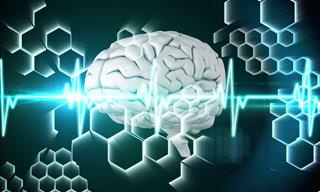

The most effective gene-editing tool available today is CRISPR-Cas9. Just this year, scientists have successfully used it for a wide variety of experiments, from modifying vegetables to encoding a Gif in bacterial DNA. However, most recently, it was used to remove a genetic disease from a human embryo.
Although extremely powerful, CRISPR-Cas9 does have its limitations; it’d only able to target DNA. Therefore, to extend its capabilities to RNA editing, scientists from the University of California San Diego School of Medicine developed a modification of CRISPR, and they’ve called it RNA-targeting Cas9 (RCas9).
In a study published in Cell, the UCDS team tested their new tool by correcting the kinds of molecular errors that cause people to develop microsatellite repeat expansion diseases, such as hereditary amyotrophic lateral sclerosis (ALS) and Huntington’s disease.
During standard CRISPR-Cas9 gene editing, a “guide” RMA is instructed to deliver a Cas9 enzyme to a specific DNA molecule. However, the scientists from UCSD instructed it to target an RNA molecule instead.

Tests that were conducted in the laboratory showed that RCas9 removed 95% of problem-causing RNA for myotonic dystrophy types 1 and 2, Huntington’s disease, and one type of ALS. This technique also reversed 93% of the dysfunctional RNA targets in the muscle cells of patient with myotonic dystrophy type 1, resulting in healthier cells.
Senior author Gene Yeo, a cellular and molecular medicine professor at UCSD School of Medicine, explained that “this is exciting because we’re not only targeting the root cause of diseases for which there are no current therapies to delay progression, but we’ve re-engineered the CRISPR-Cas9 system in a way that’s feasible to deliver it to specific tissues via a viral vector.
Across the world, an estimated 450,000 people are living with ALS. Roughly 30,000 of these are American, where 5,600 people are diagnosed with the disease each year. However, the exact number of Huntington’s disease cases is as easy to pin down. One estimate suggests that around 30,000 Americans display symptoms of it, while more than 200,000 are at risk.
Regardless of the exact figures, these two neurological diseases clearly affect a large number of people. This prevalence and the absence of a known cure makes the UCSD team’s research all the more relevant. Even more exciting is the fact that some kinds of RNA mutations that this study is targeting are known to cause over 20 other genetic diseases.
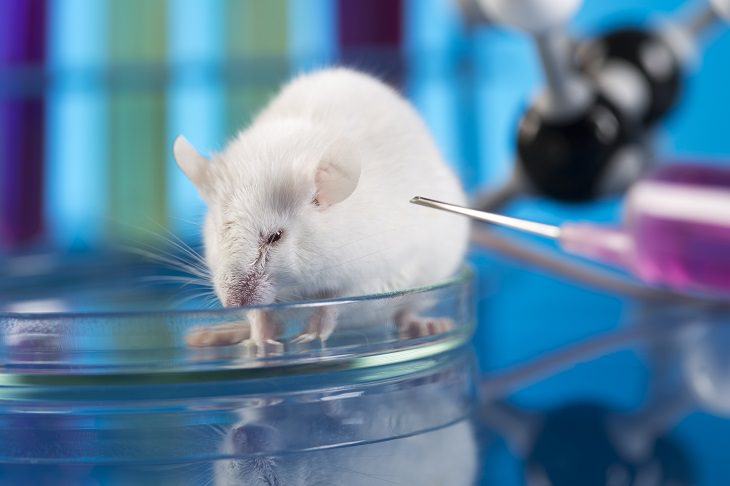
However, the researchers are well aware that what they have accomplished so far is just the first step. While RCas9 works in labs, they still have to figure out how it will fare when tested on humans.
Yeo explains that “the main thing we don’t know yet is whether or not the viral vectors that deliver
RCas9 to cells would elicit an immune response. Before this could be tested in humans, we would need to test it in animal models, determine potential toxicities, and evaluate long-term exposure.”
Ultimately, while RCas9 couldn’t deliver a cure exactly, it could potentially extend a patient’s life. For diseases such as ALS and Huntington’s, that’s a very good place to start.
Source: futurism
Images: depositphotos
1:44
You Won't Believe What the Human Body Does in One Minute
How much do you think it is capable of doing in a single minute? Watch this video and you'll have your answer!
5:04
Ever Wondered How Hormones Work? Well, Wonder No More...
Ever wondered how hormones work? Well, wonder no more as this informative TED-Ed video explains all!
3:53
Why Do Cats Like Catnip?
Are they really getting "high," or is there scientific logic behind cats' love of catnip?
Find Out How Some Elderly People Stay Sharp into Old Age
Some old people have better memories than people half their age. This could be the reason why...
20 Peculiar Microscope Photos That You Really Must See
An unseen world exists at our fingers, and thanks to these wonderful micrographs, we can get a glimpse into that dimension.
6:17
Ever Wondered Why the Sun Makes You Sneeze?
Ever wondered why looking at the sun or at bright lights makes you sneeze? Turns out, you have a condition.
The Astonishing Life and Philosophy of Ludwig Wittgenstein
It is the true story of Ludwig Wittgenstein, the man who sat in the same classroom as Adolf Hitler, became the protégé of the philosopher Bertrand Russell, and changed the face of 20th-century philosophy
A 'Brain Fog' Epidemic? Study Shows a Worrying Trend
Analysis of over 4.5 million U.S. survey responses spanning a decade (2013–2023) shows a rise from 5.3% to 7.4% in reported cognitive disability nationwide, with an exceptional surge in the 18–39 age group and a clear influence of income and educatio
16:26
Neanderthals Had Strength and Skills Beyond Our Limits
Neanderthals possessed truly exceptional, almost unbelievable, traits.
These Underwater Craft Are Changing Marine Science
Here's a look at the most remarkable machines currently expanding our understanding of the underwater world.
9:09
Protective Measures: How Our Body Reacts to a Tattoo
In this video, we’ll explore the microscopic war raging beneath your skin, where millions of your cells make the ultimate sacrifice to lock that ink in place, turning a defense mechanism into lifelong art.
4:22
eSIM vs Traditional SIM: What’s the Big Difference?
Are eSIMs and iSIMs the future of connectivity?
These Materials are Strange Enough to Boggle Your Mind...
There are some materials in this world that totally defy scientific convention. From metals that melt in your hand, to a solid lighter than air, take a look.
56:12
What's the Largest Thing in the Universe?
In this video, we look into some of the mightiest structures in the known universe.
16 Interesting Things We Bet You've Never Seen Before
Once we have finished school and learned all the necessary skills at work, it may seem that no further studying is necessary. 16 interesting photos you wish you had seen in textbooks at school.

8 Biggest Mysteries Still Surrounding the Human Body
Although modern science has revealed much about the human body, there are some things that still remain unknown. Here are the 8 biggest mysteries about it.
How AI Is Fixing Problems Humans Struggle With
Here’s how AI is quietly reshaping the world in ways that actually matter.
5:14
Earth 2125: A Vision of the Future of Our Planet
Exploring what Earth could look like in 2125 reveals exciting potential.
4:20
Ever Wondered About How Our Minds Retain and Lose Memories?
Ever wondered why you can remember something from 20 years ago, but have difficulty remembering what you had for lunch the other day? Learn why here.
Hubble Telescope: 35 Years of Incredible Photos
Exploring 35 years of reality-changing, universe-enhancing photos that opened the sights of outer space to us all.
20:04
Emotions Explained: The Science Behind How We Feel
Neuroscientist and psychologist Dr. Richard J. Davidson answers some fascinating questions about emotions you would never expect.
Science News: AI-Designed Drugs Move to Human Trials
Isomorphic Labs, is positioning itself to begin human clinical trials of medications designed entirely through artificial intelligence, marking a potentially transformative shift in how we develop life-saving treatments.
8 Important Inventions That Were a Complete Accident
It might be interesting for you to learn that some very important scientific innovations were born as a result of an accident.
38:55
What Happens the Deeper You Go Underground?
What happens when pressure pushes matter beyond the limits of what we thought possible?
5:22
Why Do You See Colors When You Rub Your Eyes?
Explore the science of afterimages, the visual illusions that linger in your vision following exposure to bright lights or images.
3:07
The Speed of Light Visualized in a Magnificent Video
Have you got the patience? Watch, in scale, just how long it takes light to travel from Earth to Mars
11:28
India Built a Monster Dam That Controls the Weather!
The Polavaram Dam doesn't just control floods - it moves water between regions and much more!
3:39
Magic is Only A Vibration Away With This Great Experiment
All it takes is some sand, a metal plate and carefully toned vibrations from a speaker to create stunning and complex patterns. This video shows you the amazing results!
What is the Troxler Effect and How Does it Affect You?
Learn about Troxler's effect and the optical illusions it creates in life.
11:15
These Paradoxes Continue to Mystify Scientists
Take a look at 7 scientific paradoxes that may never get solved.
5:01
The Truth About Folding Phones You Need to Know
Don’t buy a foldable without knowing this first.
Is Weekend Sleep as Good as Regular Sleep? Let's Check
If you thought sleeping in on the weekend was a bad habit, you're about to find out that it's quite the opposite.
14 Retro Inventions That Stunned Crowds Back in the Day
These inventions were the talk of the town back in the day.
2:11
Here are Some Unique Tricks You Can Do at Home With Salt!
This video shows us a few interesting magic tricks that you can do anytime using salt, ice, and other items you can find at home.
12 Steps That Help to Explain Einstein's Famous Theory
Have you ever wondered what Einstein's Theory of Relativity is all about? If you have, here is an easy-to-understand explanation!
6:25
Do You Like the Smell of Rain? This Is Why
One of the best things about rain and thunderstorms is that clean fresh smell afterward. But what actually causes that distinct scent?
16:31
Why Building a Perpetual Motion Machine Is Impossible
Since the Middle Ages, scholars have been trying to build the mythical perpetual motion machine. Was it all in vain? Is it even possible to build such a machine?
8:28
Could These Signals Be A Sign of Extraterrestrial Life?
Scientists have recently picked up on a mysterious radio signal from space, and it could mean a lot - maybe even a sign from extraterrestrial life forms.
Superwood: A New Material That Could Replace Steel
After decades of relying on steel—a material that produces nearly two tons of CO2 for every ton manufactured—builders may soon have access to something far more sustainable and surprisingly stronger: Superwood.
1:14:42
Documentary: How Did Our Universe Come From Nothing?
Can “nothing” truly become “something”? In this video, we’ll dig into this mind-bending question.
The First Valentine's Day Was Not That Long Ago...
Let us take you on a fun history lesson with these 10 first-ever things that started way back in history and remain to this day.
5:50
Why Do We Sometimes Hallucinate? Find Out Here!
In this informative TED-Ed video, Elizabeth Cox details the science of hallucinations.
4:57
Mjøstårnet - The World’s First Wooden Skyscraper
Mjøstårnet is an 18 story tall skyscraper towering over the Norwegian countryside. What makes it so special is that it's made entirely out of wood...
13 Astonishing Things You Never Thought You'd See
Here are 13 photos of rare phenomena you never thought you'd see!
1:44
You Won't Believe What the Human Body Does in One Minute
How much do you think it is capable of doing in a single minute? Watch this video and you'll have your answer!
Absolute Zero: The AI that Doesn't Need People to Develop
Imagine an AI that doesn’t need humans to teach it how to code—it creates its own coding challenges, solves them, and gets smarter all on its own. This isn’t science fiction; it’s a groundbreaking development called Absolute Zero
8:10
Taller Doesn't Mean Bigger - the True Size of Skyscrapers
If you were to compare skyscrapers by area rather than height, which skyscraper would end up on top?
The 12 Game-Changing Inventions From 2024 You Missed
2024 was a ground-breaking year in terms of innovation. Here's a look at some of the key breakthroughs from the year.
Find Out How Some Elderly People Stay Sharp into Old Age
Some old people have better memories than people half their age. This could be the reason why...
To enable your Ad-Free Subscription, please fill the fields below
Your subscription was successful, now you can enjoy an ad-free experience!! Note: To make sure you get no ads, please make sure to log in to your account. If you are logged in already, then refresh the page. The subscription can be cancelled at any time.