
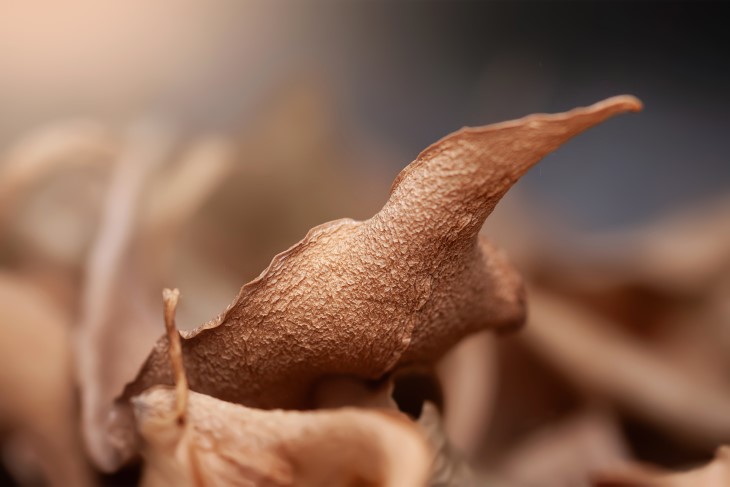
Imagine picking up a handful of dry, brittle twigs that look completely dead - brown, shriveled, and lifeless - dropping them in water, and watching tiny green leaves begin to unfurl within hours. By the next morning, what looked like dead plant matter has transformed into something lush and vibrant, like a miniature Christmas tree springing to life.
This isn't science fiction. It's the everyday reality of what are known as "resurrection plants," and for one remarkable scientist, these extraordinary organisms may hold the key to solving one of the world's most urgent problems: feeding a growing population on a warming, drying planet.
A Discovery Made by a Child of Nine
Jill Farrant was just nine years old when she first encountered a resurrection plant. Growing up in the Limpopo province of northeastern South Africa, where her father was a tobacco farmer, she often retreated to a dry riverbed near the farm when she needed a quiet moment. One day, she noticed something extraordinary: a plant that had appeared completely dead had turned green overnight.
Her father didn't believe her. But Farrant wrote about it in her diary - and decades later, that childhood memory would launch one of the most exciting careers in modern plant science. Today, at 65, Farrant is a professor at the University of Cape Town and one of the world's leading experts on resurrection plants, having spent 30 years unraveling the secrets of how these remarkable organisms survive.
What Exactly Is a Resurrection Plant?
There are about 1,300 known species of resurrection plants, including mosses, ferns, and flowering plants. They grow on every continent except Antarctica, with southern Africa being the global hot spot. What makes them extraordinary is their ability to withstand months - or even years - of extreme drought, then roar back to life within just one to two days when water becomes available.
Most plants begin to struggle or die when their water content drops below 60%. Succulents and other drought-tolerant species can push that down to around 40%, using tricks like waxy leaf coatings and night-time-only breathing pores. But resurrection plants do something completely different - and far more dramatic.
The Science Behind the "Miracle"
Rather than trying to hold onto water, resurrection plants let it go. Once their water content drops below a certain level, they actively drive moisture out of their cells, sometimes reaching as low as 5%. In the process, they undergo a complex, carefully choreographed transformation that Farrant has spent her career documenting.
As water leaves the cells, it is replaced by sugars - including sucrose and raffinose - along with specialized proteins that form a glasslike protective substance. This prevents cell membranes from collapsing under the stress of drying out. Special "chaperone" proteins stand guard over critical molecules like DNA and RNA, preserving them until conditions improve. The plant's cell walls, made of a flexible material called cellulose, fold inward so they can stay in contact with the shrinking cell membrane inside. A powerful army of antioxidants neutralizes harmful molecules that form under stress and could otherwise damage the plant's delicate internal structures.
Photosynthesis - which, ironically, produces some of those harmful molecules - shuts down entirely. Some species curl their leaves to block sunlight from reaching their chlorophyll. Others break down their entire photosynthetic machinery and simply rebuild it later when water returns. In the final stages of drying, the plant stockpiles a reserve of molecules it will need to fuel its eventual comeback. Then everything goes quiet - until the rains return.
"Drying out without dying," is how Farrant describes it. It's one of nature's most astonishing survival strategies.
Why This Could Matter for All of Us
Farrant's research isn't just about botanical curiosity. It has potentially enormous implications for global food security.
Climate change is already reducing rainfall in many parts of the world and making weather patterns more unpredictable. In sub-Saharan Africa - where 95% of all agriculture depends on rain rather than irrigation - projections suggest that 20% or more of arable land could be lost by 2050, even as the region's population doubles to two billion people. And the crops that feed humanity - maize, wheat, rice - have actually become less drought tolerant over time as breeders focused on maximizing yield. Even a few weeks without rain can wipe out an entire harvest.

Farrant believes resurrection plants could show us how to change that. Most crops already carry the genes needed to mimic these drought-survival tricks - those genes are active in seeds, which can lie dormant for years and still spring to life under the right conditions. Resurrection plants likely evolved by expanding the use of those same genes into their leaves, stems, and roots.
If scientists can identify the master "switch" genes that activate this process and introduce them into crops, it could give us plants that survive deep, prolonged droughts and still produce a harvest. Farrant's team has already worked out the molecular mechanisms that prevent drought-triggered leaf death in two resurrection plant species - one related to maize and one related to teff, a staple grain in Ethiopia. The next step is introducing those mechanisms into actual crops, most likely through genetic engineering.
While drought-resistant crops may still be some years away, other applications of Farrant's research are closer to reality.
Her team is studying the community of microbes that live in and around the roots of resurrection plants. These microbial communities promote root growth, improve nutrient uptake, and appear to contribute to the plants' resilience. The goal is to develop these microbes into a kind of biological supplement that could be applied to ordinary crops - helping them survive drought without fertilizers and potentially boosting yields at the same time. A Canadian company has already been founded to bring products based on this research to market.
There's also the case of Myrothamnus flabellifolia - Farrant's favorite resurrection plant, and the only woody species known to exist. This southern African native has been used in traditional medicine for centuries, with its leaves made into wound-healing lotions, asthma treatments, and medicinal teas. It caught the attention of fashion designer Giorgio Armani, who hired Farrant as a scientific consultant for a luxury skincare line. But as global demand - particularly from China - has surged, the slow-growing plant has become vulnerable to overharvesting. Farrant is now leading an effort to cultivate it as a sustainable cash crop, with the goal of benefiting the rural communities in Limpopo where it grows naturally.
The story of resurrection plants is ultimately a story about resilience - and about the remarkable things nature has already figured out that we're only beginning to understand. In a world increasingly threatened by drought, food insecurity, and climate disruption, a brittle brown fern on a Cape Town hillside might just hold part of the answer.
And it only took one curious nine-year-old with a diary to start us down the path to finding it.