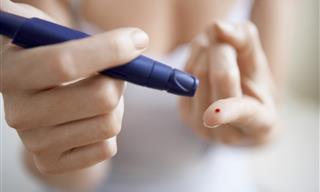

In a major lung cancer trial, a revolutionary blood test has been proven to diagnose the recurrence of cancer cells up to a whole year in advance of conventional scans.
This test, known as a liquid biopsy, could buy some crucial time for doctors by indicating that cancerous cells are present in the body when tumors are detectable on CT scans and long before the patient has any physical symptoms.
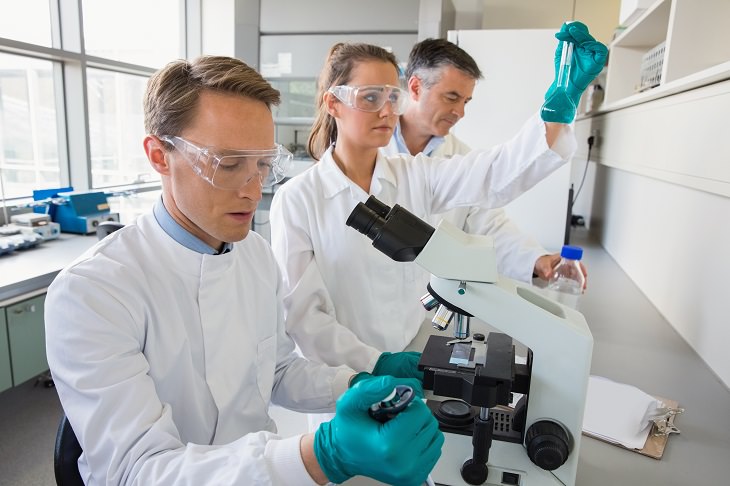
The test works by detecting free-floating mutated DNA, which has been released into the bloodstream by dying cancer cells. In the lung cancer trial, which involved 100 patients, scientists saw precipitous rises in tumor DNA in the blood of patients who relapses months, or even a whole year, later.
These findings add to the building anticipation that this technology, which is also being used to test for Down syndrome, will lead to a major breakthrough in cancer medicine.
Nitzan Rosenfield, from Cancer Research UK Cambridge Institute, who was not involved in this latest trial, has predicted that “most if not all” cancer patients will be given this test in future. He goes on to say that “even if only a fraction of cancers that are currently detected at a lethal stage will in future be detected at an early curable stage this will represent a great benefit in lives saved.”
In the latest clinical trial, 100 patients with non-small cell lung cancer were observed from diagnosis through to surgery and chemotherapy, with blood tests being taken every 6-8 weeks. By analyzing the genetic faults in cells across each tumor, the scientists created personalized genomic templates for every patient. This was then compared to the DNA floating in their blood, to see whether a fraction of it matched that of their tumor.
Professor Charlie Swanton, a cancer geneticist from the Francis Crick Institute, who led the work, explained how circulating tumor DNA tracked the patient’s disease status with extreme precision. Of patients who would stay in remission, he declared that “within 48 hours of surgery, the DNA drops down to undetectable.”
By contrast, rising tumor DNA levels were seen in patients whose disease would later return, indicating that that the cancer remained in the lung or had moved to other organs, where it was dormant.
When the tests from 24 patients were analyzed, the scientists could say with 92% accuracy who would relapse.
Swanton goes on to declare that he thinks “this is going to be very useful clinically as this allows us to identify high risk patients. We have a predictive value of 92% that your cancer is going to recur within 350 days.”
The tests even went on to reveal an apparent outlier, a patient whose cancer had not returned, but whose blood tests revealed high levels of circulating tumor DNA, had the cancer return almost a year later.
The liquid biopsies also showed whether the chemotherapy treatment was working or if the disease had become resistant, as is what happens in the majority of stage 2 and 3 cancers. In future, this could allow doctors to switch to a more effective drug and spare patients grueling treatment for nothing.

Eileen Rapley, 74, a retired art teacher from London, entered the trial after being diagnosed with lung cancer over a year ago. Since she began her treatment, doctors have discovered that she has developed a brain tumor, for which she is also being treated. Although the liquid biopsy did not guide her own care, she hopes that this new test might lead to the kind of improvements that screening techniques have brought about for breast cancer.
The test used in the study relied on building a genetic template for each patient based on analysis of tumor samples, with an estimated cost of around $1,700. However, Swanton predicts that the same kind of profile could be built using computational methods from just an initial blood test, making the technology viable outside a research setting.
Lung cancer causes more than 1 in 5 cancer deaths in the UK and, although occurrence of the disease is falling, survival has only improved by a fraction in the last 40 years. Professor Karen Vousden, chief scientist at Cancer Research UK, which funded this study, said: “These findings could help us to identify how lung cancers respond to therapy, building a bigger picture of the disease and potentially pointing the way to developing new treatments and, crucially, saving more lives.”
Source: theguardian
4:53
You Are Literally What You Eat: How Food Affects the Brain
What happens in the brain when we opt for honey instead of jam? And how is Mediterranean diet better memory performance? Click to find out!
Breakthrough: Lion's Mane Mushrooms Boost Memory & Nerves!
Researchers have recently uncovered the mushroom's potent compounds, particularly hericene A, that could help nerve cells grow and better interact with each other.
How Blue Light Really Affects Your Sleep and Health
You have probably heard that blue light coming from screens is 'bad for us'. But how does it work and what are the exact health risks? Find out
These Non-Routine Medical Tests Could Save Your Life!
Here are 8 non-routine tests that really have the potential to save your life, and some of them even need to be taken as early as 30.
Study Reveals: Some Fireworks Release Dangerous Toxins
New study reveals that not all fireworks are properly tested for toxins. It doesn't mean you can't enjoy them, but be more cautious this 4th of July.
6 Coronavirus Indicators That You May Not Have Heard Of
Here, we list some of the more unusual and lesser-known COVID-19 symptoms you might not be aware of yet.
What is the Troxler Effect and How Does it Affect You?
Learn about Troxler's effect and the optical illusions it creates in life.
3:39
Magic is Only A Vibration Away With This Great Experiment
All it takes is some sand, a metal plate and carefully toned vibrations from a speaker to create stunning and complex patterns. This video shows you the amazing results!
Study Says: With Age, Come Certain Cognitive Abilities
a study published in August 2021 in the journal *Nature Human Behavior reveals surprising findings that challenge this assumption and may be of great interest to all of us.
PayPal Versus Credit Cards: Here's the Lowdown!
Just how safe is PayPal? Should you have a PayPal account or should you pay for all online purchases using a credit card? All is revealed here!
World-Famous Psychological Experiments That Shocked Us
The human mind is a most intricate thing. It also has some quirks and idiosyncrasies that are both incredible and a little uncomfortable. Read on for more.
10:30
China's Crazy Plan to Dig a Canal in the Middle of EUROPE
China is setting out a plan to dig a canal through the middle of Europe in the nearest future, but why?
Is Microsoft's "AI Doctor" Better Than a Real Doctor?
A new study presents a committee of digital doctors achieving approximately 80% accuracy in complex medical diagnoses – far beyond the average of general practitioners.
8:12
The Tallest Statues Compared, Even Those Not Built Yet...
In this 3D animated size comparison, we showcase the tallest statues in the world alongside ambitious future projects.
2:17:01
Astronomy: What is Beyond the Edge of the Universe?
In this video, we explore what modern astronomy reveals about the universe’s boundaries—if they even exist.
9:09
Protective Measures: How Our Body Reacts to a Tattoo
In this video, we’ll explore the microscopic war raging beneath your skin, where millions of your cells make the ultimate sacrifice to lock that ink in place, turning a defense mechanism into lifelong art.
0:55
China's G1 Robot is Showing Some Incredible Moves
The G1 is a new robot developed in China and in this video shows some amazing moves.
Stunning 2024 Images from the James Webb Space Telescope
Marvel at the new images revealed by the James Webb Space Telescope.
20:04
Emotions Explained: The Science Behind How We Feel
Neuroscientist and psychologist Dr. Richard J. Davidson answers some fascinating questions about emotions you would never expect.
21:25
How Every Nuclear Power Got Its Atomics
This video will explain how each nation earned the complex and controversial title of nuclear power.
12 Earliest Versions of Tech Inventions We Use Every Day
Witness the evolution of 11 popular devices we use all the time by looking at how they all started...
5:50
Why Do We Sometimes Hallucinate? Find Out Here!
In this informative TED-Ed video, Elizabeth Cox details the science of hallucinations.
Remembering the Life and Wisdom of Stephen Hawking
Stephen Hawking possessed one of the greatest minds the world has ever seen, but was also impaired by a debilitating disease. Here are his life ant times.
9:15
These Bizarre Mysteries Continue to Stump Scientists!
The world of science hasn't been able to explain several bizarre phenomenon yet. Let's take a look at a few of them.
13 Forgotten Phone Designs That Were Too Odd to Survive
From pen-shaped dialers to phones that clipped onto your clothes, here’s a look at the most unusual phones ever made.
See the World From Up Close - 17 Fascinating Macro Photos
Seeing ordinary objects like honey, paracetamol, and snow through a microscopic lens teaches us how beautiful and intricate they really are!
14 Retro Inventions That Stunned Crowds Back in the Day
These inventions were the talk of the town back in the day.
9:34
Was Roman Concrete Really Superior to Our Own?
How did Ancient Romans make such durable concrete that it still lasts today?
7:56
These 6 Chemical Reactions Changed the Course of History
Although we rarely pay much attention to the chemistry that constantly surrounds us, these 6 reactions changed history.
Nobody Believed These 5 Scientists, But They Were Right
These 5 scientists were shamed and ousted, or rudely ignored, although years later, their "crazy" theories turned out to be true...
NVIDIA CEO Reveals Which Degree Is Worth Studying
Electrical Engineering, Computer Science, or Physics? Nvidia's CEO has a surprising answer to which area should be studied nowdays.
11:43
Learn While Laughing: The Incredible Tardigrade
If you love nature and you love laughing, this incredible series of nature videos are a great way to spend a few minutes.
6 Harmful Toxins You Didn’t Know You Encounter Daily
These toxic chemicals can be found in everyday products and can be extremely dangerous to us.
18:14
Are These Vintage Kitchen Gadgets Any Good?
Will any of the vintage kitchen gadgets stand the test of time or outperform their contemporary alternatives?
24:11
25 Game-Changing Megaprojects That Will Change Our World
These incredible megaprojects that are set to redefine our world in 2025.
8 Important Inventions That Were a Complete Accident
It might be interesting for you to learn that some very important scientific innovations were born as a result of an accident.
4:26
Despite Looking Similar, Cats Are MORE Diverse Than Dogs!
Who's more diverse, cats or dogs? This video answers this question once and for all, the it might surprise you...
4:57
The First 3D-Printed Hotel is Already Being Built!
s evidence of this, a groundbreaking project is nearing completion, in which a hotel is being printed, and tourists will soon be able to visit it. Curious to see what it looks like?
8 Jaw-Dropping Black Hole Facts to Warp Your Mind
These black hole facts will bend your mind!
These Theories About Reality & the Universe Will Stun You
You will be shocked to discover these 10 surprising theories of the universe and reality.
5 Puzzling Mysteries That Science Finally Managed to Solve
These weird occurrences have puzzled humanity for decades, if not centuries. Finally, scientists solved them & the solutions are exciting...
Extraordinary Inventions By Tesla That Were Never Built!
Nikola Tesla was a scientist too advanced for his time. Here are some of the inventions he never had a chance to build.
10 Obscure Inventions by World Famous Inventors
We’d like to bring your attention to 10 lesser-known inventions of famous figures in history, which will reveal a new and different side of these inventors to you.
13:41
The 5 Most Important Fossil Discoveries from Last Year
2024 saw some really amazing fossil discoveries!
14:34
What to Do (and Avoid) When Setting Up a Smart Home
Here's how you can set up a family-friendly smart home that will last long.
Chronically Late? What Science Has to Say About You
There are 8 positive things that science says about late people that we all need to know.
11:02
Ever Wonder What Ancient Egyptian Sounded Like?

Researchers have used all the information we know to create what they think it may have sounded like.
To enable your Ad-Free Subscription, please fill the fields below
Your subscription was successful, now you can enjoy an ad-free experience!! Note: To make sure you get no ads, please make sure to log in to your account. If you are logged in already, then refresh the page. The subscription can be cancelled at any time.