
What Made These Chimpanzees Go to War? Scientists Finally Have Answers
It sounds like the plot of a nature documentary too dramatic to be real: two groups of chimpanzees who once lived peacefully side by side, intermingled freely, and even mated across group lines — suddenly turning on each other in a wave of violence that would last years and claim dozens of lives. But this is exactly what happened in a lush Ugandan forest, and a landmark new study has finally pieced together why.
The findings, published in the journal Science, offer a sobering window into how harmony can unravel — not just in chimps, but perhaps in human societies as well.
The Largest Chimp Community Ever Studied
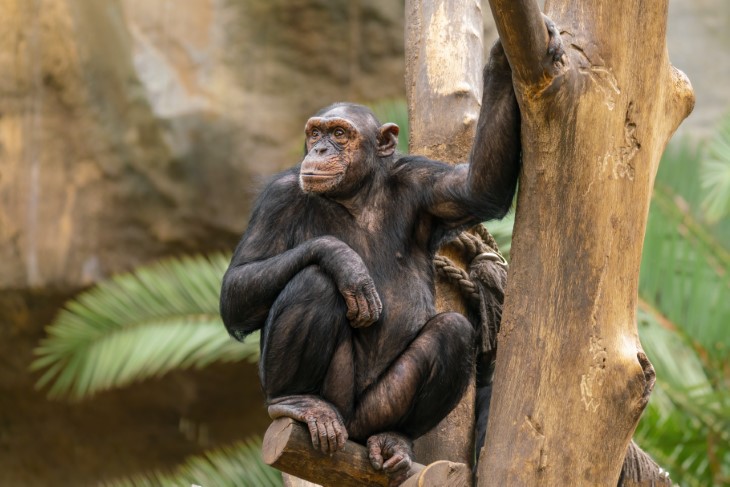
The story begins in Kibale National Park in Uganda, in a densely forested area called Ngogo. Since 1995, researchers had been carefully tracking the movements and social lives of what became the largest chimpanzee community ever studied — at one point numbering more than 200 individuals. For years, the chimps lived in two main social groups, known as the Central and Western clusters, that got along remarkably well. They shared space, formed friendships across group lines, and regularly mated with one another.
Then, on a single day in June 2015, everything changed.
The Day Peace Ended
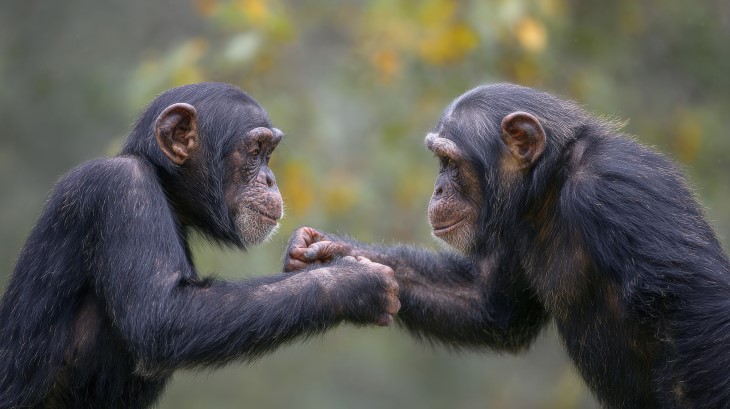
When chimps from the two groups crossed paths near the center of their shared territory, something shifted. The Central chimps chased the Western ones away — and from that moment on, the two groups stopped mixing entirely. Cross-group mating ceased. Western males began patrolling into Central territory in what looked unmistakably like efforts to expand their domain.
Two years later, the tension exploded into outright violence. In 2017, a group of Western chimps attacked and seriously injured the Central group's alpha male. What followed was a years-long campaign of lethal raids: between 2018 and 2024, Western males killed an estimated seven adult males and seventeen infants from the Central group.
Strangely, despite outnumbering their rivals, the Central chimps never retaliated with organized lethal attacks of their own. The reasons for this asymmetry remain one of the study's intriguing open questions.
What Sparked the War?
The most obvious explanation for animal violence — competition over scarce food — doesn't apply here. Researchers noted that Ngogo's forest was still rich with food when the conflict began. Something else was going on.
Several factors appear to have combined to push the community toward fracture.
First, sheer size. The Ngogo community had grown so large that maintaining the social bonds needed to hold it together became increasingly difficult. "The Ngogo chimps were victims of their own success," said co-author John Mitani, a primatologist at the University of Michigan who helped establish the research site. "The group continued to grow and grow and grow, and it reached the size that individuals couldn't pull together anymore."
Second, a devastating loss of key social figures. In 2014 — just one year before the split — five adult male chimps died within about a month of one another, likely from disease. These weren't just any chimps. They were connectors, individuals whose relationships bridged different parts of the community and helped keep the peace. With them gone, the social fabric began to fray.
Third, reproductive tension. For reasons researchers don't fully understand, Central group males had apparently lost access to females in the Western cluster even before the open conflict began. That loss of mating opportunity, researchers suggest, may have been a powerful and deeply felt grievance — one that ultimately contributed to the eruption of violence.
What This Tells Us About Conflict — and Ourselves
The Ngogo chimps have no religion, no language, no political ideology, no ethnic identity. There were no cultural divisions stoking resentment or leaders whipping up outrage. And yet, deadly group conflict emerged anyway.
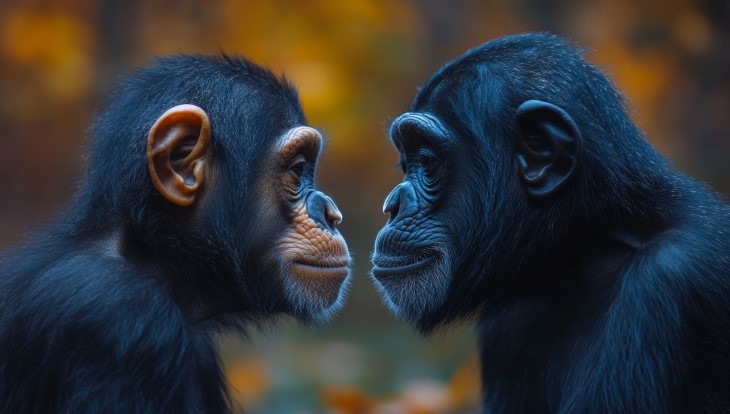
"You do not need ideology to generate hostilities," said Richard Wrangham, a primatologist and professor emeritus at Harvard University whose career has focused on the links between ape and human violence. "The motivations for warfare are much more concerned with our biology than people would have believed a long time ago."
It's a striking thought. The same forces — group size, loss of social connectors, competition over mates and resources — that drove these chimps to war may echo in patterns of human conflict stretching back through history.
That said, researchers are careful not to push the parallel too far. One crucial difference between chimp warfare and human warfare is the role of language. Chimps, it appears, do not engage in revenge killings — not because they lack the aggression, but because they lack the ability to plan and coordinate a response. "In humans, the first thing that happens when a member of your community gets killed, everybody gets together and says, 'What are we going to do about it?'" Wrangham explained. Without language, that kind of organized retaliation simply doesn't happen among chimps.
A Reason for Hope
For all the darkness in the Ngogo story, one of the study's researchers came away with an unexpectedly uplifting takeaway. John Mitani reflected that what makes humans truly unusual among primates is not our capacity for violence — it's our remarkable capacity for cooperation and kindness toward strangers.
"Instead of attacking our neighbors, we go out of our way to help them, even if they are complete strangers," Mitani said. "That's the lesson I learned from all this. I try to be optimistic, especially in these times as the world becomes increasingly polarized."
The chimps of Ngogo remind us how fragile peace can be, how easily bonds can fray when communities grow too large, lose their connectors, and stop seeing one another clearly. But they also remind us, by contrast, of something uniquely and wonderfully human: our capacity to choose cooperation over conflict — even when biology pulls the other way.