
In the quiet hours of the night, while humans and their pets sleep, a small insect known colloquially as the "kissing bug" embarks on its nocturnal quest for blood. These insects, belonging to the subfamily Triatominae, are efficient vectors of a potentially devastating illness: Chagas disease. While historically viewed as a problem confined to rural areas of Central and South America, Chagas disease is increasingly recognized as a significant, yet severely underdiagnosed, public health issue within the United States. Driven by complex ecological interactions, a lack of public and medical awareness, and established local transmission, this "silent killer" poses a threat to hundreds of thousands of Americans and their companion animals.
The study of how environment and ecology affect health—eco-epidemiology—is crucial to understanding Chagas disease. In the US, the interaction between wildlife reservoirs, the insect vector, and human habitation creates the conditions for the transmission of the causative parasite, Trypanosoma cruzi (T. cruzi).
In recent years, the narrative surrounding Chagas disease in the US has shifted significantly. Mounting evidence of locally acquired infections has challenged the long-held view that the disease is merely imported. This shift culminated in a recent CDC-backed study published in Emerging Infectious Diseases (September 2025), which strongly recommends updating the status of Chagas disease in the US from non-endemic to endemic. The authors argue that the current classification perpetuates low awareness and hinders necessary public health responses.
The Vector and the Parasite: A Nocturnal Cycle
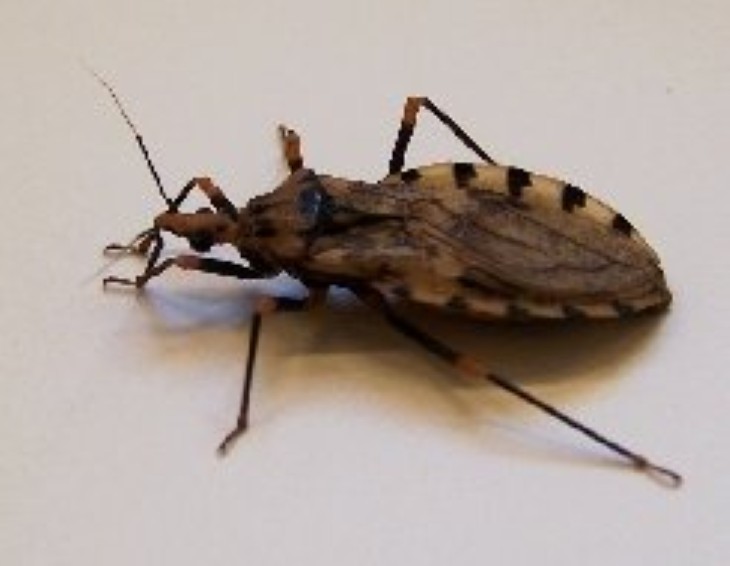
The transmission of Chagas disease begins with the kissing bug. There are eleven different species of kissing bugs documented in the United States, with the highest diversity and population density found in Texas, Arizona, and New Mexico. These insects are generally about 1/2 to 1 inch long and undergo five juvenile (nymphal) stages before reaching adulthood. They are resilient, with some species capable of living up to two years.
Kissing bugs require blood meals throughout their lives. Unlike mosquitoes or ticks, their bites are typically painless, allowing them to feed undisturbed for several minutes (as disturbing as that sounds). They are opportunistic feeders, preying on wild animals, domestic dogs, and, unfortunately - humans.
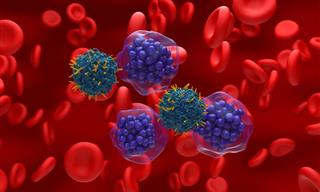
The critical danger lies not in the bite itself, but in what happens after. The parasite, T. cruzi, resides in the insect's gut. A kissing bug becomes infected after feeding on an infected host. Once infected, the bug carries the parasite for life. Research indicates that, alarmingly, approximately 30% to over 50% of kissing bugs tested in the southern US are infected with T. cruzi.
Transmission to humans or animals occurs when the infected bug defecates during or immediately after feeding. The parasite is present in the feces, not the saliva. If the feces are accidentally scratched into the bite wound, or rubbed into mucous membranes like the eyes or mouth, the parasite enters the host's bloodstream. Dogs, in particular, often become infected by ingesting the bugs.
Chagas disease is firmly established in the American South. Recent data associated with the Emerging Infectious Diseases study confirms that kissing bugs have now been recorded in at least 32 states. While findings in northern states like Pennsylvania and Illinois are rare, the vectors are common across the southern tier.

The Centers for Disease Control and Prevention (CDC) estimates that at least 300,000 people in the US live with Chagas disease, though some experts believe the number could exceed 1 million due to severe underreporting. Historically, this prevalence was primarily attributed to immigration from endemic countries in Latin America.
However, the acknowledgment of autochthonous transmission—cases where individuals contracted the disease locally within the United States—is the driving force behind the push for reclassification. Autochthonous human cases have been identified in at least eight states: California, Arizona, Texas, Tennessee, Louisiana, Missouri, Mississippi, and Arkansas.
Texas has emerged as a particular hotspot. Between 2013 and 2023, Texas documented more than 50 locally acquired human cases. This data, alongside high infection rates in local wildlife and vectors, underscores an active, domestic transmission cycle.
The progression of Chagas disease in humans is insidious, making diagnosis exceptionally difficult. The disease presents in two stages: the acute phase and the chronic phase.
The acute phase occurs in the first few weeks or months after infection. Symptoms are often mild and non-specific—fever, fatigue, body aches, rash, or loss of appetite—easily mistaken for the common flu. In many cases, the acute phase is entirely asymptomatic. This lack of distinct early symptoms means most infected individuals are unaware they carry the parasite. It is estimated that fewer than 2% of people infected in the US know their status.
Following the acute phase, the disease enters the chronic phase. About two-thirds of infected individuals will remain in the "indeterminate" chronic phase, showing no symptoms, potentially for life.
However, approximately 30% of those infected will eventually develop the "determinate" chronic phase, which can manifest decades after the initial infection. It is this stage that earns Chagas disease its reputation as a silent killer. The chronic phase primarily affects the heart, leading to cardiomyopathy, arrhythmias, aneurysms, and potentially sudden cardiac death. In some cases, it can also cause severe gastrointestinal complications.
The challenge in the United States lies in awareness. Many healthcare providers, even in high-risk states, are unfamiliar with the disease and do not routinely screen for it. While treatments (Benznidazole and Nifurtimox) exist and are highly effective during the acute phase, they are less effective once the disease becomes chronic. There is currently no vaccine available.
Chagas disease is a prime example of how ecology dictates disease risk. The transmission cycle relies heavily on wildlife reservoirs. In the US, these include woodrats (packrats), raccoons, coyotes, and opossums. These animals carry the parasite, serving as a continuous source of infection for kissing bugs. Birds and reptiles cannot be infected, but they can provide blood meals for the bugs.
Domestic dogs are critical players in this cycle and are highly vulnerable. They serve as both victims of the disease and sentinels for human risk.
In dogs, T. cruzi infection similarly targets the heart, leading to heart disease and sometimes sudden death. A dog’s activity level, age, and the specific strain of the parasite may affect the severity of the illness, and many infected dogs may appear asymptomatic for years.

The situation is particularly concerning in dog kennels in states like Texas. Kissing bugs are attracted to the heat and scent where multiple dogs are housed, creating hotspots of transmission. Studies in Texas have shown alarming canine infection rates, sometimes exceeding 30% in certain kennels. High rates of infection in local dog populations signal a concurrent risk to the human population living in the same area.
For dogs, treatment options are limited, and there is no vaccination. Veterinarians and researchers, such as those at Texas A&M University, are actively working on new treatments and better diagnostic tests. We can only hope they find medicine for these poor dogs.
Proactive Strategies to Prevent Chagas Disease
Understanding the eco-epidemiology of Chagas disease—the intricate web connecting the environment, wildlife, insects, and humans—is the cornerstone of effective prevention. The primary goal is to break the chain of transmission by minimizing or eliminating contact with the kissing bug vector. This requires a multi-pronged and proactive approach that transforms your home and its immediate surroundings into an inhospitable environment for both the bugs and the wild animals they feed on.
1.Fortify Your Living Space
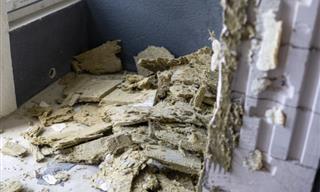
The most critical line of defense is physical exclusion. Kissing bugs are nocturnal and adept at finding even the smallest entry points into a home. A thorough sealing of your house is essential.
Seal Cracks and Gaps: Conduct a detailed inspection of your home's exterior and interior. Use high-quality caulk to seal any cracks in the foundation, walls, and around window and door frames. Pay special attention to entry points for utilities, such as pipes, electrical conduits, and air conditioning lines. For larger gaps, steel wool can be used as it deters both insects and rodents.

Secure Windows and Doors: Ensure all window screens are intact and free of rips or holes. Repair or replace any that are damaged. Install weather stripping around doors and windows to create a tight seal. Add door sweeps to the bottom of all exterior doors, including the one leading from the garage into the house.
Address Other Entry Points: Cover attic and crawl space vents with fine-gauge insect screens. If you have a chimney, make sure it is capped with a screen to prevent entry by bugs and wildlife. For homes with pet doors, choose models that have a strong magnetic seal and check them regularly for wear and tear.
2. Sanitize the Perimeter
The area immediately surrounding your house dictates the level of risk. The goal is to eliminate harborage—the hiding places for kissing bugs and the nesting sites for the wild animals that serve as their blood meals.
Clear Debris and Brush: Remove piles of firewood, rocks, leaves, and brush from the immediate vicinity of your house. These are ideal, dark, and protected environments where kissing bugs hide during the day. If you must keep a woodpile, elevate it off the ground and store it at least 50 feet away from the home.
Discourage Wildlife: Wild animals like woodrats, raccoons, and opossums are primary reservoirs for the T. cruzi parasite. Remove any potential nesting sites or food sources. Securely fasten lids on all trash and compost bins. Do not leave pet food or water bowls outside overnight. Prune tree limbs and shrubs that touch or hang over the house, as these can act as bridges for pests.
Maintain Pet and Animal Enclosures: For outdoor dog kennels, chicken coops, or other animal enclosures, maintain a high level of sanitation. Elevate structures off the ground where possible. Regularly clean bedding and remove waste to reduce odors that attract bugs. Inspect these structures for cracks and seal them, just as you would your home.
3. Light Management
Kissing bugs, like many nocturnal insects, are attracted to artificial lights. Managing your outdoor lighting can significantly reduce the number of bugs drawn to your home.

Minimize Use: The simplest method is to turn off exterior lights when they are not needed for safety or security.
Strategic Placement and Type: If you need outdoor lighting, position the fixtures away from windows and doors. Use motion-activated lights so they are only on when necessary. Consider switching to yellow "bug light" bulbs or sodium vapor lights, as their wavelengths are far less attractive to most insects than white or blue-toned lights.
Block Interior Light: Use blinds, shades, or curtains at night to prevent interior light from spilling outside and attracting bugs towards your windows.
4. Pest Management
While physical and environmental controls are the foundation, chemical intervention may sometimes be necessary, especially in high-risk areas.
Integrated Pest Management (IPM): This strategy prioritizes the methods above and uses pesticides as a targeted, secondary tool. An IPM approach is more sustainable and effective in the long run than simply spraying chemicals.
Chagas disease represents a complex convergence of environmental, veterinary, and human health challenges—a true "One Health" issue. In the United States, the risk of locally acquired Chagas disease is real and established. The insidious nature of the disease, characterized by asymptomatic early stages and severe long-term cardiac consequences, demands greater vigilance.
The recent calls to classify the US as endemic highlight the urgency of the situation. Combating this silent threat requires expanded surveillance to understand the true burden of the disease, increased funding for research into better diagnostics and treatments, and robust educational campaigns for both the public and the medical community. By understanding the nocturnal habits of the kissing bug and the ecological factors that bring them into our homes, we can take the necessary steps to protect ourselves and our animals from this neglected disease thriving in our own backyard.