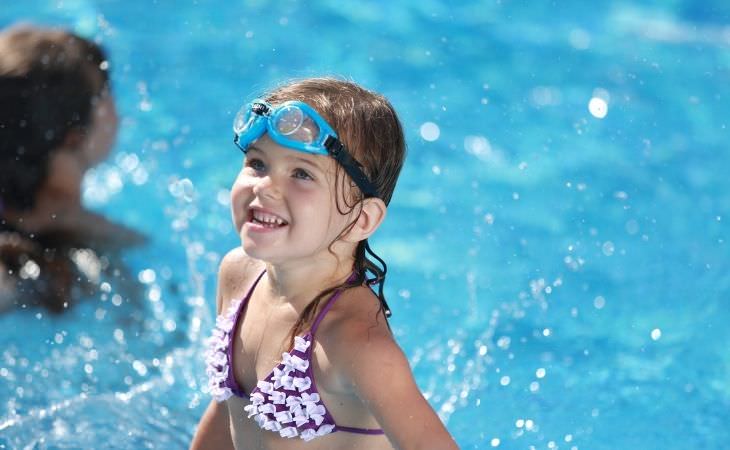
Summer is in its zenith, and with it comes the oppressive heat – but there’s one perfect place for a family outing to escape it: the pool! Almost everyone, especially kids, loves splashing in clear, cool water, but it’s crucial to do so safely to avoid any risks. To help with this, we’ve prepared the following guide, where you’ll discover how to keep your child safe at the pool at any age, and also when and how to teach them to swim in different styles. Know someone with young kids? Share this important guide with them – it could help prevent a tragedy.
Ages 1 to 2 Years
Before this age, it’s not recommended to bring children into a pool with water they can’t safely sit in. But now it’s possible – as long as your child is in your arms – and you can engage in various fun activities, such as splashing the water with their hands, bouncing in the pool while singing songs, pushing an inflatable ball across the water and chasing it, and so on.
Tips for Keeping Your Child Safe:
Stay in the shallow area of the pool where you can stand comfortably while holding your child.
Never let go of your child, even for a moment. Even if they show early swimming abilities, keep them within arm’s reach at all times so you can grab them if needed.
Do not submerge your child’s head underwater. At this age, children may swallow large amounts of water relative to their small bodies, which can dilute their blood and cause serious medical issues.
If your child is still in diapers and not fully potty-trained, it’s recommended to use swim diapers and avoid letting them swim without one.
A toddler can drown in 30 seconds, so it’s critical to be aware of all potential hazards around you and prevent them from using inflatable pool toys, like floaties or pool noodles, on their own.
Ages 2 to 3 Years
At this stage, you may be wondering how to teach your child to swim. You can do this by holding them balanced in the water while guiding them through the necessary swimming motions. Teach them how to perform doggy paddle movements with their hands and feet while you support their back and stomach, encouraging them to “swim” toward objects in the water, like an inflatable ball. They may not do it perfectly or in a way that allows them to swim independently, but it’s a good start.
Before that, ensure your child can handle having their head underwater without swallowing water. Show them how to blow bubbles by putting their mouth underwater – this way, they can avoid swallowing water if their head goes under.
Tips for Keeping Your Child Safe:
Your child may feel confident swimming on their own, but don’t leave them to swim alone, even for a few seconds – they need constant supervision in the water.
Emphasize basic and important pool rules, such as no running near the pool and only entering the water with Mom or Dad.
Do not fully submerge your child’s head underwater – they are still at risk of swallowing large amounts of water relative to their small body.
Avoid using floaties or inflatable toys designed to help your child float without your supervision – they give a false sense of security, and drowning is still possible.
Ages 4 to 5 Years
By now, your child should have the coordination to swim on their own. If you want to teach them to swim yourself, you can do so in shallow water by starting with diving lessons – ask them to touch the pool floor with their feet and stay underwater for 5-10 seconds without breathing.
Next, you can teach them the streamline position, which requires them to align their body straight in the water, keep their legs together, place one hand over the other in front of their face, and submerge their head in the water. Their body will naturally glide forward, and they should lift their head every few seconds to breathe.
After that, it’s recommended to teach your child how to float in slightly deeper water by pushing their arms and legs downward. If you notice your child panicking and making rapid, uncontrolled movements that don’t help them float, stop the activity and try again later.
Tips for Keeping Your Child Safe:
Ensure your child doesn’t go beyond the shallow water line without your close supervision and without clearly seeing it.
Although you don’t need to hold your child in shallow water, stay close in case they need help – they can easily reach an area where they can’t stand.
Be patient – your child may swim confidently one day and be scared to do so the next. Don’t force them to swim unless they want to.
Don’t assume the lifeguard is watching your child – it’s your responsibility to supervise and ensure their safety.
Age 6 and Up – Child in the Pool
As your child grows, they’ll be able to hold their breath longer underwater, allowing them to dive without issue. You can practice this by throwing sinking objects to the pool bottom for them to retrieve. If jumping is allowed in the pool you’re at, let your child do so – without running beforehand, of course.
Now is the perfect time to teach your child to swim breaststroke based on the doggy paddle they already know, then progress to freestyle. If they can already float independently, you don’t need to stay close to them the entire time they’re in the pool. However, you still need to supervise them while they’re in the pool. Don’t overestimate their abilities, as they can suddenly tire while swimming, which can be dangerous in deeper water.
Tips for Keeping Your Child Safe:
Even a child who swims well can drown – you must supervise them at all times.
When going to the beach with your child, watch them closely – their swimming skills may not be sufficient to handle waves and currents as they did in the pool.
Pay attention to your child’s swimming style and correct it if needed – click here to learn about common mistakes and how to fix them.
Subscribe and REMOVE ALL ADS
LOVE our articles but HATE our ads? For only $3.89 per month, enjoy a seamless, ad-free experience that lets you focus on what matters most — enjoying all of our content, uninterrupted. 🔒 100% Secure Payment 📅 Cancel Anytime, No Strings Attached Unlock a cleaner, faster browsing experience today and gain the freedom to navigate without visual clutter.
Ready for a Ad-Free experience? Upgrade now for just $3.89/month!
To enable your Ad-Free Subscription, please fill the fields below
Thank you for your subscription!
Your subscription was successful, now you can enjoy an ad-free experience!! Note: To make sure you get no ads, please make sure to log in to your account. If you are logged in already, then refresh the page. The subscription can be cancelled at any time.
Subscribe
Interested in Family and Parenting?
Get updates on new posts directly to your inbox!
Login
Login via Email
The new BabaMail app is now available at the app stores.