
For decades, Jewish people have feared visiting Muslim countries, as well as certain European countries, where immigration and political changes have caused a significant rise in the level of reported antisemitism. But there is a surprising country in Europe that proves that every rule has its exception: Albania. Despite the fact that more than half of the country's residents are Sunni Muslims and despite the German occupation during World War II, Albania is probably the only country in Europe where the Jewish population increased rather than decreased during the Holocaust. In the following article, we will help you get to know better the amazing story of the rescue that took place in Albania, the cultural principles behind it, and the stories of 3 heroes who made sacrifices and took enormous personal risks to save people they didn't even know in the name of decency.
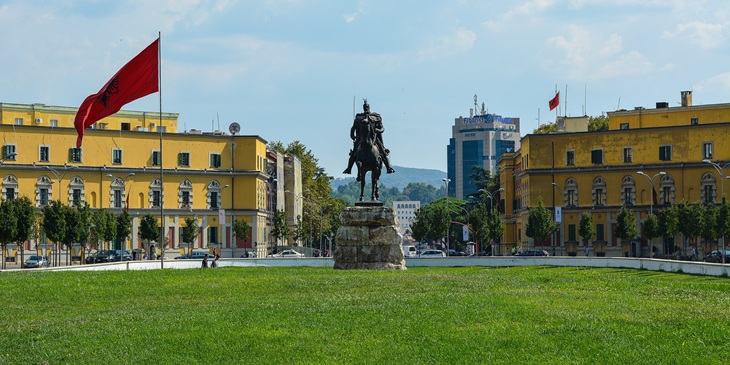
In the days leading up to the outbreak of World War II, only a few hundred Jews lived in Albania, a small and quiet community that was mainly dispersed in cities like Tirana, Vlora, and Durrës. Jews arrived in Albania in different waves over hundreds of years: some already in the Roman period and others after the expulsion from Spain in the 15th century, but a large or central community never developed in the country as it did in other European countries. Because, or thanks to, the fact that Jews were a tiny minority in a small, rural, and relatively isolated country, they hardly attracted attention and weren't perceived as a threat or a foreign element.
Besa is an ancient, deep, and significant Albanian code of honor, whose literal meaning is "promise" or "word". In practice, it is a much more binding moral value: an absolute commitment to protect the honor, safety, and life of a person under your protection. Besa is not dependent on religion, origin, or nationality, but on the human connection itself. Whoever gave Besa had to uphold it, even at a heavy personal cost. Violating Besa is considered a deep shame not only for the person himself, but for his family and his name for generations.
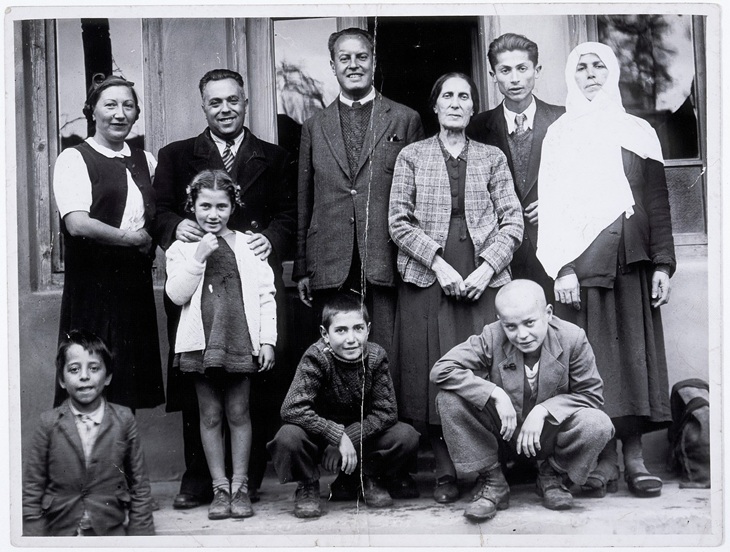
Even before Nazi Germany occupied Albania in 1943, many Jews had already arrived there, fleeing from neighboring countries such as Yugoslavia, Greece, Austria, and Germany itself. Part of the reason for this was that in 1938, only one year before the outbreak of World War II, the Albanian embassy in Berlin continued to issue visas to Jews, while no other European country was willing to accept them.
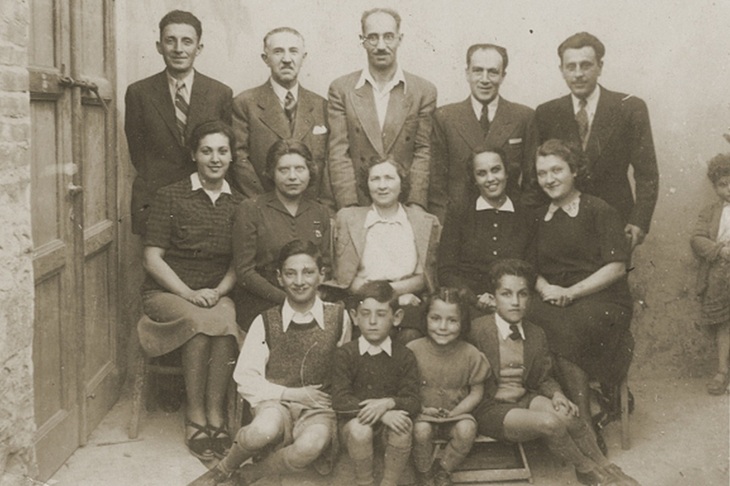
Instead of handing them over, as happened in most European countries, the Albanians chose the completely opposite path: they opened their homes, provided hiding places, forged documents, clothes, and new identities. Entire families were hidden in remote villages, in attics, basements, and isolated farmhouses, sometimes for months and even years. Any Albanian caught hiding a Jew was expected to face execution or severe punishment, but despite this, almost no cases of denunciation were recorded. On the contrary - entire villages cooperated in silence and together protected the refugees and Jews they had never met. It wasn't an organized underground activity or an official rescue network, but a widespread popular moral response.
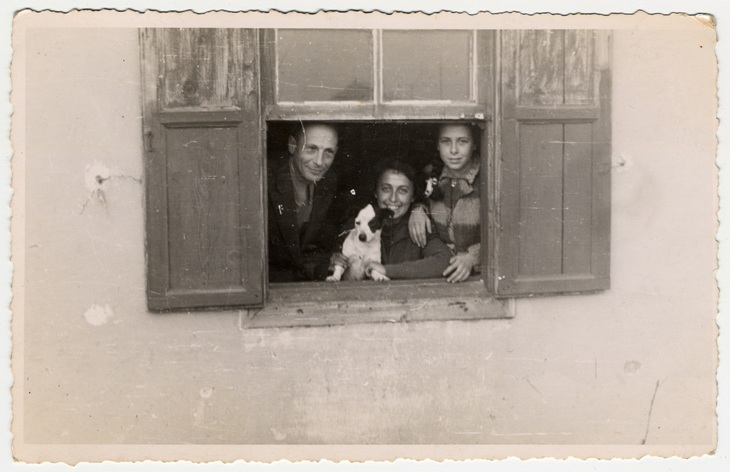
I was born in 1910. In 1943, during the Ramadan fast, 17 people arrived from Tirana to our village, Shën Gjergj, all fleeing the Germans. At first, I didn't know they were Jews. We dispersed them among the villagers. We took in the three Lazar brothers. We were poor, we didn't even have a dining table, but we never allowed them to pay for food and shelter. The Jews hid in the village for fifteen months. They dressed as local villagers to blend in with us. Even the local police knew that we were hiding Jews.
In December 1944 they left for Pristina, where our nephew, who was a partisan, helped them. From that moment we lost all contact with the Lazar brothers. In 1990, forty-five years after the war, Shlomo and Mordechai Lazar contacted us from Israel.
From the Yad Vashem archive - The story was told by Lima Balla (To translate the Hebrew: Right click with mouse and choose "translate to English")
"My father was a devout Muslim, he believed that saving lives means a guaranteed place in paradise" - The story of Ali Sheqer Pashkaj
My father owned a grocery store for food supplies. It was the only store of its kind in the area. One day a German vehicle arrived with 19 Albanian prisoners on their way to forced labor, and one Jew whose fate was sealed for death. My father spoke fluent German and invited the Germans to his store and offered them food and wine. He got them drunk. At the same time, he hid a note inside a loaf of bread and gave it to the young Jew. The note instructed him to jump and escape to the forests and wait for help at a certain point. The Nazis of course were furious about the escape, but my father claimed he was innocent. They took my father to the village and stood him against the wall, demanding to know where the Jew was hiding.
Four times they pressed a gun to his temple. They also threatened to burn the village if my father didn't reveal. My father didn't speak and finally the Germans left. My father rescued the young man from the forest and hid him in his home for two years until the end of the war. The young man's name is Yehoshua Baruchovitz. Yehoshua is still alive. He is now a dentist and lives in Mexico.
From the Yad Vashem archive (Right click and choose "translate to English") - The story was told by Invar Ali Sheqer (son of Ali Sheqer Pashkaj)
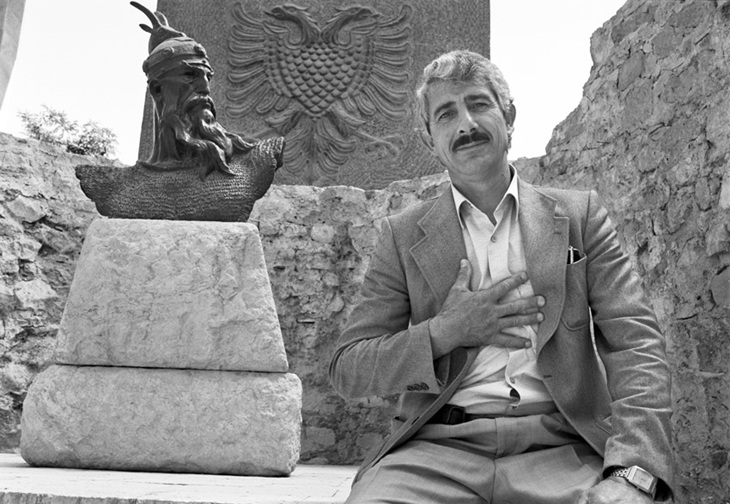
"They adopted for themselves the supreme importance of human life, in the most natural and understandable way" - The story of Refik Veseli
During World War II, Refik Veseli was a young Muslim photographer from the village of Krujë in Albania. At the age of 17, he met the Jew Moshe Mandil and his family, who fled from Yugoslavia to Kosovo and then were transferred to Albania. After the German invasion of Albania, great danger hovered over the Jews' heads and Veseli suggested that the Mandil family move to his parents' home in Krujë. Veseli and the Mandil family set out on a long journey on mules along a rocky and difficult path. To avoid German soldiers' observations, they chose side roads, moved at night, and hid in caves during the day.
When they arrived in Krujë, the family members hid the adults in a small room above the barn, and the two children of the Mandil family blended in among the Veseli family's children. Shortly after their arrival, Xhemal, Refik's brother, brought another Jewish family from Tirana; Roza and Yosef Ben Yosef, and Yosef's sister, Finica. The two families lived in the Veseli home in the mountain village until the liberation in November 1944. Refik Veseli and his family became Righteous Among the Nations. They were the first Albanians to receive this title.
More information about the Veseli family on the Yad Vashem website