We all experience emotions, and we all feel them equally, yet each of us reacts to them differently. Dr. Ernest Hartmann, a dream and emotion researcher at Tufts University in the USA, developed a way to classify how we respond to our emotions, based on what he called "emotional boundaries." Each of us has emotional boundaries shaped by our character, and getting to know them can make us more aware of how we handle the different situations that affect our lives. About 5,000 people completed Hartmann's questionnaire, and more than 100 studies have drawn on his findings to date. The personality test below is based on Dr. Hartmann's questionnaire, and it will help you discover what type of emotional boundaries you have, and what to pay special attention to in the way you react to your emotions.
After a significant argument, what is important for you to do before you can move on?
Understand the sequence of events, identify the problem and decide how to solve it.
Think not only about the things that were said, but also about the feelings and meanings that were underneath them.
To step back a bit from the issue, relax and then explain what was really important to me.
Having said what I had to say. I don't need anything else.
How do you behave when an important deadline approaches and there is still a lot of work left to be done?
Setting priorities and messages to the environment about the focus and investment required of me
The stress spreads to all areas of the day, and it is difficult for me to rest easy as long as the task is not finished.
First, the work is divided into stages, times are set and progress is made in order.
Everything that isn't relevant is ignored until the end of the task.
What role does music play in your life?
It unlocks memories, images and feelings and sometimes completely changes my mood.
It helps me connect with emotions and process them.
It's usually used as a background or as a pleasant means to accompany another activity.
Sometimes I'll listen to music depending on the activity and the desired state, for example to concentrate or relax.
What happens when a smell, a place or a song evokes a childhood memory?
I try to delve into the memory.
It's nice to remember something from the past, but I don't need to dwell on it.
For a moment it seems that the whole period comes back to life, along with the feelings and atmosphere that were there.
It's nice for me to experience the memory and think about who I was and who I am today.
A person close to you cancels a meeting with you at short notice. What is your initial inclination?
I'll assume they have a good reason and won't deal with it, unless it happens again.
I will give room for disappointment and ask them directly what happened, without rushing to conclusions.
I will look for a pattern, clarify expectations and update my plans.
The cancellation may give me a feeling of rejection, even if there was no such intention.
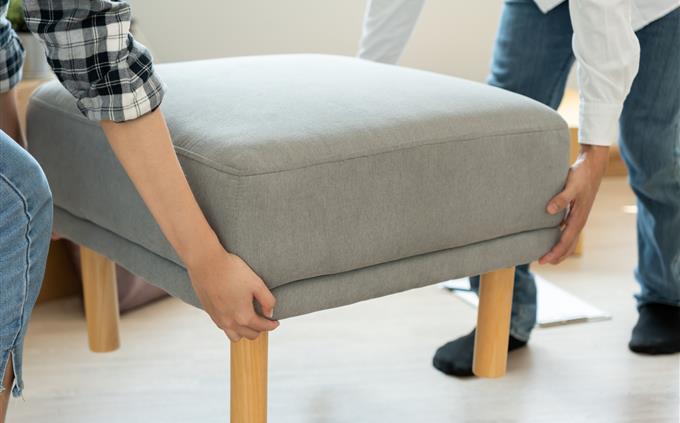
Someone changes the arrangement of your house or room without your planning. What is your initial reaction?
It is clear to me that something has changed and it takes time to get used to this change.
I will check if the change is convenient and useful; If so, I have no particular reason to object.
I'll try to keep an open mind, but I'll probably put certain things that are important to me back where they were.
I will go through the change in an orderly manner and decide what to keep and what to return to the previous state.
A person you don't know well compliments you out of the blue. How will you react?
I'll thank them briefly and move on without thinking too much about it.
I will think about what exactly they appreciated and whether the compliment was warranted.
I will be very excited and maybe I will start to wonder what made them see this in me.
I would love to receive the compliment, but I won't immediately draw a broad conclusion about myself from it.
How much work or daily activities continue to accompany you at home?
I have a clear transition to "home time" but sometimes it's necessary to digest important events.
The moods and stresses of the day often carry on with me even after I've finished work.
At the end of the day I make a summary of what remains to be done and try to leave it that way.
For me, work and personal life belong to two almost completely separate internal compartments.
Two people close to you are in a conflict and tell you different versions of their fight. How will you act?
I will try to understand what exactly happened, but I will make sure not to become an intermediary.
I will listen to both and try to help each understand the other's point of view.
I'd rather not be involved; This is a matter they must resolve between themselves.
The tension between them will weigh on me, and I will feel a strong urge to help them make up.
How do you treat old objects that remind you of people or periods of your life?
It seems to me that they keep a part of the memory inside them, so it's hard for me to say goodbye to them.
I have a few selected items at home, but they always represent different things.
If an object has no use, I have no problem giving it up.
I have significant items at home, but I don't have a necessary need for an object to remember something important.
What place do dreams occupy in your life?
Sometimes there are interesting patterns in them, but I don't see them as direct instructions for action.
A powerful dream can affect how I feel for hours and feel particularly meaningful.
There are very strong and confusing symbols and feelings in them, but they are not always related to reality.
I don't have many dreams, or they are simply forgotten quickly and I don't assign any special importance for them.
You spend a lot of time with a stressed or restless person. How does this affect you?
Their tension seeps into me and sometimes affects me negatively.
I will try to help, but I'll also work to create a private space without drama.
I will not interfere in the situation and reasons for stress, each person has his own problems.
I will ask what they need and how I can help, but I won't neglect my routine and the things that are important to me.
Someone criticizes you and you're not sure if it's justified. what will you do?
I'll briefly check if there is anything useful in it, and if not, I won't give it any more space in my thoughts.
I will separate the form of the statement from its content and decide what should be taken from it.
I will try to understand what the criticism says about the relationship between us and the other person's point of view.
Even if I know that things are exaggerated, they may continue to resonate within me for a long time.
You watched a movie that touched you deeply. What is likely to happen after it ends?
Scenes, music or feelings from the movie will continue to live inside me and may even appear in my dreams.
I'd continue to think about the message, the acting and the way the story is built.
I will let myself get excited and think about how the story connects to experiences from my life.
Once the movie is over, it's usually easy for me to move on to the next activity without thinking too much about it.
After a tense conversation with a person important to you, what will the rest of your evening look like?
A decision that after the conversation is over there is no point in continuing to think about it and you need to move on
I'll patiently examine what I felt, what the other person may have felt and what each of us is really going through.
I will organize what was said in my head and decide if a follow-up call or other action is required.
The words, the tone and the facial expressions will probably continue to occupy my mind, as I try to occupy myself with other things.
Your emotional boundaries are thin - absorbing
Your emotional boundaries are thin, so you don't just notice what's happening around you — you absorb it. A loved one's joy can lift you up, tension in a room can transfer to you in an instant, and a thoughtless word can echo in your mind long after it's spoken. There's real power in this: you form deep connections, feel things fully, and offer others a warmth and genuine kindness that's hard to fake. But that same emotional openness can wear you down, lead you to take on feelings that aren't yours, or set your own needs aside just to keep the peace. One of the most important things for you to understand is that a boundary isn't a wall — it's a way of choosing when to open the door and when to close it for a little while. The better you get at recognizing which people and situations replenish you and which ones drain you, the easier it becomes to stay balanced. You don't need to become less sensitive; you just need to give your sensitivity the protection it needs to flourish.
Your emotional boundaries are thin and flexible - the ones that connect
Your emotional boundaries are thin and flexible, which lets you connect deeply with people and experiences without ever losing your sense of self. You're attuned to other people's moods, you pick up on what isn't said out loud, and you have a way of making people feel truly seen and accepted. This lets you build warm relationships, adapt easily to changing situations, and stay open to points of view different from your own. Still, your desire to understand, support, and stay close can sometimes lead you to give too much room to other people's needs while brushing aside your own. One of the most important things to remember is that real connection doesn't require you to agree with everything or be available every moment. As you learn to state your needs clearly and step away when you need space, you'll be able to enjoy deeper connections without feeling drained by them. You don't have to choose between closeness and independence — your strength is in combining the two.
Your emotional boundaries are thick and flexible - the organizers
Your emotional boundaries are thick and flexible, which means you can stay steady even when strong emotions or unexpected situations flare up around you. You tend to pause, take stock of what's happening, and choose how to respond, rather than letting a passing feeling dictate your behavior. There's real strength in this: your inner steadiness makes people trust you, turn to you for level-headed advice, and feel they have someone beside them who sees the big picture. But your instinct to find a solution, a structure, or an explanation can sometimes move you to the practical stage too quickly — before you've given the emotion the room it's asking for. One of the most important things to remember is that not every feeling needs to be fixed; sometimes it's enough to acknowledge it and simply sit with it for a moment. As you let yourself be a little less composed in certain emotional moments, you'll find that openness doesn't weaken your stability — it adds depth to it. Your ability to keep your judgment is a real asset, especially when you pair it with patience for the things that can't be sorted out right away.
Your emotional boundaries are thick, and you know how to keep a clear line between your inner world and the drama, pressure, and shifting moods around you. You tend to handle situations practically, you don't get swept up easily, and you keep functioning even when others feel overwhelmed or confused. This is a real advantage: your composure gives you independence, resilience, and the ability to keep moving forward even when emotions threaten to take over. But the habit of setting feelings aside can sometimes distance you not only from pain and stress, but also from closeness, support, and the moments that deepen important relationships. One of your main challenges is to see that emotional openness isn't a weakness, and that confiding in someone close isn't a loss of control. The more you let yourself express a little of what's going on inside, the easier it becomes for others to know you — and to be there for you when you need it.
Subscribe and REMOVE ALL ADS
LOVE our articles but HATE our ads? For only $3.89 per month, enjoy a seamless, ad-free experience that lets you focus on what matters most — enjoying all of our content, uninterrupted. 🔒 100% Secure Payment 📅 Cancel Anytime, No Strings Attached Unlock a cleaner, faster browsing experience today and gain the freedom to navigate without visual clutter.
Ready for a Ad-Free experience? Upgrade now for just $3.89/month!
To enable your Ad-Free Subscription, please fill the fields below
Thank you for your subscription!
Your subscription was successful, now you can enjoy an ad-free experience!! Note: To make sure you get no ads, please make sure to log in to your account. If you are logged in already, then refresh the page. The subscription can be cancelled at any time.
This content is reserved for our members
Join Our Community for FREE and Enjoy:
Full and free access to ALL content.
The 'Daily Mail' service sends the highest quality and the most fascinating content directly to your inbox.
 Shai K.
7/22/2026
Shai K.
7/22/2026
















 Go to BabaMail