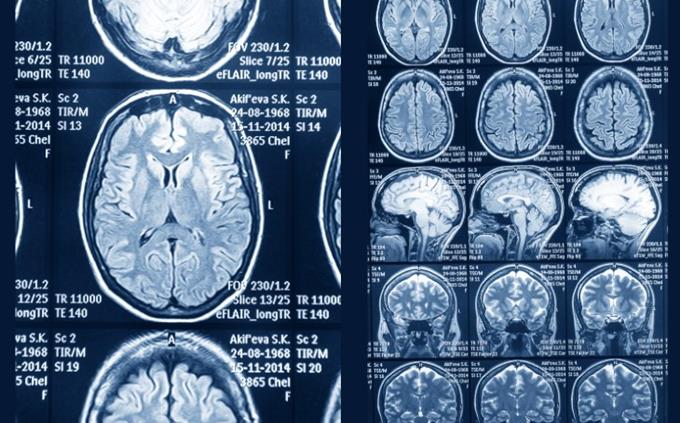
Medical imaging has transformed modern medicine, allowing physicians to look inside the human body without a single incision. From the accidental discovery of X-rays in the 19th century to today’s ultra-high-resolution MRI scanners and hybrid PET-CT systems, these technologies have revolutionized diagnosis, prevention, and treatment planning. But how well do you really understand what each scan can-and cannot-do? This quiz explores the science, history, strengths, limitations, and surprising nuances of medical imaging. Designed for seasoned minds who appreciate depth and detail, this challenge goes beyond basics. Let’s see how sharp your diagnostic instincts really are.
Which medical imaging modality was discovered first?
MRI
Ultrasound
X-ray
CT
CT scans fundamentally rely on which principle?
Magnetic resonance of hydrogen nuclei
Multiple X-ray projections reconstructed by computer
Gamma ray emission from isotopes
Reflected sound waves
Which imaging modality is best suited for detecting acute intracranial bleeding in emergency settings?
PET
Ultrasound
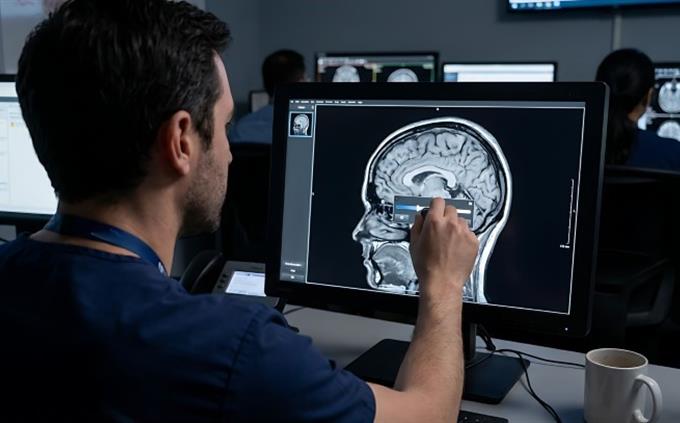
MRI
CT
PET scans are most commonly used to assess...
Bone density
Electrical brain activity
Metabolic activity
Fluid accumulation
Functional MRI (fMRI) measures...
Direct neuron firing
Glucose uptake
Blood oxygen level changes
Electrical impulses
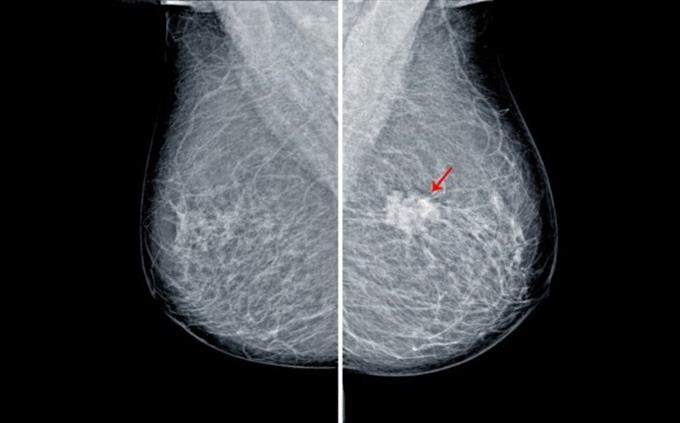
Mammography is specifically optimized to detect...
Lung nodules
Thyroid dysfunction
Breast microcalcifications
Brain aneurysms
Which imaging modality is NOT recommend for use with patients who have certain metal implants?
CT
X-ray
MRI
Ultrasound
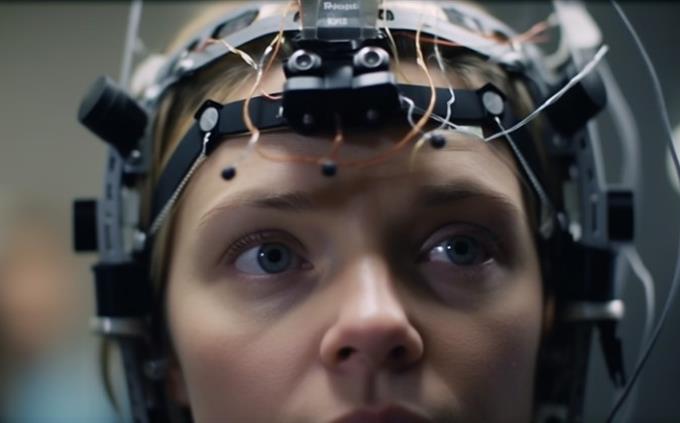
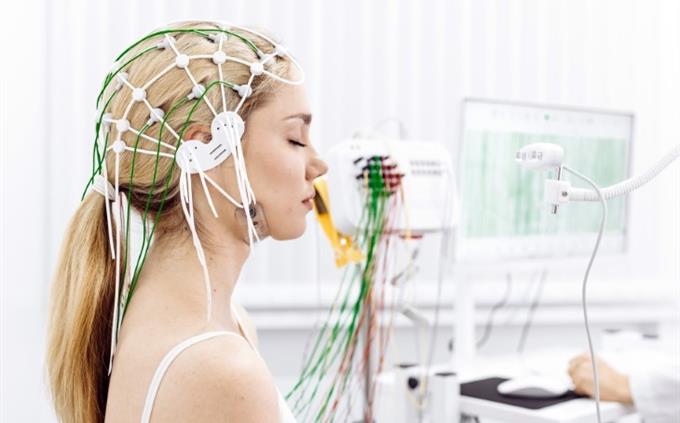
EEG primarily measures...
Cerebral blood flow
Glucose metabolism
Electrical activity of cortical neurons
Magnetic resonance
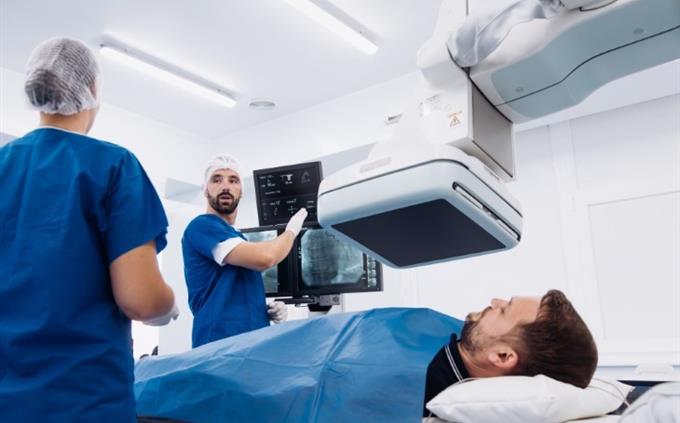
Fluoroscopy differs from standard X-ray because it...
Uses magnets
Provides real-time moving images
Requires no radiation
Detects metabolic changes
Which imaging modality is safest during pregnancy?
CT abdomen
PET scan
Ultrasound
MRI with contrast
Why can’t X-rays clearly distinguish most soft tissues?
They move too quickly
They reflect poorly
Similar densities absorb X-rays similarly
They lack resolution
Hybrid PET-CT scanners combine...
Structural and metabolic imaging
Sound and radiation
Electrical and magnetic signals
Optical and acoustic signals
Who is credited with discovering X-rays in 1895?
Marie Curie
Hans Berger
Paul Lauterbur
Wilhelm Röntgen
Which modality is most sensitive for detecting acute brain hemorrhage?
EEG
MRI
CT
PET
EEG wave patterns are categorized into bands such as...
Alpha, Beta, Delta, Theta
T1, T2, FLAIR
Sagittal, Coronal, Axial
FDG, Iodine, Barium
Imaging Intern
You’ve got the foundation, but there’s room to sharpen those diagnostic instincts. Medical imaging is a fascinating blend of physics, biology, and clinical judgment—and you’re just scratching the surface. The good news? Curiosity is half the battle. With a little deeper reading into how each modality works and when it’s used, you’ll start seeing patterns in how doctors choose the right tool for the job. Keep scanning your knowledge base—you’re warming up nicely.
Impressive! You clearly understand the strengths and limitations of modern medical imaging. You know when to choose MRI over CT, and you appreciate that not all scans are created equal. Your grasp of both the history and practical application suggests a sharp analytical mind. You likely enjoy connecting technology with real-world outcomes. A bit more fine-tuning on advanced nuclear imaging and subtle technical differences would push you into expert territory.
Outstanding performance. You possess a nuanced understanding of how imaging technologies evolved and how they function in complex clinical settings. You appreciate not just what scans can reveal—but also their limitations and risks. That balance of knowledge is what separates true expertise from surface familiarity. Whether you have a background in healthcare or simply a deeply curious mind, your command of diagnostic imaging is exceptional. The radiology suite salutes you.
Subscribe and REMOVE ALL ADS
LOVE our articles but HATE our ads? For only $3.89 per month, enjoy a seamless, ad-free experience that lets you focus on what matters most — enjoying all of our content, uninterrupted. 🔒 100% Secure Payment 📅 Cancel Anytime, No Strings Attached Unlock a cleaner, faster browsing experience today and gain the freedom to navigate without visual clutter.
Ready for a Ad-Free experience? Upgrade now for just $3.89/month!
To enable your Ad-Free Subscription, please fill the fields below
Thank you for your subscription!
Your subscription was successful, now you can enjoy an ad-free experience!! Note: To make sure you get no ads, please make sure to log in to your account. If you are logged in already, then refresh the page. The subscription can be cancelled at any time.
This content is reserved for our members
Join Our Community for FREE and Enjoy:
Full and free access to ALL content.
The 'Daily Mail' service sends the highest quality and the most fascinating content directly to your inbox.
 Shai K.
2/22/2026
Shai K.
2/22/2026




 Go to BabaMail