
In the ever-evolving realm of psychological disorders, Avoidant Restrictive Food Intake Disorder (ARFID) has emerged as a puzzling newcomer in recent years. Once lumped under the broad label of "Selective Eating Disorder," ARFID distinguishes itself from more widely recognized conditions like anorexia by avoiding any emotional entanglement with body image or fears of becoming overweight.
Diagnosing ARFID
The Diagnostic and Statistical Manual of Mental Disorders, Fifth Edition (DSM-5), serves as the cornerstone for identifying ARFID. According to this clinical bible, the condition manifests as an eating or feeding disturbance that results in persistent failure to meet appropriate nutritional and energy needs. This disturbance is associated with one or more of the following: significant weight loss, nutritional deficiency, dependence on enteral feeding (tube feeding) or oral supplements, and a marked interference with psychosocial functioning.

Critically, the diagnosis of ARFID dismisses conditions where the symptoms are better explained by lack of available food or culturally sanctioned practices. It also excludes the presence of anorexia nervosa, bulimia nervosa, or any other medical or mental conditions that could potentially cause the symptoms. In essence, ARFID stands as a unique eating disturbance requiring its own set of diagnostic considerations and interventions.
Risk Factors:
While our understanding of ARFID is still burgeoning, several risk factors have been identified. Individuals with autism spectrum conditions, Attention Deficit Hyperactivity Disorder (ADHD), and intellectual disabilities are more susceptible to developing ARFID. In addition, children who exhibit severe or enduring picky eating behaviors appear more likely to transition into ARFID as they age. Anxiety disorders frequently accompany ARFID, often further complicating the diagnostic and treatment landscape.
It's important to underscore that risk factors can vary substantially between individuals. This means that two people with ARFID might have vastly different experiences, perspectives, and symptoms—a reflection of the complex interplay between biological, psychological, and sociocultural elements.
Warning Signs and Symptoms:
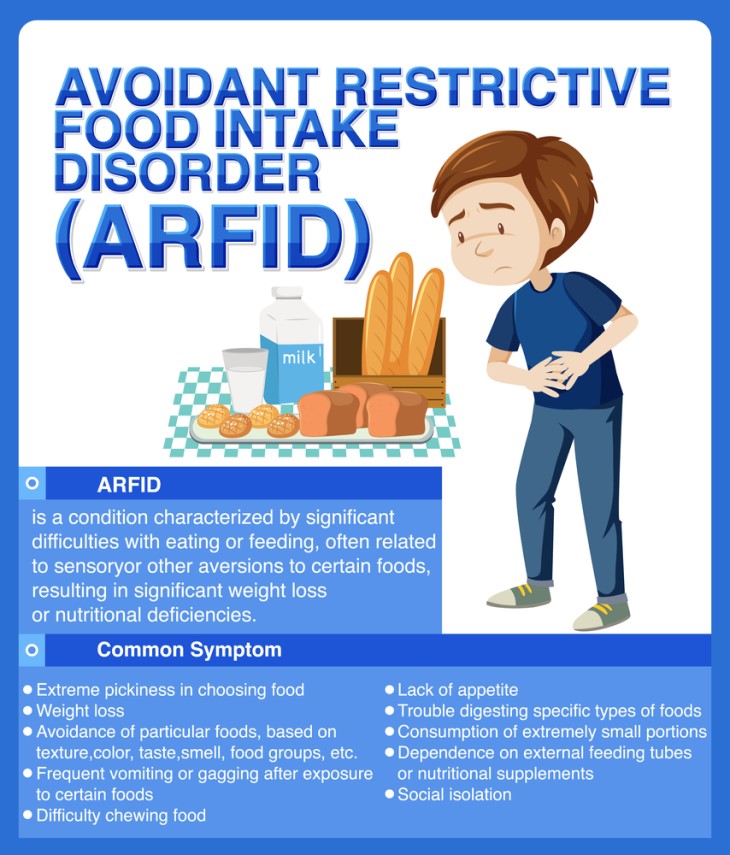
The symptoms of ARFID are as diverse as they are concerning. On the surface, dramatic weight loss and gastrointestinal issues may serve as the most visible indicators. However, closer examination reveals an array of other signs such as food texture aversions, fears of choking or vomiting, and a narrowing range of accepted foods over time.
Psychological symptoms, including lack of interest in food and non-specific complaints around mealtime, are common. Notably, there is no body-image disturbance or fears of weight gain—symptoms often associated with other eating disorders—further underscoring the unique nature of ARFID.
The Way Forward: A Daunting Reality and Gaps in Understanding
ARFID is more than just an intriguing psychological curiosity; it poses severe and life-threatening health risks. Due to insufficient nutrient intake, the body goes into an energy-conservation mode, leading to a range of dire consequences of electrolyte imbalances to cardiac arrest.
Despite the depth of our current understanding, numerous gaps remain. The etiology and long-term impacts of ARFID are yet to be fully understood, and the quest for effective treatment options is ongoing. These lingering questions underscore the imperative for continued research and clinical focus.

35 Small Gestures Kids Truly Appreciate
To help your child feel good about themselves at any age and to show them how much you love them, we’ve gathered 35 small and simple gestures that will help you create a warm and loving relationship.
8 Foods You Shouldn't Give to Children
We’ve prepared a list of 8 such foods that you should definitely know about.
These Tips Can Help Your Kid Develop Healthy Eating Habits
We all want our children to eat right from an early age, and with the help of this clinical dietitian, you can make that happen...
Guide: How to Meditate With Your Children
This guide will instruct you on how to do easy meditation techniques with your children and grandchildren.
A Few Things About Child Obesity We All Need to Know
What causes childhood obesity, why is it getting more common, and what can be done about it?
2:59
Dr. Explains: How Much Antioxidants Do Our Foods Contain?
Do you think you know which are the best lentils? Or what is the most recommended apple variety in terms of antioxidants? There are quite a few surprises here...
5:29
Cancer Stages: How Cancer Type Affects Staging
The stage of cancer is more than just a number.
10:40
Instant Back Pain Relief - How to Decompress the Spine
These spinal decompression exercises will help you relieve the pain, stiffness, and pressure throughout the entire spine almost instantly.
4:34
What Happens When We Eat Oatmeal Every Day?
Why is eating oatmeal every day so healthy, and what happens to our body when we stick to it?
8:03
The 30-Second Ear Trick That Calms Your Nervous System
This quick ear exercise stimulates the vagus nerve, which plays a key role in relaxation and healing.
10 Terrific Health Benefits of Chives
The myriad health benefits of Chives have been known since the days of the Roman Empire.
11:14
Dentists Bust 14 Popular Teeth Myths We’ve All Believed
Watch these dentists debunk some popular myths about teeth that many of us have believed in for ages.
5:01
How to Balance the Damage from Eating Refined Carbs
Refined carbs can cause some serious health effects. This is what you should do to balance the damage.

The One Common Mistake That Makes Our Earlobes Longer
Here, the skin's aging process becomes strikingly visible: loss of volume, decreased elasticity, and gradual elongation that reshapes the ear's appearance.
10 Root Vegetables With Extraordinary Health Benefits
This winter, make sure you add these super healthy root vegetables to your diet for an extra dose of nutrition.
Nutrition Guide: Top 10 Biotin-Rich Foods
Here are the top 10 biotin-rich foods to add to your shopping list.
4:30
Science Lesson: What Role Do Genetics Play in Obesity?
Nature or Nurture? Who is more at fault when it comes to obesity?
Research Shows: Just 2 Spoons of This to Lose Weight
Cider Apple vinegar is making headlines again following a study that found two tablespoons of it per day may greatly help with weight loss and improving blood sugar. Even more than expensive medications and treatments with many side effects.
23:45
Yoga Moves That Can Help Relieve Migraines
This easy restorative yoga practice focuses on pranayama breathing and can help reduce the uncomfortable symptoms of headaches and migraines
Learn Three Exercises to Reduce Anxiety and PTSD
Learn 3 simple exercises to deal with those moments when your anxiety gets too "loud" and you need a coping mechanism.
8:43
Dr. Explains: How to Naturally Lower Your Blood Pressure
In this video, a board-certified doctor walks you through 10 scientifically proven lifestyle changes that can help lower your numbers—safely and naturally.
Age-Related Macular Degeneration: How to Treat It
The diagnostic methods, the importance of early detection, and new treatments that are changing how we manage this disease
12:29
Health Problems Your Feet Might Be Telling You About
Pay close attention to your feet. They might be telling you about some hidden health issues.
7:10
Guide: How to Set Achievable Health Goals for the New Year
Here's a guide on how to set meaningful health goals for 2025.
5:38
Everything You Need to Know About Appendix Pain
This video walks us through the untruths and facts of appendicitis.
4:01
Doctor Tip: How to Drain Sinus and Clear Nose in 1 Move!
This doctor has a genius routine for draining your sinuses while also clearing your nose.
11:18
Stiff and Achy In the Mornings? Here’s What You Should Do
Take note of these useful morning stretches to get rid of pain and stiffness at the start of your day.
10 Foods That May Weaken Your Immune System
The relationship between diet and immune function is profound. A nutrient-dense, well-rounded diet acts as fuel for your immune system, while a diet low in nutrients and high in ultra-processed foods can significantly impair your body's immune system
5:35
The Real Cause of Stomach Ulcers Will Surprise You!
It’s a common misconception that stomach ulcers are caused by emotional upsets, spicy food, or psychological distress. But this is not the case...
27:11
Learn the Truth About 5 Popular Health Food Trends
Watch this video to learn some revealing truths about a few popular health food trends.
6 Pressure Points to Ease Knee Pain Naturally
you can reduce pain caused by osteoarthritis, bursitis, tendonitis, and injuries to cartilage and ligaments using the following 6 pressure points.
A Vital How-to Guide of Neuropathy Treatment & Prevention
Our full guide to one of the worst and most common nerve problems - neuropathy.
3:14
Let's Talk About the Anti-Cancer Benefit of Sweet Potatoes
Lets Talk About the Anti-Cancer Potential of Sweet Potatoes
The Spleen – A Guide to a Little-Known Organ
The spleen is an oft-ignored organ of our body. However, it serves an important function and needs to be taken care of properly.
10:01
Find Out if You’re Aging Well with These 3 Simple Tests
Test your longevity with these three at-home assessments.
10:33
Lower Back Lost Mobility? Here's How to Self Pop It
Here's how to safely pop and release pressure from the spine, by yourself, using a foam roller.
16:03
Anxiety and Grief Can Cause Profound Cardiac Injury
‘A broken heart’ is one expression we might want to take more literally. As thoroughly explained in this incredibly insightful lecture, the effects of heartbreak, as well as other emotions, both positive and negative, all leave a very real, physical
25:06
These Tips Can Help You Beat Diabetes in 4 Weeks!
Can you really beat diabetes? These hacks are worth a try...
Brain Cancer: What Symptoms Should You Watch Out For?
This article provides an overview of brain cancer, including the main types, early warning signs, how it’s diagnosed, key statistics, and new developments in detection.
13:03
Easy Upper Body Workout to Help Seniors Stay Active
Here's an easy and effective workout for seniors to build their upper body strength.
Microbreaks: How to Protect Yourself from Burnout
How to cope with prolonged times of inactivity with microbreaks.
How to Prevent Painful Chafing: Five Natural Solutions
It’s even possible to prevent chafing in advance if you know what to do and how to prepare for it. We will teach you all about it here – the signs, home treatments, and prevention methods.
This Doctor Shares a Recipe He Makes For Brain Health
Dr. Rasouli has a dish he prepares for himself every week that might look like just another homemade stew with vegetables and lentils, but there’s a good chance it’s the smartest meal you’ll put in your pot and stomach soon.
4:34
Can Oatmeal Reduce Coronary Heart Disease Progression?
Everyone knows that oatmeal is healthy, but it's a lot healthier than you might think! It might actually reduce the progression of coronary heart disease.
Can What You Eat Raise Our Risk of Parkinson’s?
An extensive American study has found that daily consumption of ultra-processed foods—such as snacks, hot dogs, sugary drinks, and packaged pastries—may double the risk of developing early neurological symptoms linked to Parkinson’s disease.
4:25
These Exercises Help Relieve Arthritic Knee Pain
Are you suffering from arthritis-related knee pain? If so, we have an excellent suggestion for you today...
To enable your Ad-Free Subscription, please fill the fields below
Your subscription was successful, now you can enjoy an ad-free experience!! Note: To make sure you get no ads, please make sure to log in to your account. If you are logged in already, then refresh the page. The subscription can be cancelled at any time.