
A few years ago, we began hearing in the media about a mysterious disease starting to spread in China, and we will all remember the COVID-19 pandemic crisis that followed for a long time. The Chinese regime has often been accused of hiding the truth from the world and downplaying the significance of the event before COVID-19 became a global phenomenon, and some claim that this history is repeating itself... In the summer months of 2025, a disease called Chikungunya fever began spreading in southern China, which has already crossed borders into Europe and is raising concerns worldwide. Let’s clarify upfront that this is not a deadly disease nor is it spread through the air like COVID-19. The infection occures like malaria - through mosquito bites. Still, it’s an issue worth being aware of and cautious about, as some of the images coming from China, which you’ll see later, are certainly concerning.
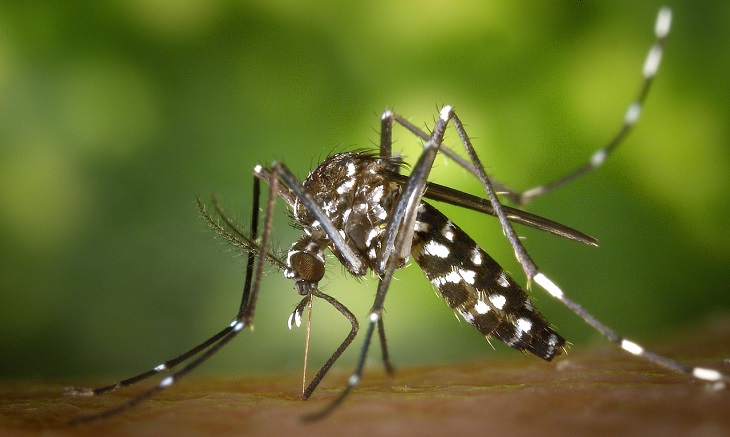
What is Chikungunya fever?
Chikungunya is a viral disease transmitted by the bite of mosquitoes, primarily the Asian tiger mosquito (Aedes albopictus), which is a common invasive species in Israel. Over 95% of people infected with the disease through a bite will develop symptoms, the most prominent of which are fever and severe joint pain, sometimes to the point of inability to move the joints. Additional symptoms include headaches, muscle pain, eye inflammation, and rashes. These symptoms are the origin of the disease’s name; the virus was first identified in the 1950s in Tanzania, and it got its name from the local language, meaning "to bend" or "to be contorted," referring to the physical contortion caused by severe joint pain. Although it is not deadly in itself, the severity of the disease increases with the patient’s age and can cause complications and serious harm in people with weakened bodies or immune systems.
In 2007 and 2017, outbreaks were reported in Italy, raising real concerns about the disease establishing itself in Europe. Such events greatly surprised researchers and indicated that tropical diseases could break out in non-tropical areas due to global warming, which allows mosquitoes originating from tropical regions to thrive in places like Europe and North America. Earlier, in 2004–2005, an outbreak affected about half a million people and spread worldwide, a scenario that could worsen due to the rapid spread of the Asian tiger mosquito in Asia and Europe. In Israel, a few dozen cases are diagnosed each year, almost all of which involve travelers returning from other countries. There are Chikungunya vaccines that have been tested and approved for use in the United States, but as of now, they have not been approved for use in Israel.

As of the summer of 2025, Chinese authorities report about 5,000 people infected with the disease in less than a month, mainly in the Foshan area. Most cases were reported in southern China, where hospitals and communities have already collapsed under the strain. The concerning reports and rising infection rates have led authorities to implement a series of disinfection measures, mosquito control, public awareness campaigns, and, in severe cases, lockdowns. Meanwhile, health authorities in Italy and the UK have reported over a hundred cases of infection, and the numbers are only rising. Another potential hotspot may develop in France, where dozens of Chikungunya fever cases have already been diagnosed this past summer, and authorities are concerned that these involve people who did not travel abroad but were infected in France itself.
For more information and to view images from quarantine areas, you are invited to watch the following videos:
There is currently no cause for panic, but there is definitely a reason for caution and awareness regarding Chikungunya fever and the dangers of mosquito-borne diseases in general. Report to local authorities about places where water accumulates or where there are open sewage points that could encourage mosquito proliferation, use mosquito repellent products, and keep window screens closed at home. Be especially cautious if you plan to travel abroad, and protect yourself well from mosquitoes on any trip to Asia or Europe.