
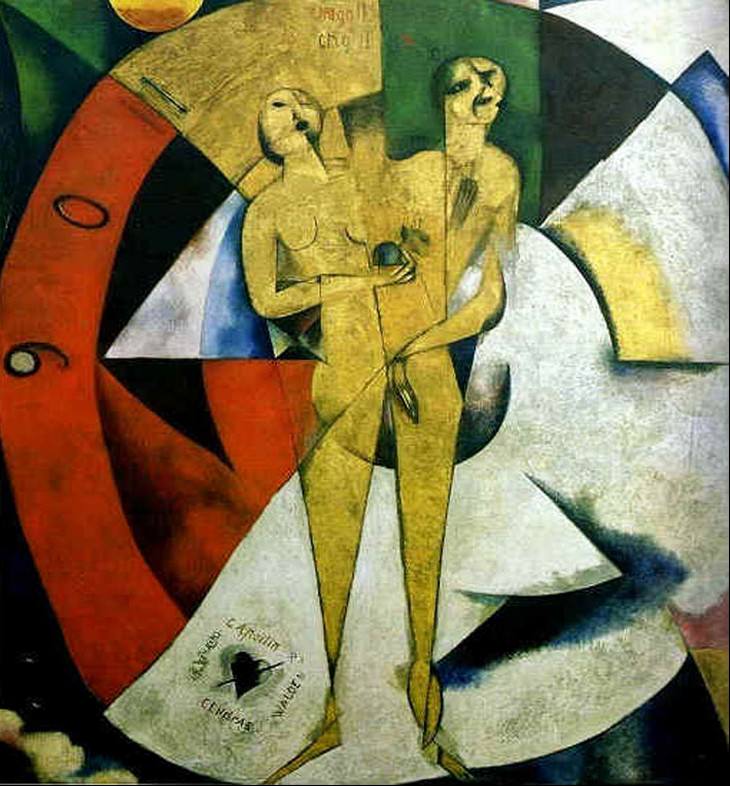
 Homage to Apollinaire, painted by Marc Chagall in 1911, pays tribute to the French poet Guillaume Apollinaire, a close friend of the artist and an influential figure in the Parisian avant-garde scene. This work captures Chagall's early exploration of Cubism and Fauvism, evident in the fragmented composition and bold color choices. The painting features several portraits of Apollinaire and other Parisian artists, as well as a self-portrait of Chagall. The inclusion of these figures signifies the importance of artistic camaraderie and mutual admiration among the avant-garde community, highlighting Chagall's appreciation for Apollinaire's friendship and support.
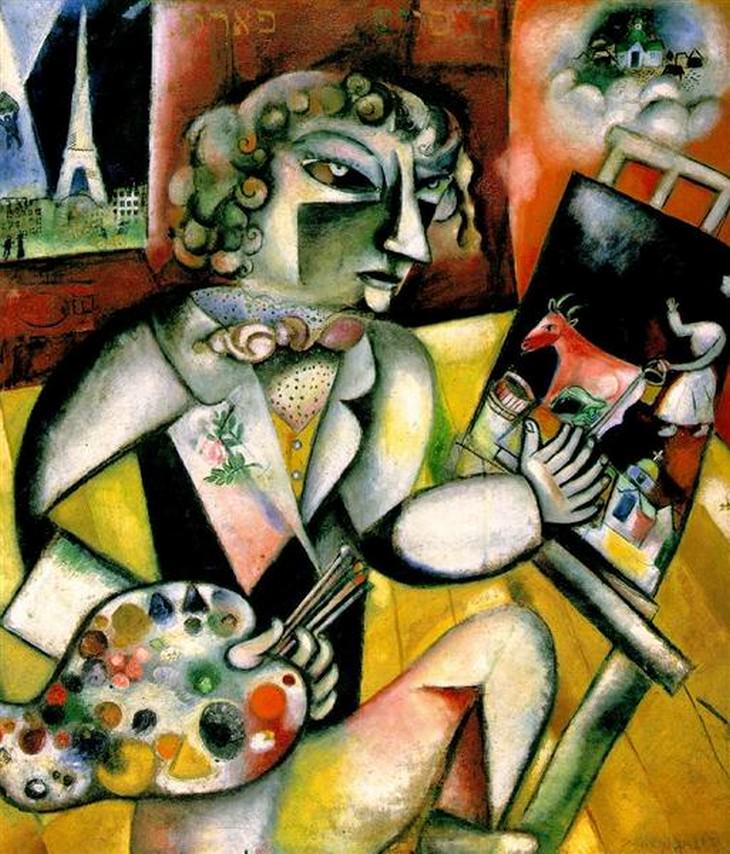 Self-Portrait With Seven Fingers, created in 1913, is a striking and highly symbolic painting by Marc Chagall. In this work, Chagall portrays himself with an extended hand featuring seven fingers, a surreal element that adds to the painting's enigmatic atmosphere. The work is rich in personal symbolism, referencing Chagall's Russian-Jewish heritage and his life in Paris. The Eiffel Tower in the background represents the artist's connection to the city, while the small village scene on the top left evokes his hometown of Vitebsk. The seven fingers may symbolize Chagall's dexterity and skill as an artist or refer to the Jewish mystical belief in the power of numbers.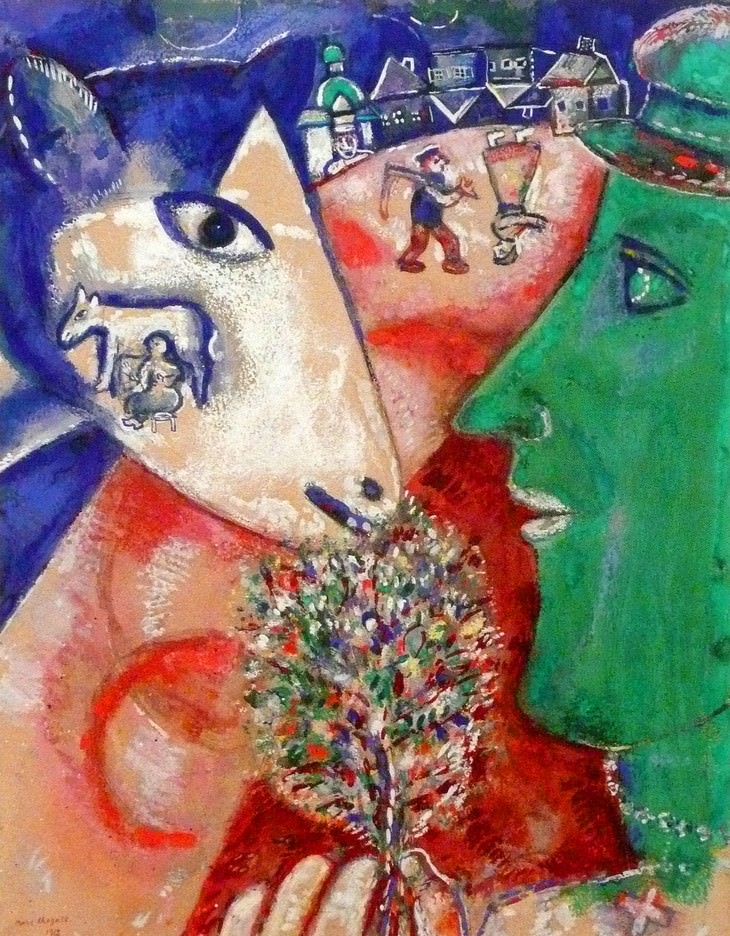
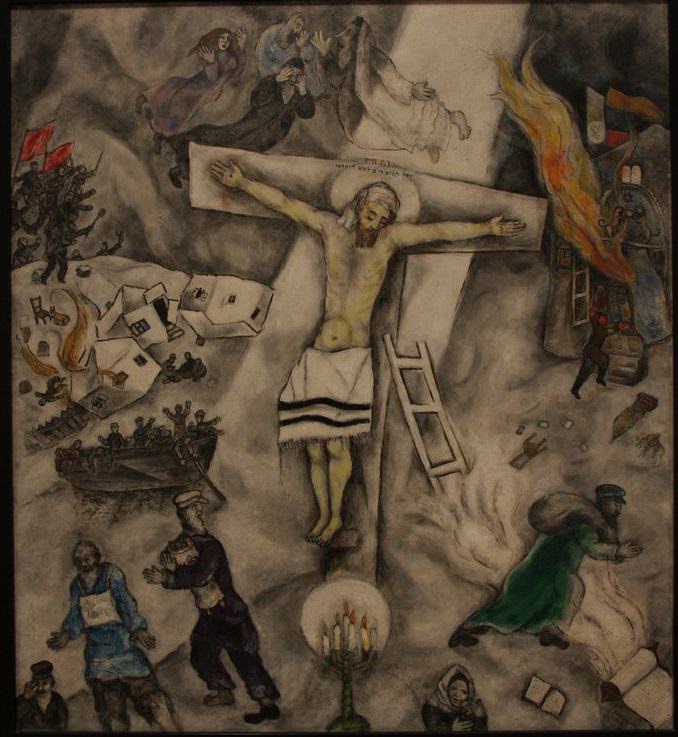
White Crucifixion, painted in 1938, is a powerful and emotional work by Marc Chagall, reflecting on the persecution of Jews in Europe during the rise of anti-Semitic sentiment leading up to World War II. The painting reinterprets the traditional Christian imagery of the crucifixion, placing Jesus in a Jewish prayer shawl and incorporating Jewish symbols such as the Torah scrolls and Menorah. Surrounding the central figure are scenes of violence and destruction, with Jewish refugees fleeing their burning homes. Through this work, Chagall emphasizes the shared suffering of both Christians and Jews, calling for compassion and understanding in the face of hatred and violence.
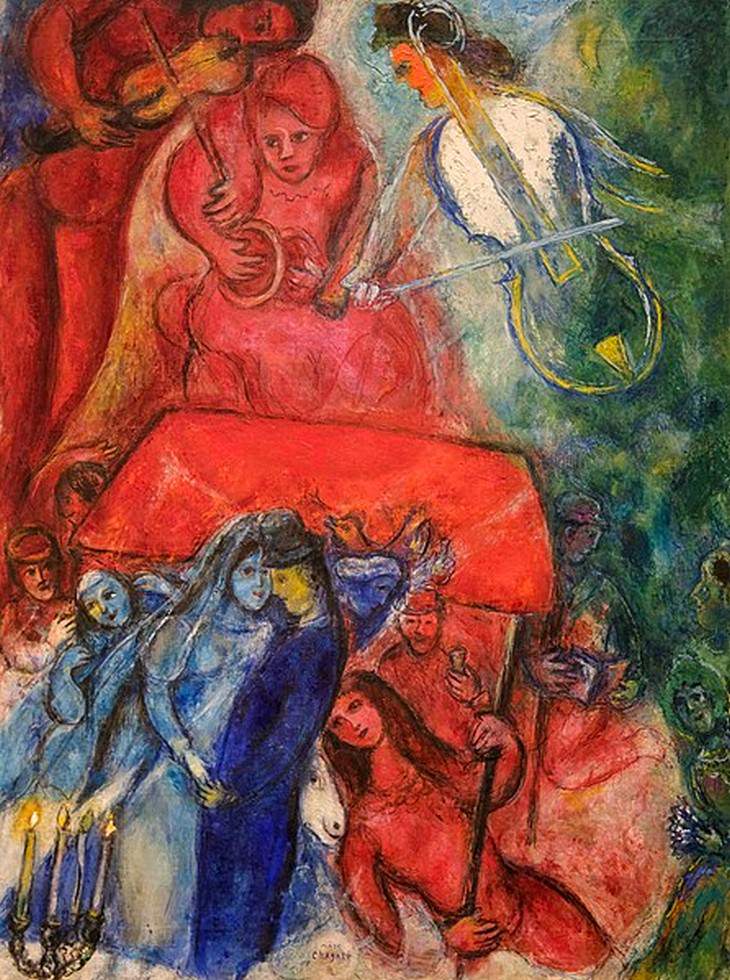
The Wedding | 1944
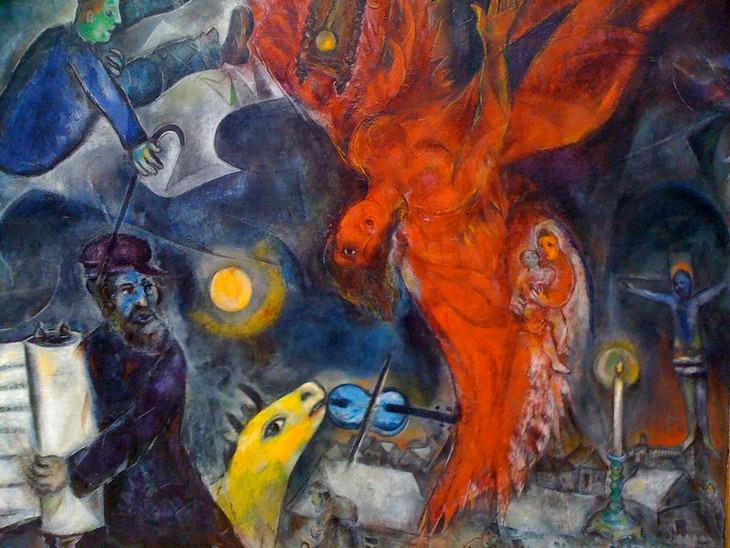 The Falling Angel, created in 1947, is a haunting and enigmatic painting by Marc Chagall that embodies the artist's reaction to the horrors of World War II and the Holocaust. The painting features an angel falling from the sky, surrounded by a chaotic and apocalyptic landscape. The vivid colors and surreal imagery evoke a sense of despair and loss, symbolizing the profound devastation experienced by the Jewish community during the war. The Falling Angel serves as a poignant reminder of the tragedy and suffering endured by millions, as well as a testament to Chagall's artistic ability to convey deep emotion and meaning through his work.
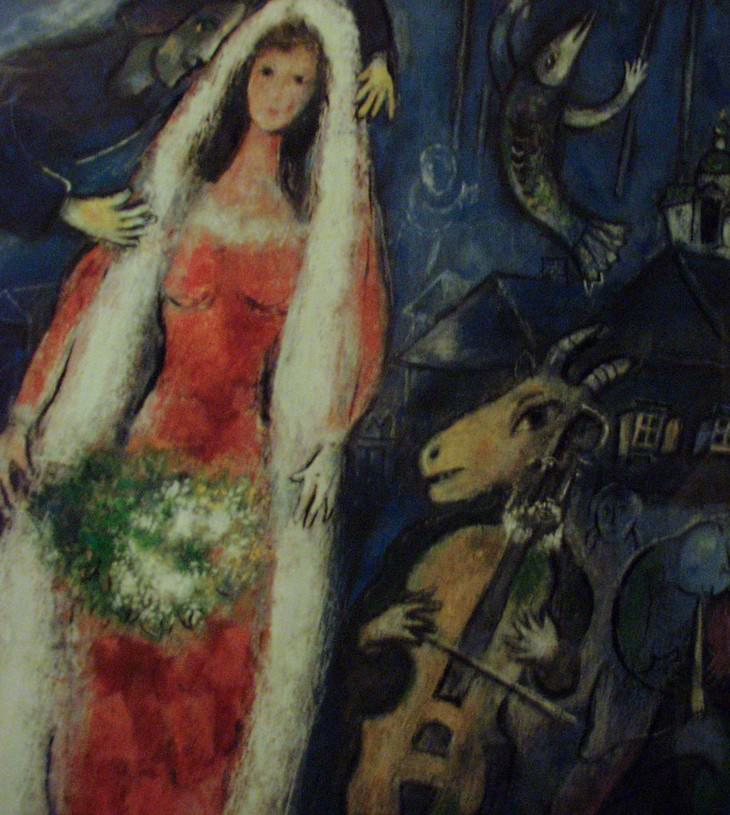 La Mariée, painted in 1950, is a romantic and dreamlike composition by Marc Chagall that celebrates love and marriage. The painting features a bride, adorned with a vibrant bouquet and surrounded by colorful flowers, animals, and other whimsical elements. The floating figures and surrealistic imagery are characteristic of Chagall's signature style, evoking a sense of weightlessness and enchantment. La Mariée is a testament to Chagall's ability to capture the magic and joy of life's most cherished moments, and it remains a beloved and iconic work in his oeuvre.
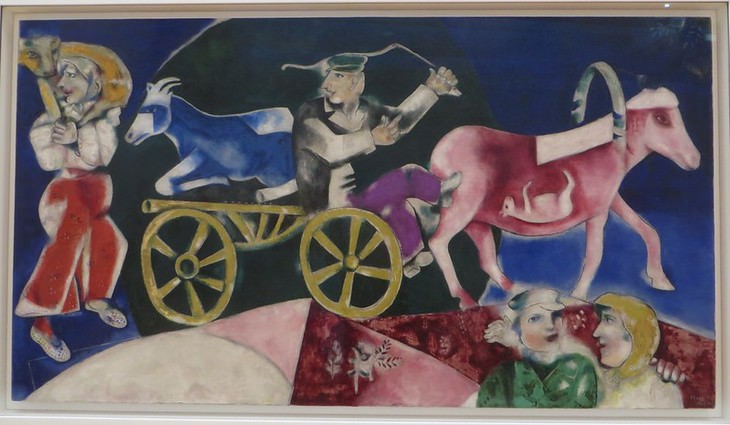 Le marchand de bestiaux (The Cattle Dealer), created in 1912, is an early masterpiece by Marc Chagall that reflects his fascination with the rural life of his native Vitebsk. The painting features a cattle dealer, a symbol of prosperity and abundance in Chagall's work, surrounded by a lively village scene. The composition is rich with vibrant colors, dynamic forms, and imaginative elements, combining the influences of Cubism, Fauvism, and Russian folk art. Through this painting, Chagall captures the spirit and essence of the traditional way of life in Eastern European villages, celebrating the human connection to nature and the land.
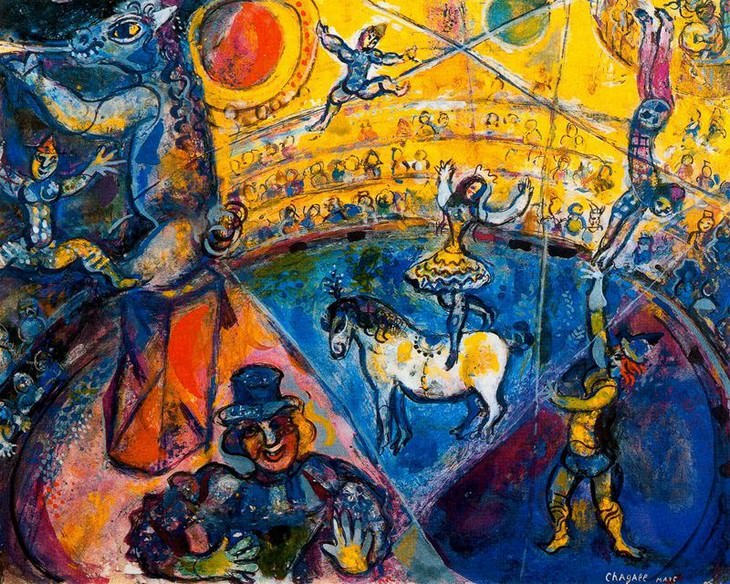 Circus Horse, painted in 1964, is a whimsical and vibrant work by Marc Chagall that showcases his love for the circus and its performers. The painting features a prancing horse, a figure of grace and agility, surrounded by a colorful array of acrobats, clowns, and other circus characters. Chagall's use of bold colors, dreamlike imagery, and fluid lines evoke the energy, excitement, and spectacle of the circus. Circus Horse serves as a joyful tribute to the world of performance and entertainment, embodying Chagall's signature blend of fantasy and reality.
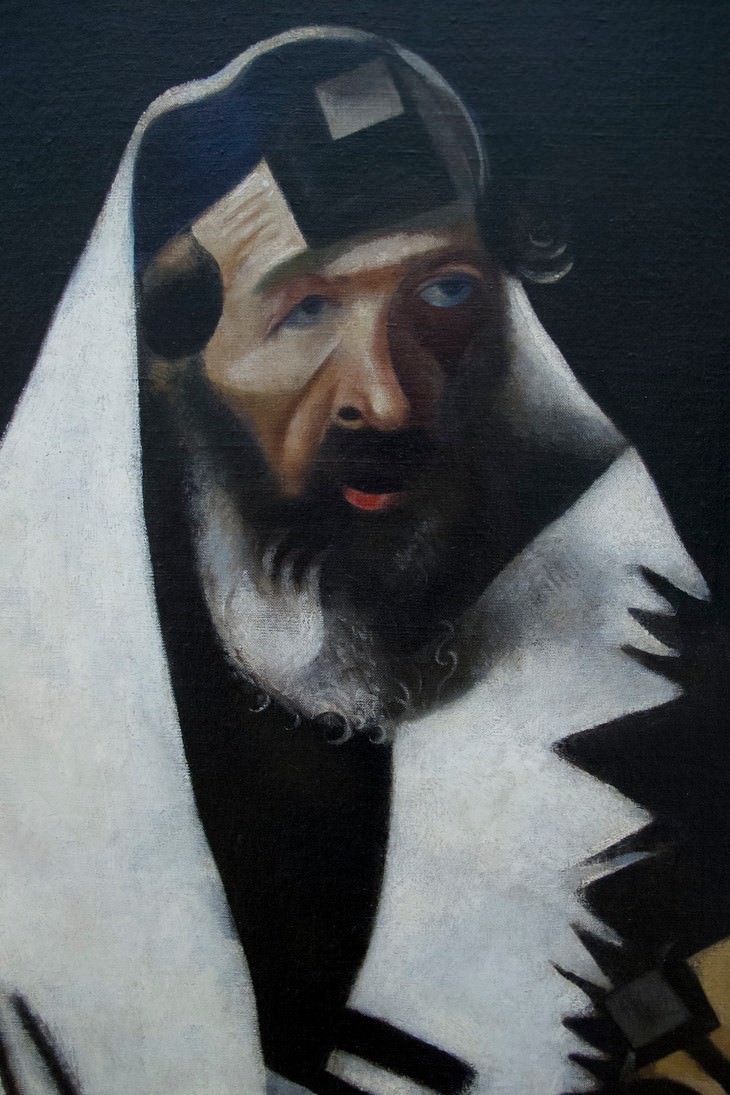 Jew In Black And White, created in 1914, is a striking and introspective painting by Marc Chagall that explores themes of identity, religion, and cultural heritage. The painting depicts a solemn figure, dressed in traditional Jewish attire, standing before a black and white background. The stark contrast between the subject and the background highlights the individual's resilience and strength in the face of adversity. Through this work, Chagall delves into the complexities of his own Jewish identity, reflecting on the challenges faced by the Jewish community during a time of increasing anti-Semitism in Europe.
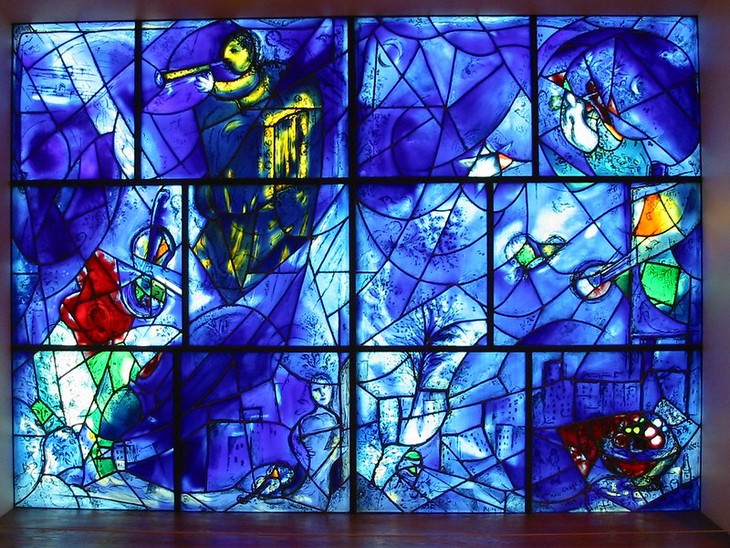 America Windows, created in 1977, is a stunning series of stained-glass windows designed by Marc Chagall for the Art Institute of Chicago. The windows were created as a tribute to the United States and its commitment to cultural and religious freedom. Chagall's signature vibrant colors and dreamlike imagery are masterfully employed in the windows, depicting themes of love, peace, and the arts. Each panel celebrates the diversity and creativity of America, showcasing figures from literature, music, dance, and the visual arts. America Windows is a shining example of Chagall's ability to transform his unique artistic vision into a variety of mediums, and it stands as a lasting symbol of unity and harmony.
Photos sources: Musée d'art et d'histoire du Judaïsme, HarshLight, Bernard Blanc, Tony Roberts, Matt Dertinger, mookiefl, Frans Vandewalle, Jim Forest, Gandalf's Gallery, Frans Vandewalle, cea +, Sharon Mollerus