This quiz explores the empire’s beginnings, territorial reach, defining battles, religious identity, cultural achievements, and eventual dissolution. Expect more than dates - this is a journey into imperial structure, ambition, and legacy.
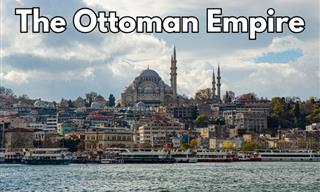
From a modest Anatolian principality in the late 13th century to a sprawling empire spanning three continents, the Ottoman Empire endured for more than 600 years. It commanded trade routes, holy cities, and strategic waterways. It fused Islamic governance with pragmatic administration, absorbed Byzantine traditions, and stood as Europe’s formidable rival. This quiz explores the empire’s beginnings, territorial reach, defining battles, religious identity, cultural achievements, and eventual dissolution. Expect more than dates - this is a journey into imperial structure, ambition, and legacy.
In which year is the Ottoman Empire traditionally considered to have been founded?
971
1504
1299
1153
The empire officially ended in:
1918
1945
1905
1922
At its territorial height in the 16th–17th centuries, the empire spanned approximately how many continents?
One - only in Asia
Two - Asia and Europe
Three - Asia, Europe and Africa
Four - Asia, Europe, Africa and South America
Before 1453, the city of Istanbul was named...
Ankara
Bursa
Constantinople
Babel
What was a staple of the diet of citizens of the Ottoman Empire?
In fact, their word for breakfast meant: "Before Coffee"
Coffee
Tea
Hummus
Mangos
The empire’s official religion was:
Shi’a Islam
Sunni Islam
Eastern Orthodoxy
Zoroastrianism
Which sultan is widely regarded as presiding over the empire’s “Golden Age”?
Mehmed
Selim II
Ahmed III
Suleiman I
Which sea became, for a time, effectively an Ottoman-controlled “internal lake”?
Black Sea
Caspian Sea
North Sea
Baltic Sea
The Ottoman system that allowed religious minorities autonomy under their own leaders was called...
Timar
Divan
Vilayet
Millet
The empire entered World War I in 1914 allied with...
Germany
Britain
France
Russia
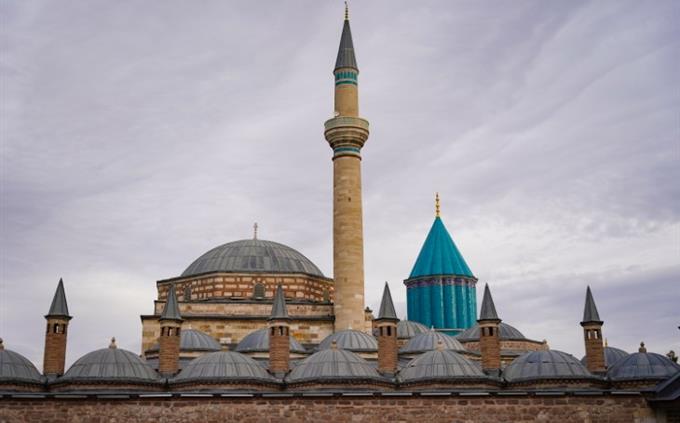
Ottoman classical architecture was heavily influenced by...
Gothic cathedrals
Roman aqueducts
Byzantine domed structures
Mughal gardens
Which major trade route was significantly impacted by Ottoman control of Constantinople?
Silk Road
Amber Road
Trans-Saharan Route
Spice Route around Africa
Which city became the empire’s capital in 1453 and remained so until 1922?
Bursa
Edirne
Istanbul
Ankara
The Crimean War (1853–1856) was primarily fought against which empire?
France
Austria
Russia
Prussia
Which architectural feature became a defining hallmark of Ottoman mosque design?
Flying buttresses
Massive central domes
Pyramidal towers
Square minarets
The Frontier Explorer
You grasp the broad narrative — foundation, expansion, and fall — but the finer structures of governance, reform, and cultural development may still be hazy. The Ottomans ruled for over six centuries; even seasoned historians revisit its layers. You’re building a solid foundation. A deeper dive into its military system and reform movements would elevate your expertise considerably.
You understand not only the timeline but the mechanics: the Janissaries, millet system, strategic waterways, and reform attempts. You see the Ottomans as a dynamic, adaptive empire rather than a static medieval relic. A bit more precision on treaties, early capitals, and late constitutional politics would bring you into elite territory.
Exceptional command. You recognize how geography, religion, reform, and military power intertwined to sustain a three-continent empire for centuries. You understand both its Golden Age and its fragile modernization efforts. Few appreciate the complexity of Ottoman administration and global strategy at this level. You could comfortably debate its legacy among scholars.
Subscribe and REMOVE ALL ADS
LOVE our articles but HATE our ads? For only $3.89 per month, enjoy a seamless, ad-free experience that lets you focus on what matters most — enjoying all of our content, uninterrupted. 🔒 100% Secure Payment 📅 Cancel Anytime, No Strings Attached Unlock a cleaner, faster browsing experience today and gain the freedom to navigate without visual clutter.
Ready for a Ad-Free experience? Upgrade now for just $3.89/month!
To enable your Ad-Free Subscription, please fill the fields below
Thank you for your subscription!
Your subscription was successful, now you can enjoy an ad-free experience!! Note: To make sure you get no ads, please make sure to log in to your account. If you are logged in already, then refresh the page. The subscription can be cancelled at any time.
This content is reserved for our members
Join Our Community for FREE and Enjoy:
Full and free access to ALL content.
The 'Daily Mail' service sends the highest quality and the most fascinating content directly to your inbox.
 Shai K.
2/19/2026
Shai K.
2/19/2026






 Go to BabaMail