
The most effective gene-editing tool available today is CRISPR-Cas9. Just this year, scientists have successfully used it for a wide variety of experiments, from modifying vegetables to encoding a Gif in bacterial DNA. However, most recently, it was used to remove a genetic disease from a human embryo.
Although extremely powerful, CRISPR-Cas9 does have its limitations; it’d only able to target DNA. Therefore, to extend its capabilities to RNA editing, scientists from the University of California San Diego School of Medicine developed a modification of CRISPR, and they’ve called it RNA-targeting Cas9 (RCas9).
In a study published in Cell, the UCDS team tested their new tool by correcting the kinds of molecular errors that cause people to develop microsatellite repeat expansion diseases, such as hereditary amyotrophic lateral sclerosis (ALS) and Huntington’s disease.
During standard CRISPR-Cas9 gene editing, a “guide” RMA is instructed to deliver a Cas9 enzyme to a specific DNA molecule. However, the scientists from UCSD instructed it to target an RNA molecule instead.
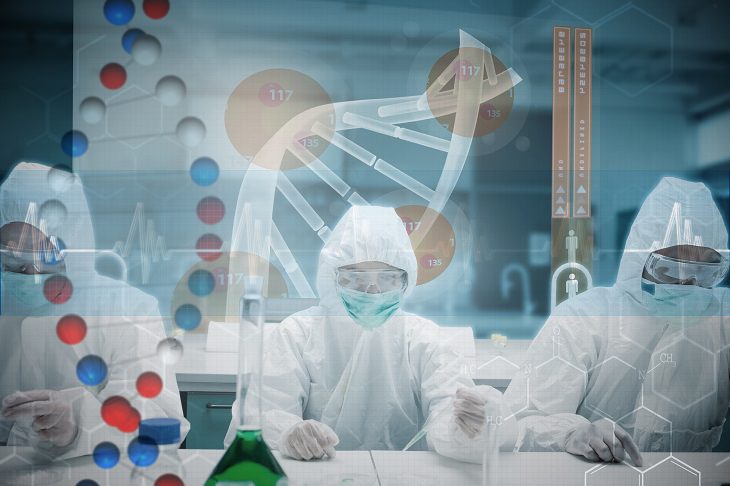
Tests that were conducted in the laboratory showed that RCas9 removed 95% of problem-causing RNA for myotonic dystrophy types 1 and 2, Huntington’s disease, and one type of ALS. This technique also reversed 93% of the dysfunctional RNA targets in the muscle cells of patient with myotonic dystrophy type 1, resulting in healthier cells.
Senior author Gene Yeo, a cellular and molecular medicine professor at UCSD School of Medicine, explained that “this is exciting because we’re not only targeting the root cause of diseases for which there are no current therapies to delay progression, but we’ve re-engineered the CRISPR-Cas9 system in a way that’s feasible to deliver it to specific tissues via a viral vector.
Across the world, an estimated 450,000 people are living with ALS. Roughly 30,000 of these are American, where 5,600 people are diagnosed with the disease each year. However, the exact number of Huntington’s disease cases is as easy to pin down. One estimate suggests that around 30,000 Americans display symptoms of it, while more than 200,000 are at risk.
Regardless of the exact figures, these two neurological diseases clearly affect a large number of people. This prevalence and the absence of a known cure makes the UCSD team’s research all the more relevant. Even more exciting is the fact that some kinds of RNA mutations that this study is targeting are known to cause over 20 other genetic diseases.
However, the researchers are well aware that what they have accomplished so far is just the first step. While RCas9 works in labs, they still have to figure out how it will fare when tested on humans.
Yeo explains that “the main thing we don’t know yet is whether or not the viral vectors that deliver
RCas9 to cells would elicit an immune response. Before this could be tested in humans, we would need to test it in animal models, determine potential toxicities, and evaluate long-term exposure.”
Ultimately, while RCas9 couldn’t deliver a cure exactly, it could potentially extend a patient’s life. For diseases such as ALS and Huntington’s, that’s a very good place to start.
Source: futurism
Images: depositphotos
Find Out How Some Elderly People Stay Sharp into Old Age
Some old people have better memories than people half their age. This could be the reason why...
17:49
Was There a Time a Day Lasted 10 Hours?
Eons ago, before the dinosaurs ever evolved, there was primordial life on Earth. What did it look like?
Forget Apples! It's an Egg a Day That Keeps the Doc Away...
According to new research, it could actually be an egg a day that keeps the doctor away.Find out more here!
Scientists Make Huge Breakthrough in Cancer Treatment
Scientists might have just found a revolutionary way to fight cancer. Read about it here.
These Non-Routine Medical Tests Could Save Your Life!
Here are 8 non-routine tests that really have the potential to save your life, and some of them even need to be taken as early as 30.
6:17
Ever Wondered Why the Sun Makes You Sneeze?
Ever wondered why looking at the sun or at bright lights makes you sneeze? Turns out, you have a condition.
What We Can Learn from ChatGPT About Being Human
What can we learn from ChatGPT about ourselves?
A 'Brain Fog' Epidemic? Study Shows a Worrying Trend
Analysis of over 4.5 million U.S. survey responses spanning a decade (2013–2023) shows a rise from 5.3% to 7.4% in reported cognitive disability nationwide, with an exceptional surge in the 18–39 age group and a clear influence of income and educatio
5:16
Fascinating: How Fast Does Our Brain Operate?
Ever wonder at what speeds our thoughts move?
11:02
Ever Wonder What Ancient Egyptian Sounded Like?
Researchers have used all the information we know to create what they think it may have sounded like.
7 Overlooked Scientists Who Should Be Household Names
Meet seven scientists who never got the credit they deserved.
3:39
Magic is Only A Vibration Away With This Great Experiment
All it takes is some sand, a metal plate and carefully toned vibrations from a speaker to create stunning and complex patterns. This video shows you the amazing results!
10:31
Science Predicts These 10 Technologies Will Rule 2025
These upcoming tech innovations will reshape our world.
7 Mind Blowing Science Facts School Left Out
Put on your learning caps! We rounded up 7 surprising scientific facts you probably didn't learn at school.
8:48
Fascinating: What Around Us is Invisible?
The Invisible Things that Turn the World...
Do You Have One Of These RARE Genetic Traits?
How unique are you? You might have several rare genetic traits that make you unlike most of the world's population!
8:11
Fascinating: What is the Deepest Hole Humanity Has Dug?
This video explains how low humanity has dug down so far.
56:12
What's the Largest Thing in the Universe?
In this video, we look into some of the mightiest structures in the known universe.
11:43
Learn While Laughing: The Incredible Tardigrade
If you love nature and you love laughing, this incredible series of nature videos are a great way to spend a few minutes.
The First Valentine's Day Was Not That Long Ago...

Let us take you on a fun history lesson with these 10 first-ever things that started way back in history and remain to this day.
2:41
Trick-Mousing is Such Adorable Entertainment...
Mice are much cleverer than most people believe, and they easily respond to training, as long as you use positive reinforcement, or in other words - reward them frequently for their behavior with food.
9 Great NASA Inventions That Took the World By Storm!
For around six decades, NASA have been inventing top-notch products. Here are nine great examples!
11:05
Science: Can AI Preserve Our Most Precious Memories?
Technologist Pau Aleikum Garcia talks about synthetic memories.
8 Important Inventions That Were a Complete Accident
It might be interesting for you to learn that some very important scientific innovations were born as a result of an accident.
18:21
Fascinating: How Do Cats TRULY See Humans?
Understanding a cat's world is the key to strengthening your bond. Let's decode your cat's mind!
1:44
You Won't Believe What the Human Body Does in One Minute
How much do you think it is capable of doing in a single minute? Watch this video and you'll have your answer!
Is Microsoft's "AI Doctor" Better Than a Real Doctor?
A new study presents a committee of digital doctors achieving approximately 80% accuracy in complex medical diagnoses – far beyond the average of general practitioners.
14:34
What to Do (and Avoid) When Setting Up a Smart Home
Here's how you can set up a family-friendly smart home that will last long.
38:55
What Happens the Deeper You Go Underground?
What happens when pressure pushes matter beyond the limits of what we thought possible?
5:50
The Rise of the Machines: Can Humanoid Robots Help Us?
Will humanoid robots change the way we work forever?
3:55
50 Years Later, We're Debunking the Moon Landing "Hoax"
How do we prove to people the moon landing was real? By answering their doubtful questions in this video.
Has Modern Technology Changed Our Cognitive Abilities?
Modern digital technology is everywhere and it’s changing how we think, how we behave and even how we feel about things.
10 Tech Products You Must Double-Check Before Buying
Beware! These tech products are most commonly faked.
Science News: New Wonder Mushroom Cleans the Air
Let's learn about a magical new mushroom that is not only enriching the soil for farmers but also capturing CO2 from the air!
Hair Regeneration Could Be Possible With This New Process
Learn about an innovative new study which has revealed a novel treatment for effective hair regeneration.
16:31
Why Building a Perpetual Motion Machine Is Impossible
Since the Middle Ages, scholars have been trying to build the mythical perpetual motion machine. Was it all in vain? Is it even possible to build such a machine?
6 Signs That Someone is Listening on Your Cellphone Calls!
With technology advancing all the time, there is the ever-increasing chance of our phones being tapped. Here are 6 signs that your phone could be tapped.
11:15
These Paradoxes Continue to Mystify Scientists
Take a look at 7 scientific paradoxes that may never get solved.
1:48
Boston Dynamic's Robot Does Some Incredible Things...
Boston Dynamics shows us again what her lead robot can do.
15:41
Keep Your Home Safe with These Handy Gadgets
These 13 devices will transform your home security.
8:28
Could These Signals Be A Sign of Extraterrestrial Life?
Scientists have recently picked up on a mysterious radio signal from space, and it could mean a lot - maybe even a sign from extraterrestrial life forms.
5:28
Just How Small is an Atom? - Fascinating!
Just how small are atoms? And what's inside them? The answers turn out to be astounding...
This New Blood Pressure Drug Could Be a Game-Changer
Zilebesiran, an investigational drug that is showing profound success in late-stage clinical trials is offering hope for millions who struggle to keep their blood pressure in check.
8:12
The Tallest Statues Compared, Even Those Not Built Yet...
In this 3D animated size comparison, we showcase the tallest statues in the world alongside ambitious future projects.
58:37
Science: Here's Everything We Know About Pluto
Join us as we unravel the mysteries of far off Pluto, 3.7 billion miles from our Sun.
10:30
China's Crazy Plan to Dig a Canal in the Middle of EUROPE
China is setting out a plan to dig a canal through the middle of Europe in the nearest future, but why?
Let's Learn All About Your White Blood Cells
White blood cells (WBCs) are the part of your immune system which is responsible for fighting infection. Learn all about them here!
4:22
eSIM vs Traditional SIM: What’s the Big Difference?
Are eSIMs and iSIMs the future of connectivity?
9:34
Was Roman Concrete Really Superior to Our Own?
How did Ancient Romans make such durable concrete that it still lasts today?
To enable your Ad-Free Subscription, please fill the fields below
Your subscription was successful, now you can enjoy an ad-free experience!! Note: To make sure you get no ads, please make sure to log in to your account. If you are logged in already, then refresh the page. The subscription can be cancelled at any time.