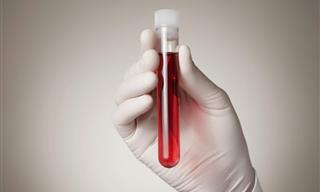

In a major lung cancer trial, a revolutionary blood test has been proven to diagnose the recurrence of cancer cells up to a whole year in advance of conventional scans.
This test, known as a liquid biopsy, could buy some crucial time for doctors by indicating that cancerous cells are present in the body when tumors are detectable on CT scans and long before the patient has any physical symptoms.
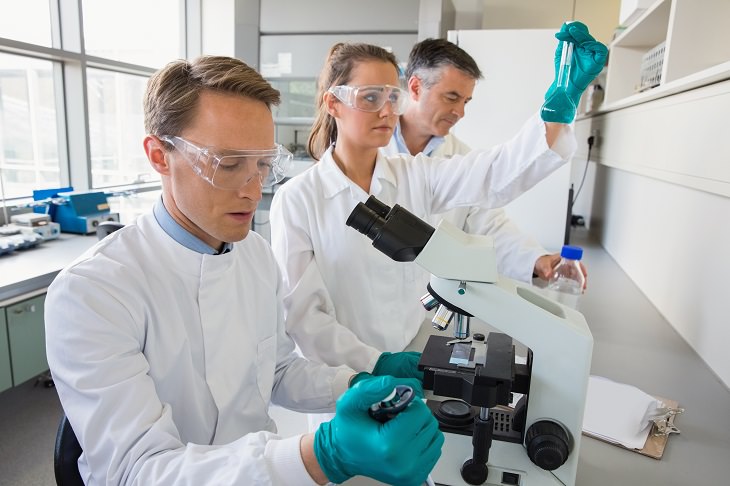
The test works by detecting free-floating mutated DNA, which has been released into the bloodstream by dying cancer cells. In the lung cancer trial, which involved 100 patients, scientists saw precipitous rises in tumor DNA in the blood of patients who relapses months, or even a whole year, later.
These findings add to the building anticipation that this technology, which is also being used to test for Down syndrome, will lead to a major breakthrough in cancer medicine.
Nitzan Rosenfield, from Cancer Research UK Cambridge Institute, who was not involved in this latest trial, has predicted that “most if not all” cancer patients will be given this test in future. He goes on to say that “even if only a fraction of cancers that are currently detected at a lethal stage will in future be detected at an early curable stage this will represent a great benefit in lives saved.”
In the latest clinical trial, 100 patients with non-small cell lung cancer were observed from diagnosis through to surgery and chemotherapy, with blood tests being taken every 6-8 weeks. By analyzing the genetic faults in cells across each tumor, the scientists created personalized genomic templates for every patient. This was then compared to the DNA floating in their blood, to see whether a fraction of it matched that of their tumor.
Professor Charlie Swanton, a cancer geneticist from the Francis Crick Institute, who led the work, explained how circulating tumor DNA tracked the patient’s disease status with extreme precision. Of patients who would stay in remission, he declared that “within 48 hours of surgery, the DNA drops down to undetectable.”
By contrast, rising tumor DNA levels were seen in patients whose disease would later return, indicating that that the cancer remained in the lung or had moved to other organs, where it was dormant.
When the tests from 24 patients were analyzed, the scientists could say with 92% accuracy who would relapse.
Swanton goes on to declare that he thinks “this is going to be very useful clinically as this allows us to identify high risk patients. We have a predictive value of 92% that your cancer is going to recur within 350 days.”
The tests even went on to reveal an apparent outlier, a patient whose cancer had not returned, but whose blood tests revealed high levels of circulating tumor DNA, had the cancer return almost a year later.
The liquid biopsies also showed whether the chemotherapy treatment was working or if the disease had become resistant, as is what happens in the majority of stage 2 and 3 cancers. In future, this could allow doctors to switch to a more effective drug and spare patients grueling treatment for nothing.

Eileen Rapley, 74, a retired art teacher from London, entered the trial after being diagnosed with lung cancer over a year ago. Since she began her treatment, doctors have discovered that she has developed a brain tumor, for which she is also being treated. Although the liquid biopsy did not guide her own care, she hopes that this new test might lead to the kind of improvements that screening techniques have brought about for breast cancer.
The test used in the study relied on building a genetic template for each patient based on analysis of tumor samples, with an estimated cost of around $1,700. However, Swanton predicts that the same kind of profile could be built using computational methods from just an initial blood test, making the technology viable outside a research setting.
Lung cancer causes more than 1 in 5 cancer deaths in the UK and, although occurrence of the disease is falling, survival has only improved by a fraction in the last 40 years. Professor Karen Vousden, chief scientist at Cancer Research UK, which funded this study, said: “These findings could help us to identify how lung cancers respond to therapy, building a bigger picture of the disease and potentially pointing the way to developing new treatments and, crucially, saving more lives.”
Source: theguardian

It’s Not a Myth: Why You Want to Avoid Going to Bed Angry
'Never go to bed angry' turns out to be more than just a hackneyed saying. These are 5 very real reasons that explain why going to bed mad is harmful.

These Non-Routine Medical Tests Could Save Your Life!
Here are 8 non-routine tests that really have the potential to save your life, and some of them even need to be taken as early as 30.
Forget Apples! It's an Egg a Day That Keeps the Doc Away...
According to new research, it could actually be an egg a day that keeps the doctor away.Find out more here!
Study Finds a Painless Way to Monitor Blood Sugar Levels
A new study found that continuous glucose monitors improve blood sugar control and quality of life in diabetes patients - pain-free.
6 Coronavirus Indicators That You May Not Have Heard Of
Here, we list some of the more unusual and lesser-known COVID-19 symptoms you might not be aware of yet.
5:23
Why HAVEN'T We Cured Cancer Yet? An Explanation
This informative video goes over the major challenges researchers face when trying to find a perfect cure for cancer.
7 Discoveries of Albert Einstein that Changed the World
The 7 biggest discoveries of Albert Einstein and how they changed the world forever.
Study: New Link Found Between Parkinson's and the Gut
A recent study has identified gut microbes likely involved and linked them to decreased riboflavin (vitamin B2) and biotin (vitamin B7), suggesting a potential treatment
9:09
Protective Measures: How Our Body Reacts to a Tattoo
In this video, we’ll explore the microscopic war raging beneath your skin, where millions of your cells make the ultimate sacrifice to lock that ink in place, turning a defense mechanism into lifelong art.
Science News: New Wonder Mushroom Cleans the Air
Let's learn about a magical new mushroom that is not only enriching the soil for farmers but also capturing CO2 from the air!
16:26
Neanderthals Had Strength and Skills Beyond Our Limits
Neanderthals possessed truly exceptional, almost unbelievable, traits.
A Quantum Leap? Revolutionary Technique Discovered
Scientists at Singapore University have developed a groundbreaking manufacturing method powered by artificial intelligence that may revolutionize how we understand and create quantum materials at the atomic level.
14:58
Why IS Fentanyl So Dangerously Addictive?
In this video, we break down what opioids really do to your brain and body, what using them actually feels like, and why so many people are dying from Fentanyl overdoses.
Science in 2025: 8 Developments That Could Change it All
Here are some of the most exciting trends in science and healthcare to keep an eye on.
1:44
You Won't Believe What the Human Body Does in One Minute
How much do you think it is capable of doing in a single minute? Watch this video and you'll have your answer!
9 Great NASA Inventions That Took the World By Storm!
For around six decades, NASA have been inventing top-notch products. Here are nine great examples!
4:52
Neon Lights: a Beautiful Union of Science and Art
Neon signs are a beautiful blend or artistry and science, and knowing the history and the science behind them make them even more exciting
2:11
Here are Some Unique Tricks You Can Do at Home With Salt!
This video shows us a few interesting magic tricks that you can do anytime using salt, ice, and other items you can find at home.
Are You Ready to Learn About the Expanse of the Universe?
If you have an interest in the unknown, then look no further than these 15 unbelievably facts discovered about space
How AI Is Fixing Problems Humans Struggle With
Here’s how AI is quietly reshaping the world in ways that actually matter.
4:45
Woah! Learning to Play Music Has This Effect on Your Brain
Learning how to play an instrument can do wonders for our brain...here's how!
6:47
7 Exciting Physics Tricks You Have to See!
Watch these seven remarkable physics tricks in this exciting and fun video.
2:39
Discover 5 Cutting Edge Humanoid Robots in 2025
Watch the video to see which robots are leading the pack in intelligence, mobility, and impact.
These 14 Forgotten Robots Promised So Much...
This collection showcases 14 cool vintage robots that were supposed to change everything.
2:03:03
Full Documentary: From First to Last Dinosaur
With stunning visuals and cutting-edge science, we’ll bring their story to life—from their very first day to their last, a saga of survival, adaptation, and mystery.
Is Weekend Sleep as Good as Regular Sleep? Let's Check
If you thought sleeping in on the weekend was a bad habit, you're about to find out that it's quite the opposite.
20:01
Future Tech: 19 Innovations About to Change Our World
These groundbreaking new technologies will change our world.
58:37
Science: Here's Everything We Know About Pluto
Join us as we unravel the mysteries of far off Pluto, 3.7 billion miles from our Sun.
4:20
Ever Wondered About How Our Minds Retain and Lose Memories?
Ever wondered why you can remember something from 20 years ago, but have difficulty remembering what you had for lunch the other day? Learn why here.
Is Microsoft's "AI Doctor" Better Than a Real Doctor?
A new study presents a committee of digital doctors achieving approximately 80% accuracy in complex medical diagnoses – far beyond the average of general practitioners.
Blood Test Breakthrough Transforms Leukemia Diagnosis
This research demonstrates that rare circulating stem cells in blood carry the same diagnostic information as bone marrow samples, enabling doctors to identify disease progression months before clinical symptoms appear.
11:05
Science: Can AI Preserve Our Most Precious Memories?
Technologist Pau Aleikum Garcia talks about synthetic memories.
21:24
James Webb Telescope: Redefining Our View of Space
Here's a brief look at all the amazing discoveries made by the James Webb Space Telescope so far.
4:05
Kirobo: First Robot in Space!
It was one small step for robot and another giant leap for mankind...
10:46
Neat Life Hacks To Help You Remember Things Better
A lot of us tend to forget the simplest things at times. This video provides some neat tips to help boost your memory.
21:51
What Will the Universe Look Like in 10 Quintillion Years?
These questions take us beyond science into the realm of imagination, as we contemplate the ultimate fate of our Universe and everything within it.
Earth Is So Incredible: I Was Stunned by These 50 Facts
Here's a post that will explain to you just what's truly, scientifically amazing about our planet Earth. I'm gobsmacked.
6:25
Do You Like the Smell of Rain? This Is Why
One of the best things about rain and thunderstorms is that clean fresh smell afterward. But what actually causes that distinct scent?
Alzheimer's: What Recent Breakthroughs Have Taught Us
Now, you can discover 4 new studies that show how to do this in ways you haven’t heard of.
19:27
20 of the Most Infamous Tech Product Flops In History
Here's a look at some of the most infamous and biggest technology failures in recent history.
8:12
The Tallest Statues Compared, Even Those Not Built Yet...
In this 3D animated size comparison, we showcase the tallest statues in the world alongside ambitious future projects.
Stunning 2024 Images from the James Webb Space Telescope
Marvel at the new images revealed by the James Webb Space Telescope.
5:50
Why Do We Sometimes Hallucinate? Find Out Here!
In this informative TED-Ed video, Elizabeth Cox details the science of hallucinations.
14 Times Nature Inspired Groundbreaking Technology
Let’s explore 14 remarkable examples of how nature has shaped modern technology.
Remembering the Life and Wisdom of Stephen Hawking
Stephen Hawking possessed one of the greatest minds the world has ever seen, but was also impaired by a debilitating disease. Here are his life ant times.
NVIDIA CEO Reveals Which Degree Is Worth Studying
Electrical Engineering, Computer Science, or Physics? Nvidia's CEO has a surprising answer to which area should be studied nowdays.
4:57
The First 3D-Printed Hotel is Already Being Built!
s evidence of this, a groundbreaking project is nearing completion, in which a hotel is being printed, and tourists will soon be able to visit it. Curious to see what it looks like?
To enable your Ad-Free Subscription, please fill the fields below
Your subscription was successful, now you can enjoy an ad-free experience!! Note: To make sure you get no ads, please make sure to log in to your account. If you are logged in already, then refresh the page. The subscription can be cancelled at any time.