
Once example of a study conducted in relation to the perception of time was held in 2005 at the Ludwig Maximilian University of Munich. Psychologists Marc Wittmann and Sara Lenhoff surveyed a sample of 499 participants, aged between 14 and 94. They were asked about how fast they felt time was moving, and had the option to select different answers ranging from “very slowly”, to “very fast”.
The psychologists conducting the study concluded that the perception of short periods of time, namely days, weeks or months, did not change with age. In fact, the general perception for these time periods was that the clocked ticked by quickly.
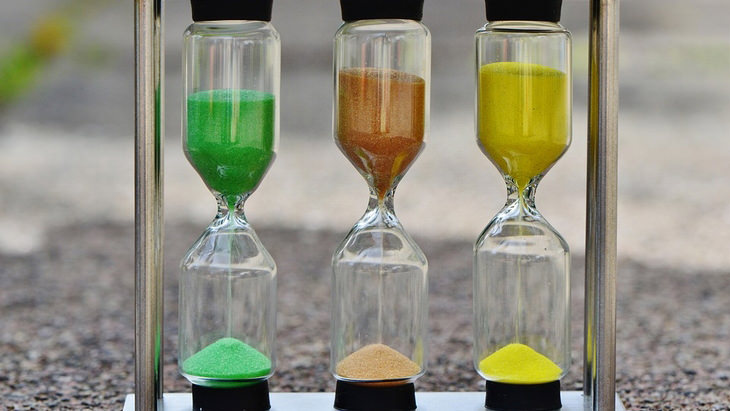
In contrast, when participants were asked about longer periods of time, such as a decade, a pattern began to emerge. Older people had a much greater tendency to perceive such time periods as moving faster.
The study’s participants aged 40 or older felt that time elapsed slowly in their childhood, but accelerated steadily from when they were in their teens into early adulthood.
The main reason for this is that a human being can estimate the length of an event from two distinct vantage points, prospective and retrospective. As their names suggest, the former occurs when an event is still ongoing, and the latter occurs when an event has ended.
A secondary reason for the perception of accelerated time is that our experience of time simply varies from one experience to the other. This means that there really is truth in the saying “time flies when you’re having fun”. The funny thing is that when we’re in such special moments, they seem to end quickly, however our perception of them when we look back at them makes it seem as if they were much longer than they really were.
It’s believed that the reason for the aforementioned is how the brain encodes new experiences. In other words, the more new memories we build on a weekend getaway, the longer the trip will seem in hindsight.
According to BBC columnist and psychologist Claudia Hammond, this is what’s known as the “holiday paradox”. From childhood through to early adulthood, we go through many new experiences and learn a whole myriad of new skills. As time goes by, our lives become more routine, thus we tend to experience less moments that are unfamiliar.
She contends that because we deal with so many new things in our early lives, this leads to over-representation of our early lives in our autobiographical memory. The inevitable result of this is that the time seems to have lasted longer.
All of these findings don’t mean that we are unable to slow time down in later life. In fact, we can do so by keeping our brains active, continually learning new skills and ideas, and exploring new places.
Content Source: Scientific American

54:17
Science Philosophy: What is the TRUE Nature of Time?
Join us as we journey through theories, discussions, and insights that challenge our perceptions and broaden our understanding of time itself.
Scientists Find Enzyme That Could End Aging and Cancer
Scientists have found an enzyme that they reckon could be used to slow down the aging process and eradicate cancer!
Friendship Might Be One of the Secrets to Healthy Aging
A recent study finds that senior individuals with exceptionally good memory and cognitive function are the ones with strong relationships.
These Photos Prove: Time & Angle Make All the Difference!
These fascinating comparison photos highlight what a huge difference time angle can make!

21:10
How We Might Slow Down or Even REVERSE Aging Soon
Epigenetics, a new branch of biology, may hide the secret to anti-aging. This series of short interviews explains how this might work...
7:21
Could We Stop the Aging Process? Find Out Here!
This video takes a close look at three different tools that scientists are experimenting with which could eventually help prevent aging in humans.
33:02
The Entire Story of Earth in 30 Minutes!
The story of our planet, from birth to the adult, ancient planet we see before us today - all in just half an hour.
5:22
Why Do You See Colors When You Rub Your Eyes?
Explore the science of afterimages, the visual illusions that linger in your vision following exposure to bright lights or images.
Absolute Zero: The AI that Doesn't Need People to Develop
Imagine an AI that doesn’t need humans to teach it how to code—it creates its own coding challenges, solves them, and gets smarter all on its own. This isn’t science fiction; it’s a groundbreaking development called Absolute Zero
Science History: 17 Math Equations that Changed the World
In this article, we'll journey through 17 of these monumental formulas, demystifying the symbols to reveal the revolutionary ideas they contain and the immense impact they have had on the course of history.
18:14
Are These Vintage Kitchen Gadgets Any Good?
Will any of the vintage kitchen gadgets stand the test of time or outperform their contemporary alternatives?
Extraordinary Inventions By Tesla That Were Never Built!
Nikola Tesla was a scientist too advanced for his time. Here are some of the inventions he never had a chance to build.
24:11
25 Game-Changing Megaprojects That Will Change Our World
These incredible megaprojects that are set to redefine our world in 2025.
3:39
Magic is Only A Vibration Away With This Great Experiment
All it takes is some sand, a metal plate and carefully toned vibrations from a speaker to create stunning and complex patterns. This video shows you the amazing results!
Is Weekend Sleep as Good as Regular Sleep? Let's Check
If you thought sleeping in on the weekend was a bad habit, you're about to find out that it's quite the opposite.
2:41
Trick-Mousing is Such Adorable Entertainment...
Mice are much cleverer than most people believe, and they easily respond to training, as long as you use positive reinforcement, or in other words - reward them frequently for their behavior with food.
20:32
History: Did the Trojan War REALLY Happen?
The Trojan War, the most famous of the ancient wars, fought by thousands of men for ten long years on the beaches of the famed city of Troy. Was all that real?
This New Blood Pressure Drug Could Be a Game-Changer
Zilebesiran, an investigational drug that is showing profound success in late-stage clinical trials is offering hope for millions who struggle to keep their blood pressure in check.
Earth Is So Incredible: I Was Stunned by These 50 Facts
Here's a post that will explain to you just what's truly, scientifically amazing about our planet Earth. I'm gobsmacked.
9:13
Want to Travel Quickly Through Space? Try Using a Wormhole
If you want to know what a wormhole is and how it is supposed to work, then you've come to the right place!
11:02
Ever Wonder What Ancient Egyptian Sounded Like?
Researchers have used all the information we know to create what they think it may have sounded like.
6:05
The Real Reason Companies Prevent You from Fixing Things
Ever felt like you should be able to fix that broken gadget, but something's holding you back? Watch this to know more.
5:14
Earth 2125: A Vision of the Future of Our Planet
Exploring what Earth could look like in 2125 reveals exciting potential.
5:50
Why Do We Sometimes Hallucinate? Find Out Here!
In this informative TED-Ed video, Elizabeth Cox details the science of hallucinations.
1:44
You Won't Believe What the Human Body Does in One Minute
How much do you think it is capable of doing in a single minute? Watch this video and you'll have your answer!
9:15
These Bizarre Mysteries Continue to Stump Scientists!
The world of science hasn't been able to explain several bizarre phenomenon yet. Let's take a look at a few of them.
NVIDIA CEO Reveals Which Degree Is Worth Studying
Electrical Engineering, Computer Science, or Physics? Nvidia's CEO has a surprising answer to which area should be studied nowdays.
See the World From Up Close - 17 Fascinating Macro Photos
Seeing ordinary objects like honey, paracetamol, and snow through a microscopic lens teaches us how beautiful and intricate they really are!
5:01
The Truth About Folding Phones You Need to Know
Don’t buy a foldable without knowing this first.
8:12
The Tallest Statues Compared, Even Those Not Built Yet...
In this 3D animated size comparison, we showcase the tallest statues in the world alongside ambitious future projects.
4:57
Fascinating: How Does Our Digestive System Work?
This video explains how the human digestive system does its daily.
8:19
You Won't Believe What Passes for a Phone in North Korea
You won't believe what phones look like in North Korea!
17:03
What is a Ballistic Missile and is Its Purpose?
Why is the ballistic missile so feared, and what exactly qualifies it as such - will all be explained in this informative video.
Science Proves: These 10 Bible Stories Probably Did Happen
The Bible describes many seemingly supernatural cases, but today, science can show that they might have indeed happened.
0:55
China's G1 Robot is Showing Some Incredible Moves
The G1 is a new robot developed in China and in this video shows some amazing moves.
12 Earliest Versions of Tech Inventions We Use Every Day
Witness the evolution of 11 popular devices we use all the time by looking at how they all started...
Remembering the Life and Wisdom of Stephen Hawking
Stephen Hawking possessed one of the greatest minds the world has ever seen, but was also impaired by a debilitating disease. Here are his life ant times.
56:12
What's the Largest Thing in the Universe?
In this video, we look into some of the mightiest structures in the known universe.
14 Retro Inventions That Stunned Crowds Back in the Day
These inventions were the talk of the town back in the day.
5:50
The Rise of the Machines: Can Humanoid Robots Help Us?
Will humanoid robots change the way we work forever?
14 Times Nature Inspired Groundbreaking Technology
Let’s explore 14 remarkable examples of how nature has shaped modern technology.
10:04
11 Practical Technologies That Will Help Fight Flooding
These amazing innovations will be real handy during a flood.
These 18 Photos Capture the Universe Like Never Before!
See the universe in a new light with these astonishing photos.
13:41
The 5 Most Important Fossil Discoveries from Last Year
2024 saw some really amazing fossil discoveries!
Whoa! Who Knew the Human Body Was Capable of So Much?
Have a look at these 17 intriguing facts about the human body that we can practically guarantee will leave you in awe.
3:02:59
Like Science Mysteries? Enjoy This Giant Compilation!
In this video, we unravel the greatest unsolved mysteries of physics.
Let's Learn All About Your White Blood Cells
White blood cells (WBCs) are the part of your immune system which is responsible for fighting infection. Learn all about them here!
To enable your Ad-Free Subscription, please fill the fields below
Your subscription was successful, now you can enjoy an ad-free experience!! Note: To make sure you get no ads, please make sure to log in to your account. If you are logged in already, then refresh the page. The subscription can be cancelled at any time.